Major Changes Proposed to DU Admission Test; Seats May Also Be Reduced
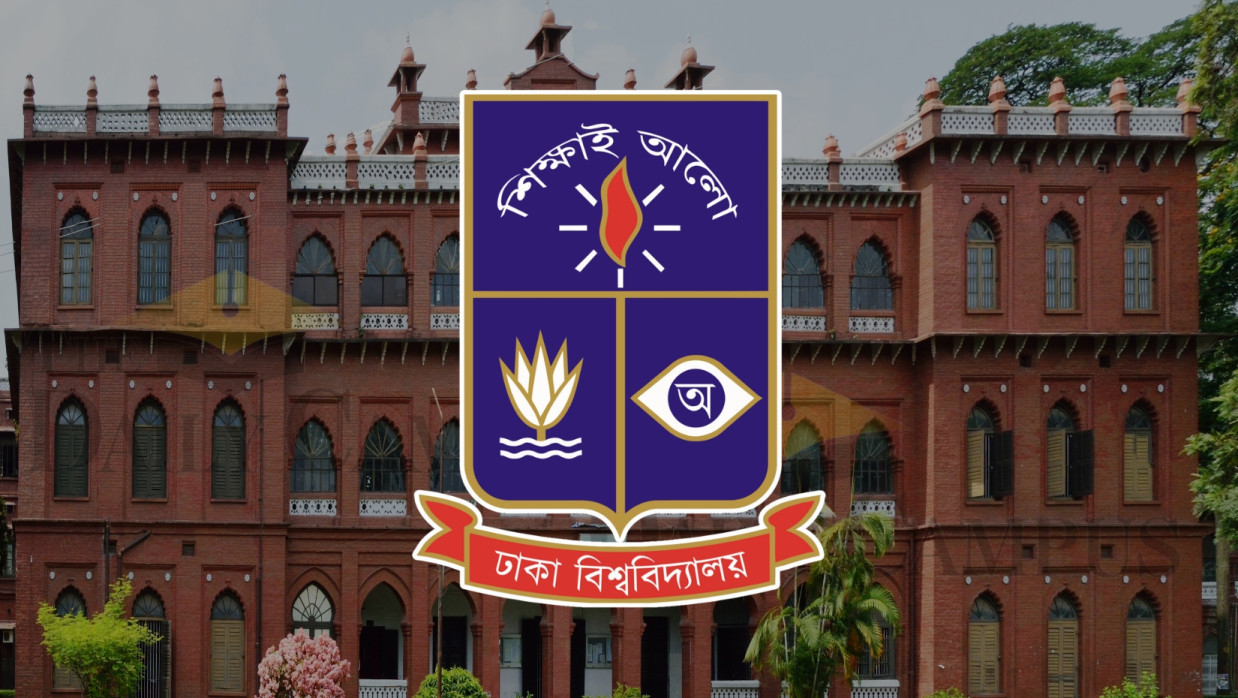
Deans of various faculties at the University of Dhaka (DU) have proposed a suite of structural modifications to the undergraduate admission test format for the upcoming 2026–27 academic session. The recommendations include scrapping the written segment of the test in favor of a multiple-choice question (MCQ) format, introducing specialized evaluation for English-medium applicants, and downscaling the total number of seats in several departments.
University authorities, however, emphasized that these proposals are currently in the preliminary stages of discussion. Policymakers are scheduled to convene immediately after the upcoming Eid-ul-Adha holidays to evaluate the recommendations before placing them before the Academic Council and the central admission committee for final statutory endorsement.
Shift to MCQ-only format proposed
According to sources present at the recent Deans' Committee meeting, the central discourse revolved around modernizing the entry examination and streamlining the grading process. Deans representing the Faculty of Business Studies, Faculty of Science, and Faculty of Engineering and Technology aligned in favor of executing an entirely MCQ-based examination by removing the descriptive written component.
Conversely, alternative suggestions were floated by some faculty heads who recommended holding the MCQ and written segments in separate shifts. Security parameters regarding question paper leaks and logistics were also reviewed, with the Dean of the Faculty of Biological Sciences recommending that the examinations be centralized exclusively within the physical perimeter of the DU campus rather than at divisional centers.
Special question structures for English-medium students
A prominent concern raised during the session was the structural disadvantage faced by English-medium, GCE A-Level, and O-Level candidates under the current bilingual examination model. Due to the high weightage placed on standard Bengali syntax and literature, many highly qualified English-medium students fail to clear the baseline requirements, subsequently driving a domestic brain drain toward foreign universities.
To preserve local talent, the committee is exploring the possibility of compiling customized, equivalent question papers tailored explicitly to the academic competencies of English-medium applicants, ensuring a level playing field during the highly competitive admission race.
Addressing zero-enrollment and seat optimization
The persistent issue of vacant seats across multiple specialized departments took center stage during the discussions. Deans noted that despite high technical demand, several core science and specialized disciplines failed to secure a sufficient headcount of qualified students who passed the institutional cut-off scores, leaving seats empty even after conducting supplementary practical examinations.
To remedy this, the committee proposed two major interventions:
-
Seat Rationalization: Following the precedent set in previous academic years, the university is considering a calculated reduction of seats in departments experiencing low applicant demand.
-
Waiting List Mobilization: A structured protocol was suggested to promptly call upon eligible candidates from the merit waiting lists to systematically fill operational vacancies.
Furthermore, the Dean of the Faculty of Science proposed a revised testing matrix where Physics and Chemistry would remain mandatory testing modules, alongside elective options spanning four additional secondary subjects.
Final verdict expected post-Eid
When approached for comment, the Acting Dean of the Faculty of Social Sciences, Professor Dr. Mohammad Moinul Islam, clarified the institutional roadmap: "The discussions held so far are strictly preliminary. We will now dispatch these points to the respective academic departments to gather localized faculty opinions. The aggregated feedback will return to the Deans' Committee, move forward to the Academic Council, and finally reach the central admission committee for execution. This is a comprehensive legislative process, and it is premature to definitively outline the exact changes at this time."
Echoing similar observations, the Acting Dean of the Faculty of Arts, Professor Abul Kalam Sarkar, stated, "The initial talks focused primarily on methodological reforms. A definitive consensus on these policy transformations is anticipated once university policymakers resume sessions following the Eid holidays."
 Follow The Daily Campus on Google News