The Significance of Sergio Gor’s Visit in Light of the ‘Bangladesh First’ Policy
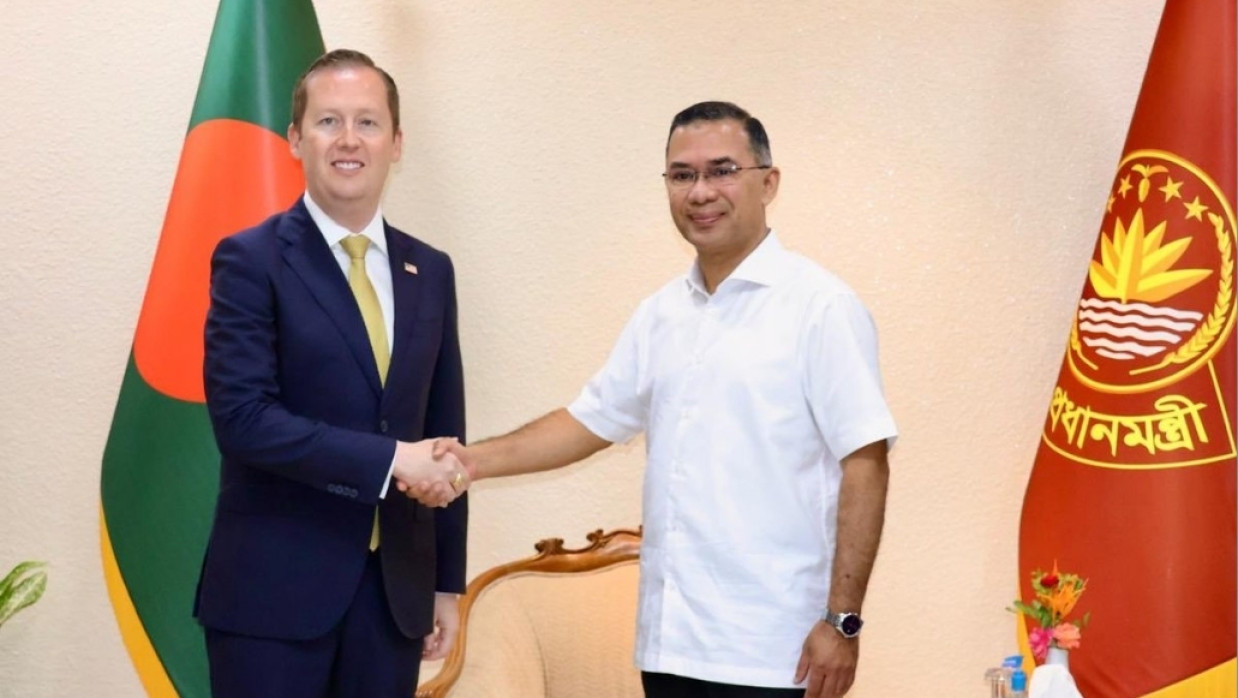
Prime Minister Tarique Rahman’s declared “Bangladesh First” policy does not mean placing Bangladesh within the strategic orbit of the United States, China, India, or any other major power. Its central principle is that the country’s foreign relations should be guided by national economic interests, public welfare, sovereignty, and long-term security. From this perspective, the recent visit of Sergio Gor, US President Donald Trump’s Special Envoy for South and Central Asia, represented an important test of how this policy operates in practice.
Gor arrived in Dhaka on July 30, 2026, for a three-day visit.
Core Principles and Economic Dimensions
The "Bangladesh First" policy rests on three fundamental principles. First, Bangladesh’s relationship with another country should not be determined by political loyalty or ideological alignment. Second, every agreement and partnership should be evaluated according to its costs and benefits for Bangladesh. Third, amid intensifying competition among major powers, Bangladesh should avoid becoming an instrument of any geopolitical bloc and instead place its national interests above external pressure. Therefore, Gor’s visit should not be interpreted as evidence that Bangladesh is adopting an anti-China position or entering an exclusive strategic alignment with Washington. Rather, it should be viewed as an opportunity to use relations with the United States to advance Bangladesh’s development, trade, investment, technological capacity, and national security.
The United States is one of Bangladesh’s largest export markets. The most immediate significance of Gor’s visit lies in its potential economic outcomes, including attracting greater American investment, expanding market opportunities for ready-made garments, securing reliable supplies of cotton, wheat, soybeans, and developing cooperation in information technology, artificial intelligence, energy, renewable power, and digital services. During their meeting, Prime Minister Tarique Rahman invited US investment in warehousing, cotton, wheat, soybeans, and the information technology sector. In turn, Gor expressed Washington’s willingness to work positively on expanding engagement through the US International Development Finance Corporation (DFC), while both sides discussed the possibility of holding a US investors’ summit in Bangladesh. If implemented, "Bangladesh First" moves beyond political rhetoric into a practical policy for creating employment, expanding exports, diversifying supply chains, and acquiring advanced technology.
Strategic Balance and the Rohingya Question
Gor’s arrival shortly after Prime Minister Tarique Rahman’s visit to Beijing gives the trip considerable geopolitical significance. Washington naturally seeks to understand the future direction of Bangladesh–China relations and Dhaka’s broader strategic priorities. Foreign Minister Khalilur Rahman, however, stated that Bangladesh’s relations with China or India were not discussed during his meeting with Gor. Bangladesh’s position remains clear: accepting Chinese investment is a sovereign right, just as benefiting from American markets, technology, investment, and development finance is part of the national interest. Bangladesh should neither allow itself to be used against China nor distance itself from the United States merely to satisfy another power, developing project-based and interest-driven relationships with all its partners.
Simultaneously, Gor’s visit to the refugee camps in Cox’s Bazar carried an important humanitarian and political message.
Maritime Dynamics, Security, and Future Priorities
In the Bay of Bengal—an increasingly important area of geopolitical competition—Bangladesh occupies a strategic intersection between South and Southeast Asia. Washington’s interest encompasses maritime security, counterterrorism, defense cooperation, regional connectivity, and Bangladesh’s role in the wider Indo-Pacific region.
A tangible sign of growing bilateral confidence was the US decision to lower its travel advisory for Bangladesh from Level 3 to Level 2. Regarding this decision, US Special Envoy Sergio Gor stated:
"The United States is committed to deepening economic and strategic relations with Bangladesh. Based on positive changes in the security situation, we are lowering our travel advisory from Level 3 to Level 2."
While this shift signals positive momentum for tourism, business travel, and foreign investment, Bangladesh must sustain this confidence by strengthening the rule of law, maintaining political stability, protecting foreign and domestic investors, and ensuring predictable governance.
To capitalize on this momentum, Bangladesh should pursue several clear priorities: set a specific timetable for the proposed US investors' summit, identify investment-ready projects in IT, energy, agriculture, pharmaceuticals, logistics, and digital services, establish a negotiating roadmap concerning tariffs and garment exports, mobilize international diplomatic support for Rohingya repatriation, subject defense cooperation to careful legal and parliamentary review, and maintain balanced relations across all major partners including China, India, the European Union, Japan, Russia, and Turkey.
Disclaimer: Written by Dr. Saiful Islam, Political Analyst and Professor at the University of Dhaka. The views and opinions expressed in this op-ed are solely those of the author and do not necessarily reflect the views, policies, or editorial position of The Daily Campus.
 Follow The Daily Campus on Google News