Four new textbooks will be introduced in the fourth grade of primary education and sixth grade of secondary education from the 2027 academic year, with all four to be printed on colour paper.
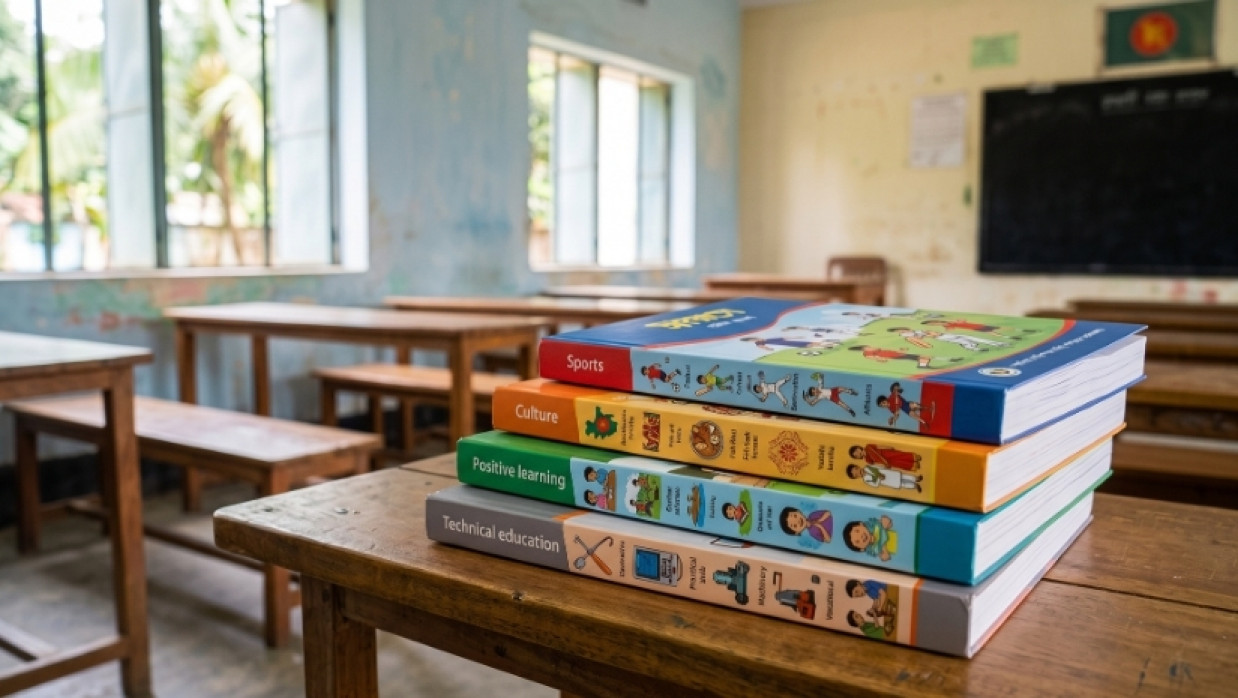
The new books are ‘Kheladhula’ and ‘Bangladesher Sangskriti’ for fourth-graders, and ‘Anandamoy Shikhan’ and ‘Amar Karigori Shiksha’ for sixth-graders. Editing of the Bangla versions has already been completed, while the English versions are at the final stage.
According to sources at the National Curriculum and Textbook Board (NCTB), around 7.2 million copies of the two new fourth-grade books and around 8 million copies of the two sixth-grade books will be printed for the 2027 academic year.
Live tenders for the books are currently underway. After the tenders are opened, the selected printing presses will receive Notices of Award (NoA), followed by contracts with the NCTB. The four textbooks will then be printed according to the supplied CDs.
Although NCTB contracts generally provide 70 days to complete printing, a shorter timeframe will be given for these books. Unlike regular secondary-level textbooks, which are generally printed in black and white, the two new sixth-grade books will also be printed on colour paper, like primary-level textbooks.
Primary textbooks are generally printed on 80 GSM paper, while secondary-level books use 70 GSM paper. The four new textbooks will all be printed on 80 GSM paper.
Sources said the editing of the Bangla versions of all four books has been completed, while work on the English versions is nearing completion. A one-day workshop will also be held, where experts, teachers and relevant stakeholders will provide feedback before necessary additions and deletions are made to finalise the books. All work is expected to be completed within this month.
What the four new textbooks will cover
‘Kheladhula’
The fourth-grade ‘Kheladhula’ textbook will contain 13 chapters aimed at introducing students to the importance of sports, rules and techniques, physical fitness and mental development.
The chapters are: importance and benefits of sports; physical exercise and workouts; football; cricket; badminton; kabaddi; chess; athletics, including running and jumping; swimming; martial arts; sports and mental well-being; sports-related accidents and first aid; and ‘Notun Kuri Krira’.
Each chapter will focus on basic concepts, rules, techniques, practice and personal development related to the respective sport. The book will also address how sports can help develop teamwork, confidence and discipline.
‘Bangladesher Sangskriti’
The fourth-grade ‘Bangladesher Sangskriti’ textbook will have 10 chapters introducing students to Bangladesh’s language, heritage, lifestyles and cultural diversity.
The chapters are: I and my culture; family and social values; language and literary culture; festivals and traditions; folk culture; arts and culture; food culture of Bangladesh; clothing and ornaments; cultures of different communities in Bangladesh; and nature and culture.
The book will help students learn about their cultural identity, the country’s heritage, the lifestyles of different communities and the idea of unity amid cultural diversity.
‘Anandamoy Shikhan’
The sixth-grade ‘Anandamoy Shikhan’ textbook will focus on developing positive attitudes, healthy lifestyles and enjoyable learning experiences among students.
The book has seven chapters covering exercise, taking care of the body, being polite, spending time with loved ones, enjoying the world, practising gratitude and ways to be happy.
Rather than focusing only on theoretical discussions, the book will use practical activities and learning experiences to help students develop positive habits in their daily lives. The initiative aims to make learning more enjoyable and student-friendly.
‘Amar Karigori Shiksha’
The other new sixth-grade textbook, ‘Amar Karigori Shiksha’, aims to highlight the importance of technical and vocational education among students of general education schools and encourage their interest in the field.
The book has been structured around John Keller’s 1983 ARCS-P motivation model, which focuses on attention, relevance, confidence, satisfaction and purpose.
Its five chapters are: dependence on skilled people, focusing on attention; easier life through technical skills, focusing on relevance; learning skills safely, focusing on confidence; technical skills for society and the nation, focusing on satisfaction; and future planning through technical education, focusing on purpose.
The book will introduce students to the importance of skills-based education, its application in real life, different career opportunities and preparation for their future working lives.



 Follow The Daily Campus on Google News