Fall of Red: Left May Be Left With No Government In India
Turn the clock back 30 years to 1996, and CPI(M) leader Jyoti Basu had been the chief minister of West Bengal for 20 years and almost became the Prime Minister of India as part of the United Front. Basu had agreed to take up the post but was overruled by the Politburo, a decision he later described as a "historic blunder".

Cut to 2008, and the Manmohan Singh-led UPA government had to face a floor test after the Left Front, which had nearly 60 MPs in the Lok Sabha, withdrew support over the Indo-US nuclear deal. The Left ruled three states in the country at the time - West Bengal, Kerala and Tripura.
Less than 20 years later, the Communists are staring at a wipeout in India as voters continue to solidify their turn to the right.
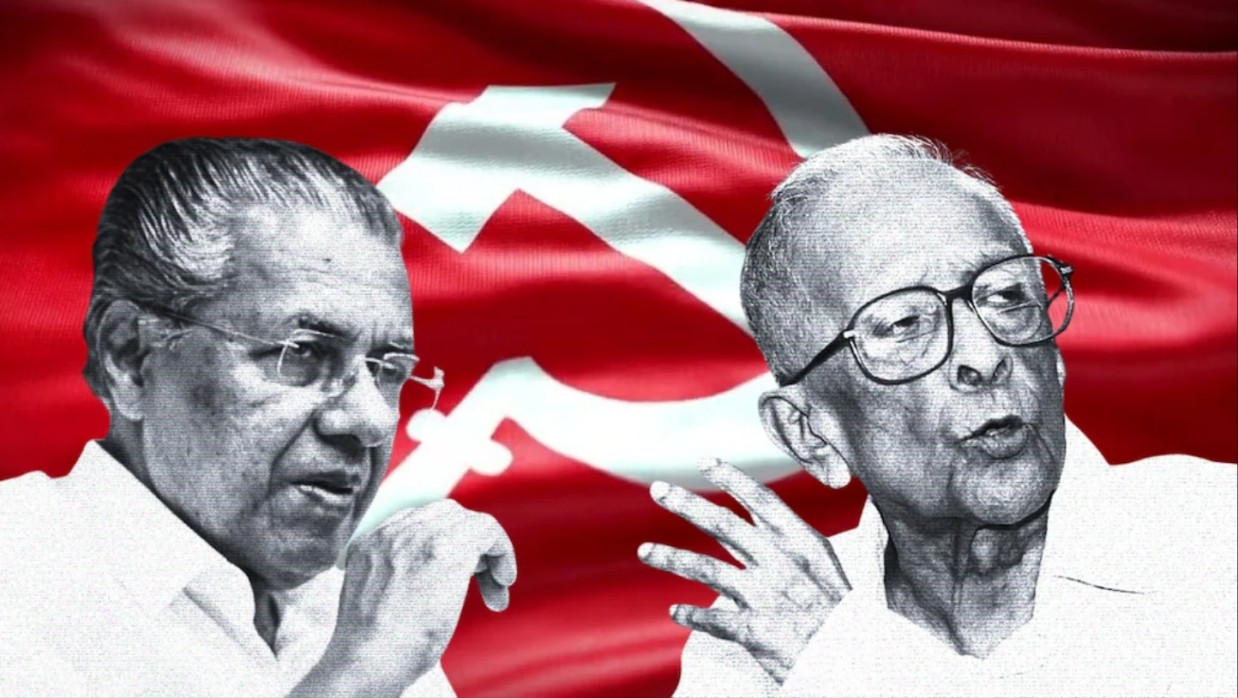
If the Left Democratic Front, led by Pinarayi Vijayan, loses power in Kerala - as trends at noon on Monday indicate it will - this will be the first time since 1970 that the Communists will not be in power in any state in India.
Ascendancy
The Left's political history in India is a storied one. When the first elections were held in the country in 1951-52, it was the Communist Party of India that had the highest number of seats among Opposition parties in the Lok Sabha.
Just five years later, in 1957, India's Left parties made history by winning the elections in Kerala and forming the world's first democratically elected Communist government in any major nation.
Then came 1977, and the CPI(M) won power in West Bengal, beginning what would be the longest uninterrupted term by a party in any state. Jyoti Basu became chief minister and remained in the chair for over 23 years, making way for Buddhadeb Bhattacharya in 2000. The Left would rule Bengal for 11 more years after that.
The Left alternated power in Kerala, but another state where it enjoyed uninterrupted success for a sustained period was Tripura.
In 1993, the Left swept to power in the state, with the CPI(M) alone winning 44 of the 60 seats in the Assembly. Dasarath Deb was the chief minister till 1998, when Manik Sarkar took over and held on to the chair for 20 years.
Fall
The Left had been on the decline, but its descent to near-irrelevance began in 2011. Riding the wave of 'poriborton' (change) and protests against land acquisition in Nandigram and Singur, Mamata Banerjee's Trinamool Congress won a brute majority in West Bengal, reducing the Left Front to just 62 seats in the 294-member Assembly, down from 235 in 2006.
Then came the Tripura blow.
The rise of the BJP at the Centre in 2014 was followed by a saffron wave in states and, in 2018, it conquered the Left's Tripura fortress as well. The party won 36 seats in the 60-member Assembly, bringing the Communists' tally down from 50 to a mere 16.

The only solace for the Left after that was Kerala, where it came back to power under Pinarayi Vijayan in 2016 and bucked the state's trend of changing governments every five years by returning to power in 2021.
As things stand at 1.30 pm on Monday, however, the Left is set to lose the southern state as well, leading in only 37 of the state's 140 constituencies against the Congress-led UDF's 88.
 Follow The Daily Campus on Google News