Bangladesh Has Its Own Rape Academy. It Is Called Facebook.
Trigger Warning: The following content discusses sexual content, paedophile networks, rape cases in Bangladesh and globally, and reports of sexual abuse against children.
Somewhere in Bangladesh tonight, a girl's photograph is being passed around a Facebook group with 78,298 members. She does not know. The photograph was taken at a wedding, or a school function, or a family lunch. Someone scraped it from a public post, uploaded it to a group organised around evaluating female children for sexual availability, and asked the membership whether she is old enough to be taken to a hotel in Cox's Bazar. The replies are coming in. Most of them are encouraging.
This is not a hypothetical. This is a documented, ongoing, publicly visible reality on the world's largest social media platform, and it is happening in Bangladesh, right now, at a scale that should have produced emergency legislation months ago.
%20-%202026-04-23T215348-751.jpg)
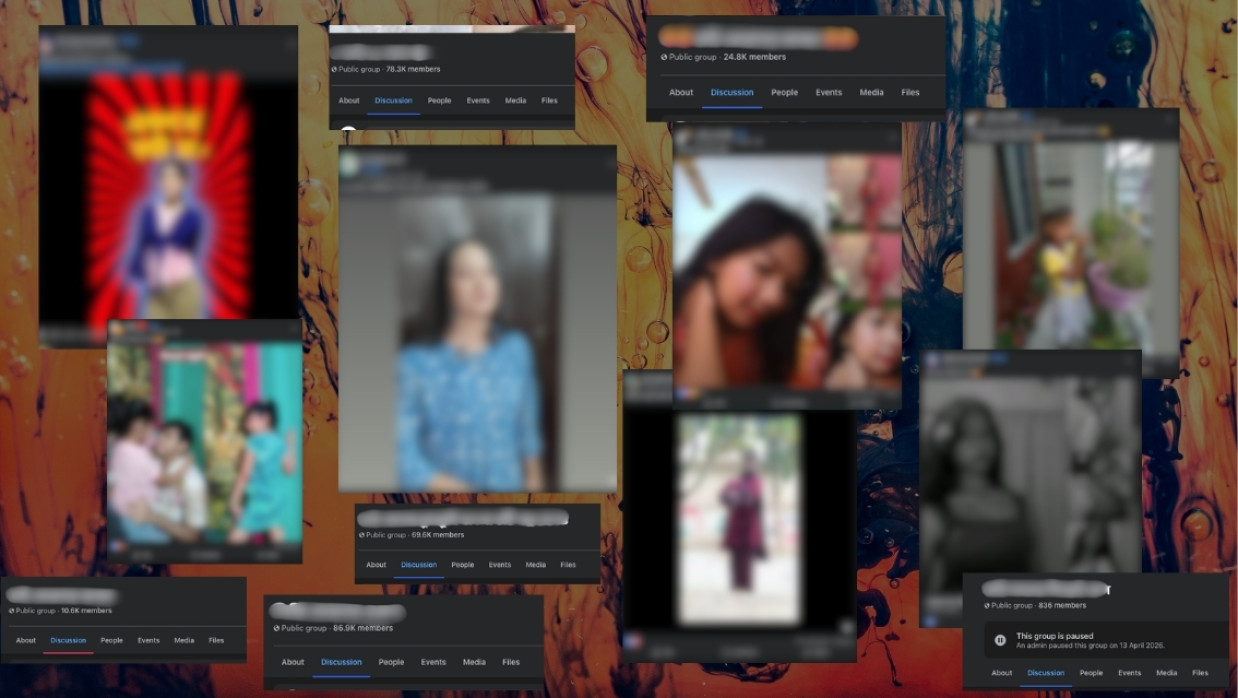
One group has 78,298 members. Another has 69,637. Another has 24,789. These are not hidden communities. They are public Facebook groups, searchable, open, and visible to anyone with an account. Their subject is female children, categorised inside the groups using the Bengali word kochi, meaning tender or young, as a tag for girls typically aged between nine and fourteen. Their cover photographs are girls in school uniforms.
A deepfake image of a child posted in one such group drew more than 76 exploitative comments. Posts regularly direct members toward private inboxes and encrypted messaging platforms, a deliberate funnel designed to move the most extreme material off the visible platform and into spaces beyond easy detection. Some groups have been removed. Every day, dozens more appear in their place.
%20-%202026-04-23T203729-733.jpg)
These three groups represent a fraction of what exists. There are hundreds of such groups, if not more. What is emerging, experts warn, is not a collection of isolated offenders but a community, a structured social environment where exploitative fantasies, criminal thinking, collective reinforcement, revenge impulses, and deep sexual frustration are gathering in one place, feeding each other, and producing something considerably more dangerous than any single member.
A Global Architecture, a Local Crisis
To understand what is happening in Bangladesh, it helps to understand what the rest of the world has only recently been forced to confront.
On March 26, 2026, CNN published the findings of a months-long undercover investigation into what it called an online "rape academy", a global network of men who drug their wives or partners unconscious, film the assaults, and teach each other how to do the same. The investigation found that this ecosystem did not disappear after the 2024 trial of Dominique Pelicot, who had spent nearly a decade drugging his wife Gisèle and recruiting men he found online to rape her while she was unconscious. Pelicot's website was shut down. The community simply migrated.
On a pornographic website (name withheld), men had built a subculture around filming unconscious women, over 20,000 videos tagged under categories including "sleep" and "eyecheck," with some individual clips surpassing 50,000 views. The site received tens of millions of visits in a single month. A number circulated widely in coverage of the CNN report: 62 million. It requires clarification. The 62 million figure represents total page visits to website (name withheld) in February 2026, not individual users, and certainly not 62 million men who actively participated in the criminal subculture.
The active membership of the associated Telegram group, "Zzz," where men traded drug dosages and livestreamed assaults, was closer to a thousand at the time of the investigation. The distinction matters: precision protects credible reporting from easy dismissal. What CNN found is damning enough without inflation.
On Telegram, men in that group sold odorless sleeping liquid for $175 a bottle, shipped worldwide, and livestreamed rapes to paying audiences for $20 a viewer. A Polish man named Piotr was arrested in early April 2026 after admitting to charges of aggravated rape. French lawmaker Sandrine Josso, herself a survivor of drug-facilitated assault, called these spaces "schools of violence", online academies where, she said, every subject needed to become a rapist or sexual predator is taught.
Bangladesh does not need to import that infrastructure. It has built its own. The difference is that Bangladesh's version targets children, operates in plain sight, and has not yet produced a single prosecution of a group administrator.
What Is Being Built Inside These Groups
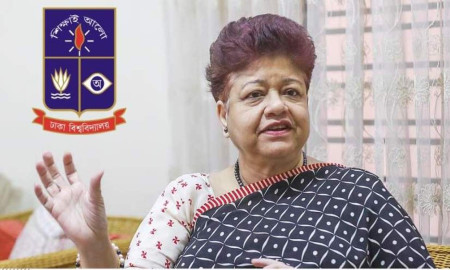
Assistant Professor Rezaul Karim Shohag, Chairman of the Department of Criminology and Assistant Proctor at the University of Dhaka, is unambiguous about the danger posed by the community dimension of these groups. He identifies the demand cycle as the engine that keeps them running: the continued consumption and sharing of exploitative material encourages its production, and production feeds more consumption.
The individuals drawn to this content, Asst. Professor Shohag explains, include what he describes as "secret deviants", people who engage in criminal or deviant behaviour when they believe the potential benefits outweigh the risks of detection. In Bangladesh today, that calculation favours the offender. Weak enforcement, absent digital monitoring systems, and significant legal grey areas have made these groups among the lowest-risk criminal enterprises in the country.
He adds a warning that every policymaker in Bangladesh must hear: due to weak enforcement and widespread sharing, these acts are increasingly perceived as common rather than criminal. Normalisation, once embedded in a community, is extraordinarily difficult to reverse. "When they find such similarities in others," he says, referring to individuals with deviant tendencies, "they can expose those parts at a greater scale. This helps the community grow."
He also highlights several distinct motivations driving participation: some members are acting on revenge or personal grievances; others are competing for online visibility through short-form exploitative content; many simply do not understand, or choose not to acknowledge, that sharing this material constitutes a criminal offence.
Asst. Professor Shohag is equally pointed about the systemic failures that allow these communities to flourish. Bangladesh's justice system, he argues, remains largely offender-centric, focused on arrest and prosecution while consistently overlooking victim support, rehabilitation, and protection.
He also identifies the near-total absence of integrated crime data and monitoring infrastructure. In comparable jurisdictions, structured crime reporting frameworks and tools such as Geographic Information Systems are used to map hotspots and enable targeted intervention. Bangladesh has no equivalent. The state is, in the most operational sense, responding to what makes headlines while the infrastructure enabling the crimes quietly expands.
%20-%202026-04-23T203724-901.jpg)
Dr. Tania Haque, Professor in the Department of Women and Gender Studies at the University of Dhaka, approaches the same problem from a different but complementary angle. These networks, Professor Haque explains, are sustained not only by those who create exploitative content but by everyone who consumes, shares, and does not report it. Each act of passive participation strengthens the structure. "This creates a self-reinforcing cycle of production, circulation, and consumption," she says, "enabling such communities to expand rapidly unless actively disrupted through coordinated intervention."
Professor Haque is particularly alert to the role of digital platform design in amplifying risks that have always existed offline, anonymity, she argues, has made these risks "more complex, hidden, and difficult to detect." The problem, she insists, is not only technological. It is rooted in social attitudes that allow such behaviour to emerge and persist without adequate stigma or consequence. The platforms did not create misogyny or paedophilia. They gave both an organisational infrastructure and a distribution network.
The Numbers Bangladesh Is Not Fully Counting
The documented statistics on child sexual violence in Bangladesh are alarming precisely because they represent only what surfaces. In the first seven months of 2025, Ain o Salish Kendra recorded 306 girls raped, a surge of nearly 75 percent from prior years. Forty-nine of those victims were toddlers. Ninety-four were between seven and twelve years old. In March 2025, UNICEF issued a formal statement expressing it was "profoundly horrified" by the rise in reported cases, including attacks occurring inside schools and educational institutions, spaces that exist specifically to protect children.
The figures for 2026 offer no reassurance. In the first three months of the year alone, at least 175 rape cases and 141 cases of violence against children were documented across print and electronic media. These are the cases that reached a journalist. Bangladesh remains a country where shame, family pressure, distrust of institutions, and the near-total absence of functional reporting pathways suppress the overwhelming majority of cases before they reach anyone at all. The documented numbers are not an approximation of the problem's scale. They are its floor.
In March of this year, a seven-year-old girl walked out of a forested area in Chattogram's Sitakunda with her throat slit. A man had lured her with chocolate, taken her by bus to an eco-park, carried her to a hilltop, and attempted to rape her. When she screamed, he cut her throat and left her to die. She managed to walk while bleeding. She died in hospital the following day.
She was seven years old. She walked while bleeding.
No legal argument and no platform policy discussion should be permitted to occupy more space than that sentence.
The Law Has Not Kept Up, and Offenders Know It
Supreme Court lawyer Faran Md Aaraf has put the central legal failure precisely: paedophilic acts are criminal under Bangladeshi law. Exercising paedophilic intentions in cyberspace is, currently, a grey area. The Pornography Control Act of 2012 prohibits the creation, distribution, and storage of pornographic material, but the majority of content in these groups consists of photographs of clothed children scraped from public sources. It falls outside the Act's operative definition. Consuming exploitative content is not itself criminalised. There is no sexual offenders registry. There is no express legislation against the creation and administration of online communities organised around the sexual targeting of minors.
AI-generated and digitally altered images, deepfakes, occupy a space that existing statutes do not reach. The deepfake image of a child that drew 76 exploitative comments in a public group sits, under current Bangladeshi law, in territory where the group administrator faces limited liability and the commenters face almost none. This is not a minor technical gap. It is a structural invitation.
Monjur Sharif, cybercrime analyst and consultant at the Criminal Investigation Department of Bangladesh Police, identifies the enforcement failure that sits beneath the legal one. The absence of formal Memoranda of Understanding between Bangladesh and major global platforms, including Meta, means that domestic law enforcement bears the full burden of response without the platform cooperation that makes response effective. The current Legal Enforcement Support Platform framework, he explains, is insufficient for crimes of this scale and complexity.
The Cyber Security Ordinance 2025 does define digital pornography, child sexual abuse material, and sextortion as serious punishable offences. But Sharif is explicit that legal provisions alone cannot close this gap. "Stronger institutional coordination and active collaboration with international platforms are essential to ensure timely action and victim protection." The law exists on paper. The infrastructure to enforce it does not exist in practice.
Posting someone's private photographs without consent constitutes a prosecutable cyber offence. But without a functioning chain from complaint to investigation to prosecution, without trained personnel, without platform cooperation, without forensic capacity, this provision is theoretical. Meta's moderation is demonstrably slower than these communities' ability to rebuild. Removed groups reappear within hours. The administrators are not afraid. They have not been given a reason to be.
The Next Front: Deepfakes and the Schools That Are Not Ready
The global trajectory of this crisis points toward a dimension Bangladesh has not yet been forced to confront at scale, but will be, and sooner than policymakers appear to appreciate.
A UNICEF survey found that sexual deepfakes of 1.2 million children were created worldwide in 2025 alone. In Spain, one in five young people told Save the Children researchers that deepfake nudes of them had been created by peers. An analysis by WIRED and Indicator found that since 2023, students from at least 28 countries, predominantly middle schoolers, have been targeted by AI-generated explicit images created by classmates and circulated through school networks. The technology is not sophisticated. It is available on a standard smartphone. The barrier to entry is effectively zero.
Bangladesh is specifically vulnerable to this next wave. Rapid growth in internet and smartphone access among young people, combined with weak platform accountability, absent digital literacy education in most schools, and the already-documented culture of nonconsensual image sharing that exists across these Facebook groups, creates precisely the environment in which this technology will be turned against children. That it has not yet been formally documented at scale in Bangladeshi schools does not indicate the incidents are absent. It indicates that no one is systematically looking.
%20-%202026-04-23T203718-773.jpg)
A teacher at a private school in Dhaka describes the ground-level reality with a clarity that no statistic can capture. She notes that exploitation does not begin online, it begins in homes and families, often so early that children lack the language or understanding to name it as wrong. This early exposure creates lasting vulnerability, making children easier to manipulate and groom later, including in digital spaces.
Many children, she observes, access smartphones and social media without any guidance, without an age-appropriate understanding of personal boundaries, and without a trusted adult they believe will respond without blame. Social stigma and the culture of silence around these issues prevent children from speaking out or seeking help even when they know something is wrong. The combination of early offline exposure, unsupervised digital access, and enforced cultural silence is not coincidental. It is the precise environment that online predatory communities are structured to exploit.
She extends this warning: "From our millennial generation, at least 70 percent of children mostly girls had faced such people, be it relatives, guards, or even drivers. Most of them kept it in the dark, and those who did such things also died with their secrets. But now they have platforms where they can discuss it." The shift from secret shame to organised community is not a minor development. It is the difference between a private disorder and a networked criminal enterprise.
What Must Now Happen
Asst. Asst. Professor Shohag calls for a holistic and coordinated response: stronger collaboration among government agencies, measurably improved law enforcement capacity, active involvement of human rights organisations, and significantly broader public awareness. He calls specifically for the development of national crime data systems and regular evaluation mechanisms, because Bangladesh cannot respond effectively to a pattern it is not measuring.
He also argues that the justice system must become genuinely victim-centric, focused not only on arrest and prosecution but on rehabilitation, protection, and compensation for survivors. Without that shift, reporting will continue to be suppressed by the well-founded fear that coming forward changes nothing.
The state must update legal frameworks to reflect the realities of AI-generated content, strengthen monitoring of online platforms, and make cybercrime enforcement functionally operational rather than aspirationally available. "Without coordinated efforts from families, institutions, technology companies, and the state," Professor Haque warns, "children will continue to face escalating risks in both their physical and digital environments."
Professor Haque draws the same conclusion from her vantage point. Families must play an active role in educating children about online safety, privacy, and personal boundaries. Educational institutions must integrate digital literacy and ethical awareness into their curricula in a sustained and age-appropriate way.
Sharif's prescription from inside the enforcement system is equally direct: formal MoUs with global platforms, an upgraded coordination framework that goes beyond what LESP currently offers, and the institutional capacity to act quickly when platforms are slow. The Cyber Security Ordinance 2025 provides the legal basis. What is needed now is the will and the infrastructure to use it.
The specific reforms Bangladesh needs are not complicated to name. Express legislation criminalising the creation and administration of online communities organised around the sexual exploitation of children. A national sexual offenders registry. Binding cooperation agreements with Meta and other platforms that make content removal fast, monitored, and mandatory rather than reactive and voluntary. Medical and law enforcement infrastructure capable of receiving survivors, trained personnel, established protocols, and a chain of accountability that does not collapse at the first institutional handoff.
The Answer to "Not All Men"
Consider what we are being asked to correct. One group has 78,298 members. Another has 69,637. Another has 24,789. These are three groups among hundreds. Their members are not anomalies in an otherwise sound social order. They are a community, organised, persistent, growing, and currently operating under the protection of legal grey areas that legislators have had ample time and evidence to close, and have not.
This piece is not an accusation directed at all men. It is a demand directed at the institutions, legislative, judicial, technological, that have had the evidence, the expert testimony, the crime statistics, the UNICEF statements, and the political opportunity to act, and have, so far, chosen otherwise.
The men running these groups are operating in daylight because the institutions with the power to hold them accountable have not exercised that power. That calculation is not fixed. It can be changed. It must be changed.
Because while this article is being read, those groups are still there. The administrators are still posting. Somewhere in Bangladesh tonight, a child's photograph, taken at a wedding, or a school sports day, or a family lunch, is being evaluated by tens of thousands of men for her availability. She does not know. She did not consent. She is waiting, without knowing she is waiting, for the institutions of her country to decide that she is worth protecting.
Shame changes sides when accountability begins. Bangladesh cannot afford to wait any longer.
 Follow The Daily Campus on Google News