2026 World Cup Ball Needs Charging Before Matches
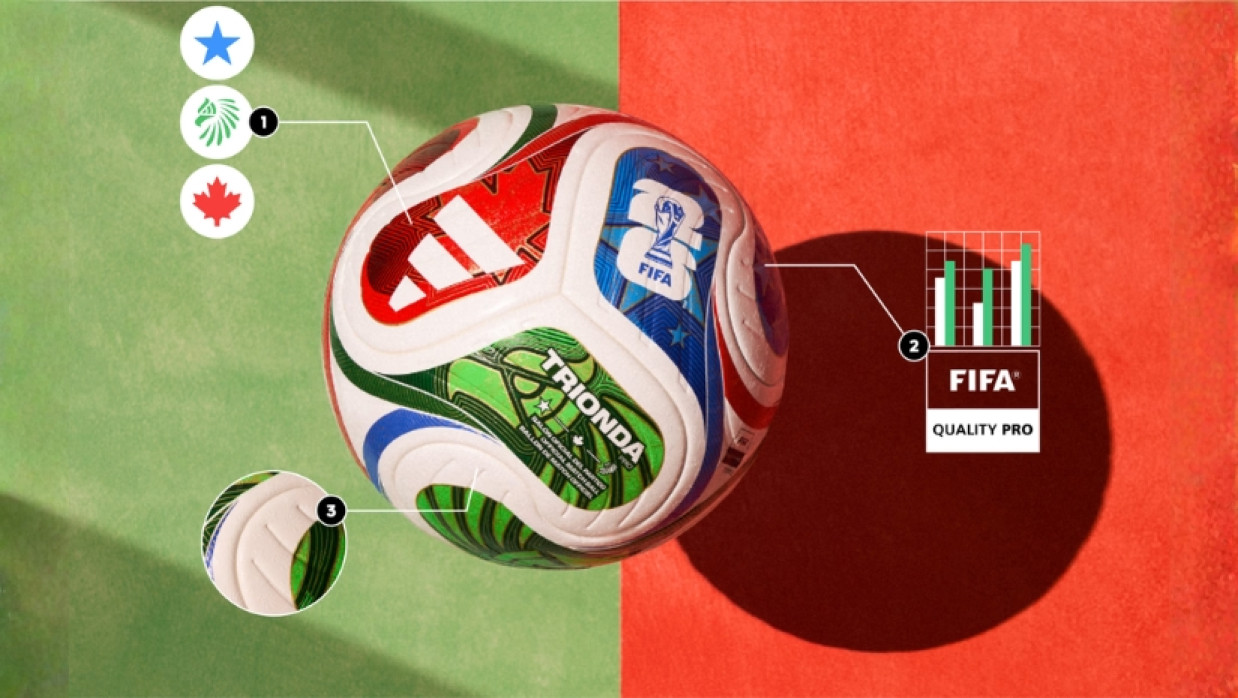
In a striking intersection of sports and consumer electronics, the official match ball for the upcoming FIFA World Cup 2026 will require a full electrical charge before every fixture, mirroring the pre-match preparation of smartphones or smartwatches. The tech-heavy ball, named "Trionda," will be deployed across host venues in the United States, Canada, and Mexico to provide match officials with real-time tracking data to expedite and refine critical on-pitch decisions.
At the core of the Trionda’s design is a highly advanced connected ball technology built around a 500Hz motion sensor chip. Suspended precisely at the geometric center of the ball, the 14-gram sensor is engineered to record spatial metrics 500 times per second, capturing every nuance of touch, velocity, trajectory, spin, and directional shift in real time.
This continuous data stream will feed directly into the Video Assistant Referee (VAR) hub, merging instantly with optical stadium tracking cameras to assist officiating crews with micro-decisions, including intricate offsides, handballs, fouls, and boundary line clearances.
The microchip is powered by a small rechargeable battery capable of sustaining continuous transmission for approximately six hours on a single charge—a window sufficient to cover a standard match including potential extra time and penalty shootouts. However, because the battery drains under operational cycles, equipment managers will be mandated to plug the balls into specialized charging docks alongside standard communication gear ahead of kickoff.
FIFA technical directors have assured competing federations that the weight distribution of the central casing has been meticulously calibrated, ensuring that the sensor does not alter aerodynamic balance or ball performance, leaving players unable to feel any physical disparity on the pitch.
While connected ball technology saw initial deployment during the 2022 tournament in Qatar, the 2026 iteration introduces a significantly faster processor and deeper algorithmic integration with Hawk-Eye and goal-line tracking infrastructures to construct real-time three-dimensional models of the play space.
Beyond its technical interior, the Trionda's external aesthetic carries intricate patterns reflecting the cultural heritage of the three host nations, with its name signifying "three waves" to honor the joint North American hosting alliance. The tournament is scheduled to run from June 11 to July 19 across 16 designated metropolitan venues.
 Follow The Daily Campus on Google News