The joke isn't Kamra's punchlines—it's the idea that India still values free speech
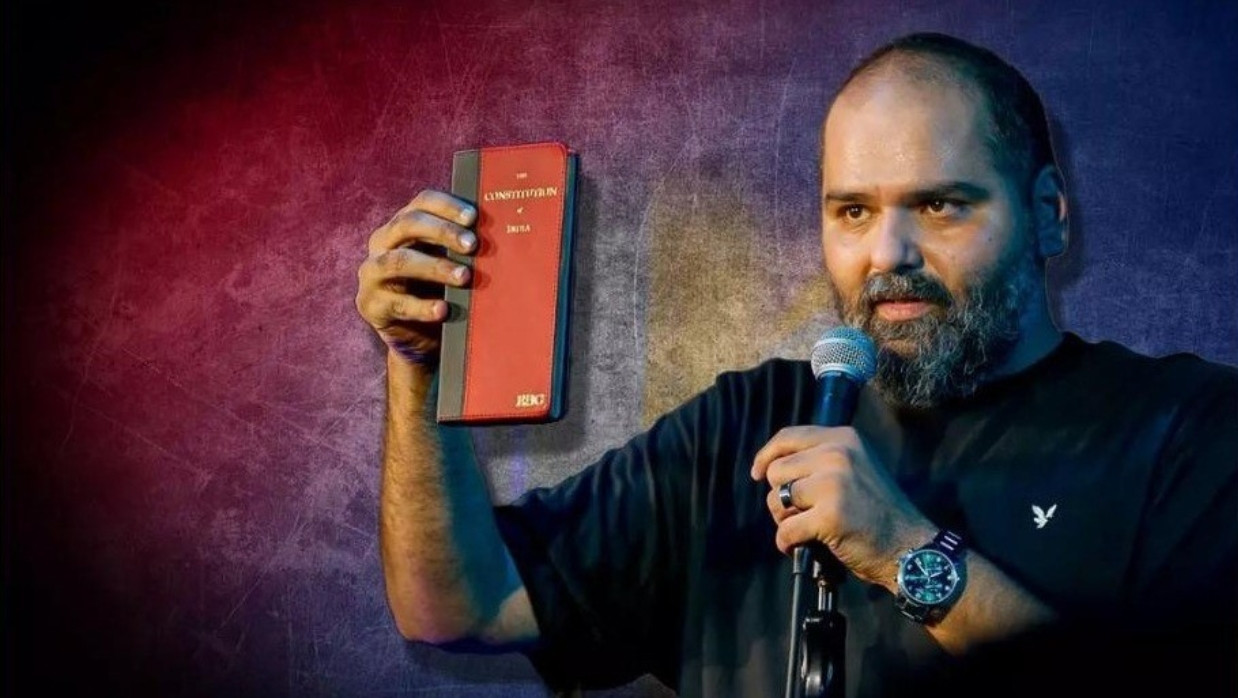
There was a time when the world looked to India as a noisy, chaotic, but ultimately triumphant experiment in democratic resilience. Today, that same democracy is being quietly suffocated—not with a dramatic coup, but through a thousand careful cuts: a journalist murdered here, a comedian prosecuted there, and laws drafted to ensure no one makes too much noise about either.
The recent targeting of Kunal Kamra—a satirist whose real crime was reminding Indians that laughter can still be a form of dissent—reveals the absurdity of the moment. In a functioning democracy, his routines would be forgettable comedy club fodder. In today’s India, they’re treated as criminal provocations, worthy of police complaints and breathless panel debates about “limits.”
Meanwhile, the killers of journalists like Mukesh Chandrakar operate with near impunity. Chandrakar, who reported on illegal mining until he was shot dead in Raigarh, represents the other end of this spectrum: not the harassment of high-profile critics, but the elimination of local truth-tellers who threaten powerful interests.
The Digital Personal Data Protection Act (DPDP) is the bureaucratic veneer over this crackdown. Sold as privacy legislation, it functions as a legal chokehold, allowing authorities to pull down critical reporting and trace anonymous dissenters with ease. It’s a pattern familiar to observers of democratic backsliding: first, intimidate the boldest voices; then, pass laws to control the rest.

What’s striking isn’t just the repression but the gaslighting that accompanies it. When journalists are killed, the discourse shifts to their 'alleged links' or 'unverified threats'. When comics are prosecuted, commentators muse about 'responsibility'. And when laws like the DPDP are challenged, the courts move glacially, as if democracy isn’t bleeding out in the meantime.
The numbers tell the story India’s officials won’t:
● A press freedom ranking (159th) is now below Pakistan and South Sudan.
● Over 10,000 sedition cases have been filed since 2014, most against activists and students.
● Freedom House reports that India’s government has become the world’s most aggressive democratic regime in demanding content removals, particularly criticism of BJP leadership.
This isn’t just India’s crisis. When the world’s largest democracy abandons free expression, it gives license to dictators everywhere. The tragedy is that India’s founders saw this coming. Ambedkar famously warned that constitutional rights are meaningless without a culture to sustain them—a prophecy now fulfilled as mobs attack comedians while waving the very Constitution they betray.
Kunal Kamra, holding aloft that document at the end of his set, exposed the regime’s hypocrisy: “This book allows me to do what I do. In its framework, we can say anything.”
Yet the same state that sanctimoniously invokes “constitutional values” granted bail to all 12 accused in the Habitat Studio vandalism—including a Shinde faction leader—despite their arrest under non-bailable charges for rioting and destroying Habitat Studio.
The question isn’t whether India will wake up to the damage, but whether it’ll do so before the last dissenting voice falls silent. Because once a democracy loses the capacity for self-criticism, it’s no longer a democracy at all—just a hollowed-out state going through the motions. As the noose tightens around free speech, we must ask: When journalists are killed with impunity and comics are prosecuted for jokes, what space remains for democratic dissent? The answer, increasingly, appears to be none at all. In the end, the joke isn't Kamra's punchlines—it's the idea that India still values free speech. And that's not funny at all.
 Follow The Daily Campus on Google News