New Textbooks to Include Khaleda Zia’s Role in Anti-Ershad and Anti-Hasina Movements
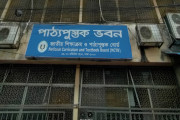
The National Curriculum and Textbook Board (NCTB) has finalized structural revisions for the upcoming academic year, incorporating the historic political contributions of former Prime Minister Begum Khaleda Zia, the November 7 Sepoy-People's Revolution, and the July 2024 mass uprising into secondary school textbooks.
Simultaneously, the board is updating the Information and Communication Technology (ICT) curriculum to include modern digital competencies such as Artificial Intelligence (AI), cyber security, cyberbullying, and media literacy.
Experts and curriculum specialists have already concluded initial workshops to finalize the revised drafts.
Historical revisions in elementary and secondary history books
According to the approved framework, major shifts are being introduced across multiple grades to accurately portray the nation's political evolution:
-
Primary Level (Class 5): In the Bangladesh and Global Studies textbook, a comprehensive chapter titled "Our Memorable Leaders" will highlight the structural contributions of Shaheed President Ziaur Rahman.
-
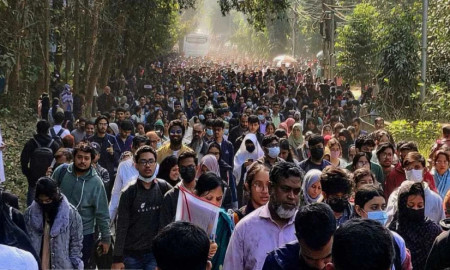
Secondary Level: The History of Bangladesh and World Civilization textbook will systematically incorporate the milestone events of democratic restoration. This includes the background of the November 7 Sepoy-People's Revolution, the 1990 anti-Ershad autocratic movement, and the recent anti-Hasina autocratic struggle, specifically highlighting the political endurance and contributions of BNP Chairperson Begum Khaleda Zia.
Reviewing the upcoming curriculum transformations, Abdul Khaleq, Secretary of the Secondary and Higher Education Division, held a high-level coordination meeting with top NCTB officials on Wednesday (May 20).
"NCTB has briefed me that from the post-independence era to the present day—including the Liberation War and the 2024 mass uprising—the precise historic contributions of leadership figures in restoring democracy are being objectively and accurately integrated into the text," the Education Secretary stated.
New subjects and modern ICT curriculum integration
Beyond historical narratives, the education board is diversifying the elementary and secondary curriculum with new standalone textbooks and tech-focused modules:
-
Class 4: A new dedicated textbook on Sports and Culture is being introduced.
-
Class 6: A specialized learning manual titled Learning with Happiness will be added to the mandatory curriculum.
-
ICT Textbook Overhaul: To address global technological shifts, secondary-level ICT textbooks are being thoroughly modernized. The updated modules will explicitly educate students on Artificial Intelligence (AI) algorithms, robust Cyber Security protocols, preventing Cyberbullying, and evaluating online information via Media Literacy.
Printing timeline on track for December delivery
NCTB officials confirmed that the international and domestic tendering processes for textbook printing have already commenced. The regulatory body announced that the mass printing of all revised and newly developed textbooks will be fully completed by December 2026, ensuring timely nationwide distribution to students on January 1. Concurrently, NCTB has initiated long-term research to formulate a comprehensive new national curriculum framework.
 Follow The Daily Campus on Google News