Policy Brief Warns
Vaccine Gaps Could Fuel Antimicrobial Resistance in Bangladesh
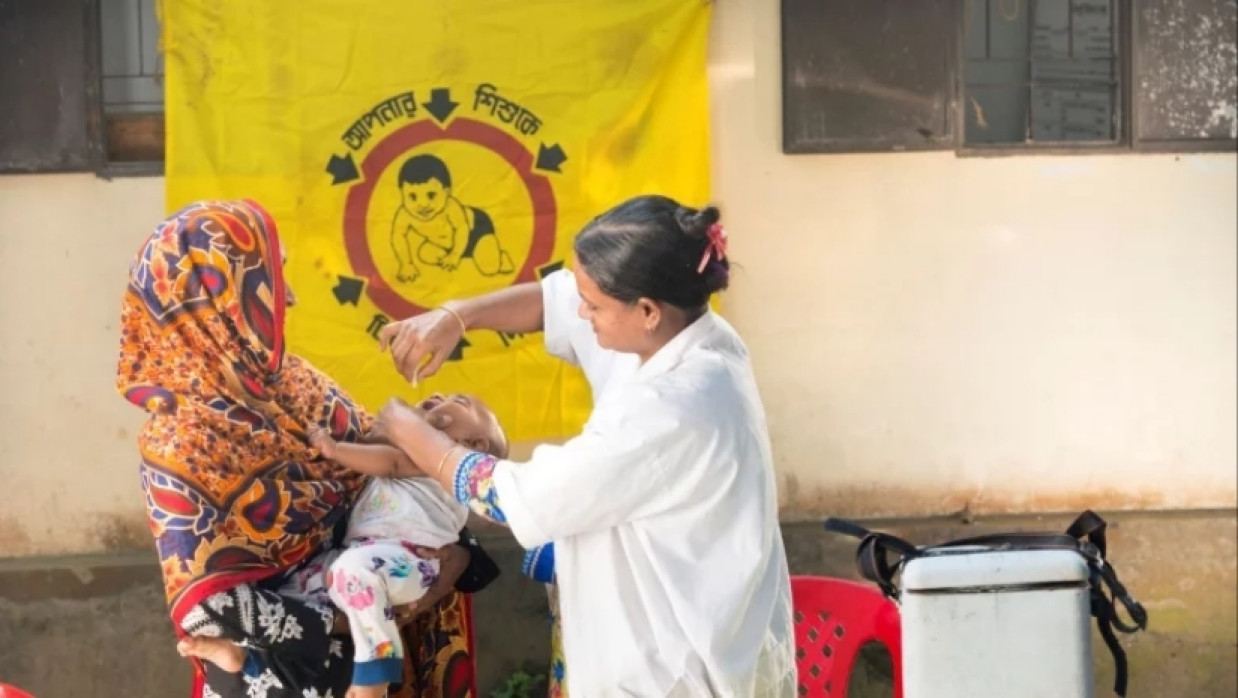
A newly released policy brief by the Global Antibiotic Resistance Partnership (GARP) has warned that widening immunization gaps could severely accelerate the crisis of antimicrobial resistance (AMR) in Bangladesh. The report highlights that vaccines must be weaponized not just to prevent infectious diseases, but as a primary frontline strategy to lower antibiotic dependence and halt the spread of drug-resistant superbugs.
The policy brief, titled "The Value of Vaccines in Mitigating Antimicrobial Resistance in Bangladesh," was jointly led by the One Health Trust and icddr,b. The publication arrives at a time when Bangladesh is struggling with a severe public health crisis, currently tracking one of its largest measles outbreaks in recent history with over 51,500 suspected cases and more than 350 fatalities recorded nationwide since the start of 2026.
The staggering cost of drug-resistant pathogens
Global scientific consensus places antimicrobial resistance among the greatest threats to modern medicine. Projections indicate that drug-resistant infections could claim more than 3.90 crore (39 million) lives worldwide between 2025 and 2050. The domestic burden is already exceptionally high. In Bangladesh alone, historical baseline data from 2021 shows that 96,878 deaths were associated with AMR, while 23,454 fatalities were directly attributable to drug-resistant pathogens. Public health specialists emphasize that every single breakthrough infection prevented by routine vaccination cuts down the unnecessary prescribing of antibiotics, subsequently slowing down mutation rates among hazardous bacteria.
A regional push for preventive healthcare
The Bangladesh policy brief is part of a broader international campaign coordinated by GARP to generate context-specific, cross-disciplinary evidence on the intersection of immunization and antibiotic preservation. A total of ten countries are participating in this evidence-gathering infrastructure, including Bangladesh, India, Pakistan, Nepal, Kenya, Uganda, South Africa, Mozambique, Côte d’Ivoire, and Vietnam.
The blueprint for Bangladesh was engineered through extensive consultations with a multidisciplinary technical working group. The specialized panel pulled together experts from the Directorate General of Health Services (DGHS), the Institute of Epidemiology, Disease Control and Research (IEDCR), Bangladesh Medical University (BMU), the University of Dhaka, the Directorate General of Drug Administration (DGDA), the ARK Foundation, the World Health Organization (WHO), and UNICEF, utilizing a comprehensive "One Health" methodology that spans both human and livestock medicine.
Recommendations to alter national AMR policy
While the report praises Bangladesh’s Expanded Programme on Immunization (EPI) for historical milestones—such as eliminating neonatal tetanus and polio—it strongly cautions that these gains are deteriorating due to disruptions in routine healthcare delivery and declining vaccine confidence across specific communities. To counteract this vulnerability, the expert group urges policymakers to formally embed immunization targets into the core of Bangladesh’s national AMR strategy.
The brief outlines three highly critical, vaccine-specific directives to immediately curb national antibiotic abuse. First, the government must regularly assess the localized field effectiveness of Pneumococcal Conjugate Vaccines (PCV) and systematically transition the national supply chain to higher-valency formulations. Second, the state needs to guarantee the permanent, long-term structural integration of the Typhoid Conjugate Vaccine (TCV) into routine childhood immunization schedules. Finally, authorities must accelerate the delayed mass introduction of Rotavirus vaccines across public health clinics to curb infant diarrheal diseases, which frequently drive incorrect antibiotic applications.
Shifting the focus from surveillance to prevention
Commenting on the launch, Dr. Wasif Ali Khan, Scientist at the Infectious Diseases Division of icddr,b and Chair of GARP-Bangladesh, noted that the ongoing measles outbreak serves as a stark reminder of how quickly immunization gaps can erase decades of socio-economic progress. He簡reiterated that vaccines are the most cost-effective defensive systems available to lower the emergence of resistant strains.
Echoing these priorities, Dr. Erta Kalanxhi, Fellow and Director of Partnerships at the One Health Trust, pointed out a critical gap in global health strategies. She noted that while the international response to AMR has historically focused heavily on clinical surveillance, preventative medicine and proactive immunization must now take center stage if developing countries are to survive the looming superbug crisis.
 Follow The Daily Campus on Google News