Where Will Billionaires and Politicians Hide if Nuclear War Breaks Out?
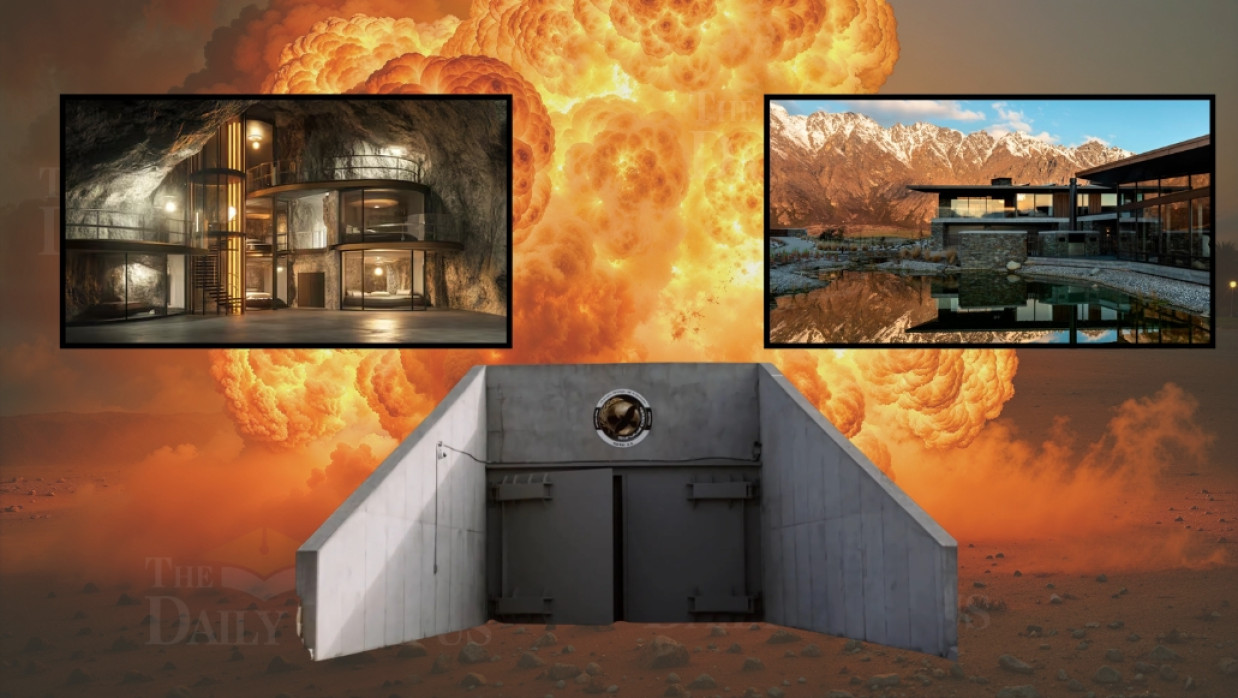
As geopolitical tensions continue to rise, with the Russia-Ukraine war entering its third year, the Israel-Palestine conflict persisting, and the recent escalation involving Iran, the United States, and Israel threatening to draw in wider regions, a small but influential group has been making private preparations for the possibility of a larger breakdown.
Billionaires, technology founders, hedge-fund managers, and some prominent political figures have been investing in remote properties and fortified retreats designed to withstand systemic collapse.
New Zealand has emerged as the leading destination. Its isolation, political stability, temperate climate, and abundant natural resources make it attractive to those modeling worst-case scenarios. Peter Thiel, the PayPal co-founder and early Facebook investor, acquired 477 acres on the South Island and obtained citizenship through the country’s investor visa program, despite limited time spent there.
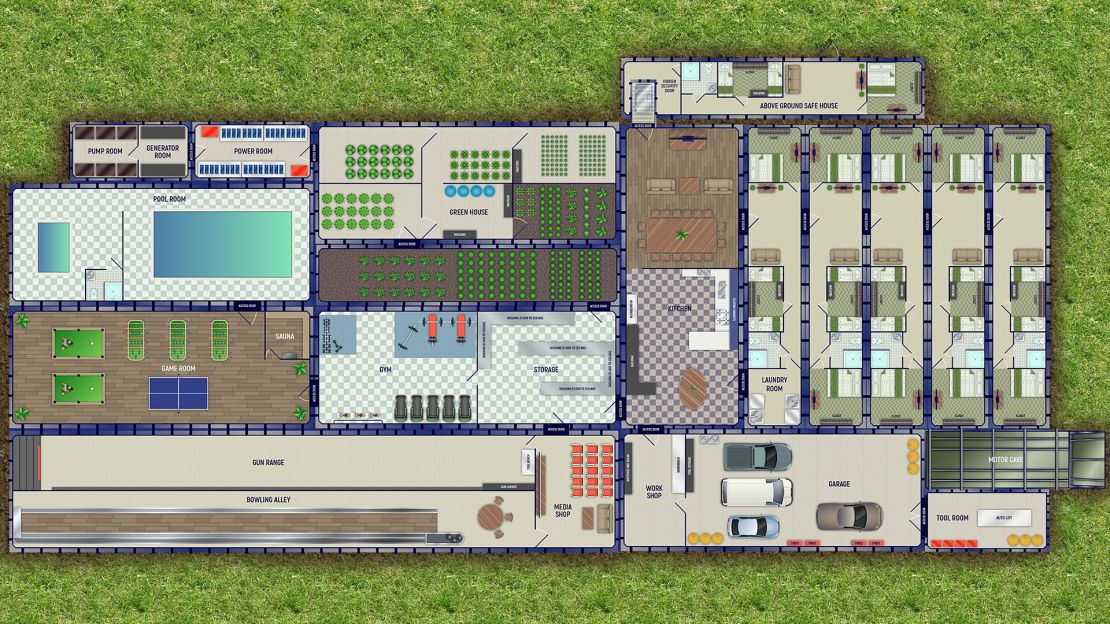
Other Silicon Valley figures have followed, often using shell companies and private trusts to keep their purchases out of public view. Security consultants specializing in ultra-high-net-worth clients report consistent demand for “off-grid” estates equipped with blast-resistant construction, independent power and water systems, medical facilities, and multi-year food supplies.
The logic is straightforward. In the event of a nuclear exchange or prolonged global disruption, New Zealand offers distance from primary targets, potential agricultural self-sufficiency, and a low strategic profile.
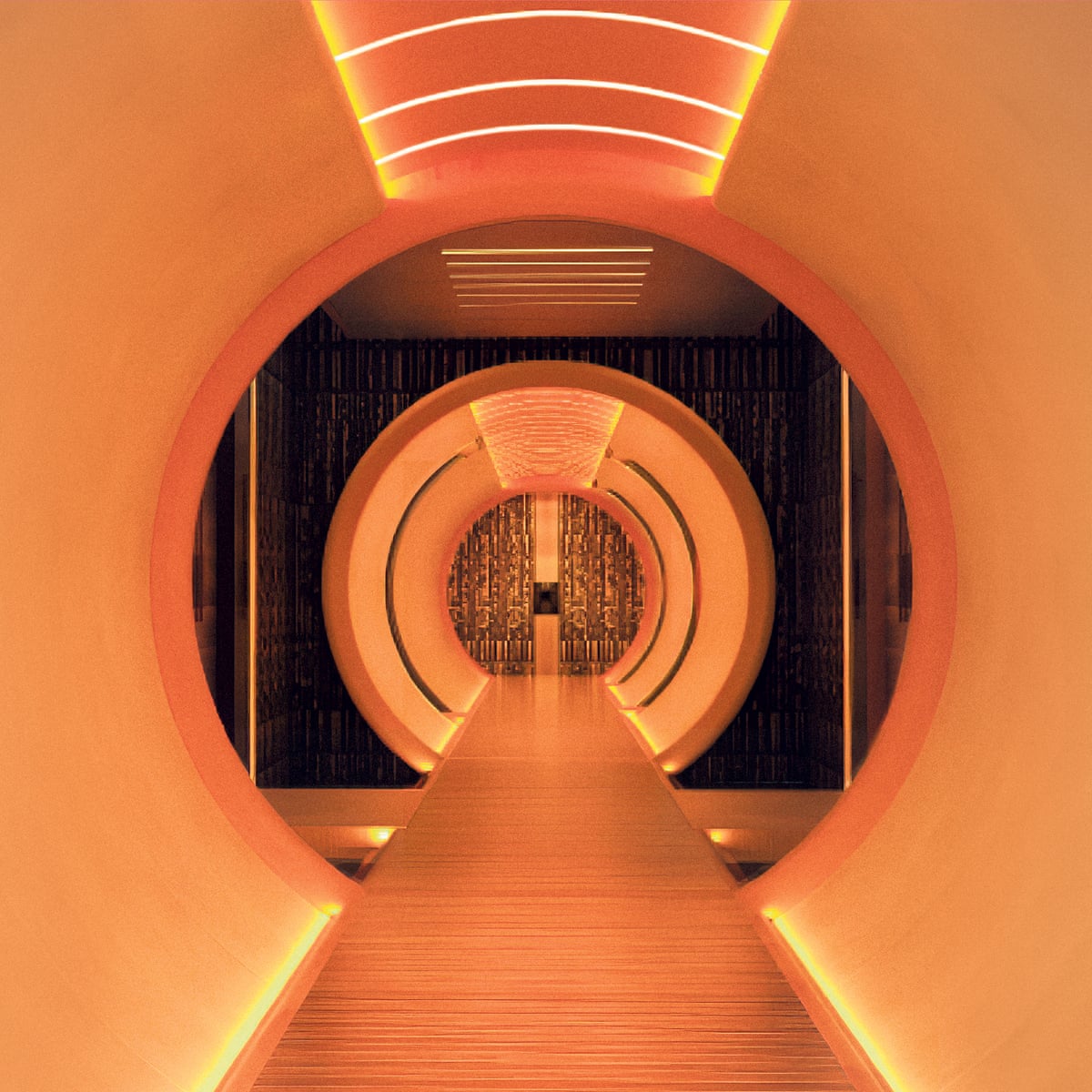
Nuclear-war modelers, including physicist Brian Toon and author Mark Lynas, have identified the southern hemisphere, particularly New Zealand and parts of Australia, as among the few places where some food production could continue through the multi-year nuclear winter that would follow a large-scale conflict.
Yet the location is not without vulnerabilities. The same models project that even in New Zealand, 68 percent of the population could perish within two years from famine and cold in a full-scale nuclear war. Bunkers may extend survival time, but they do not protect against the broader collapse of global trade, supply chains, and social structures.
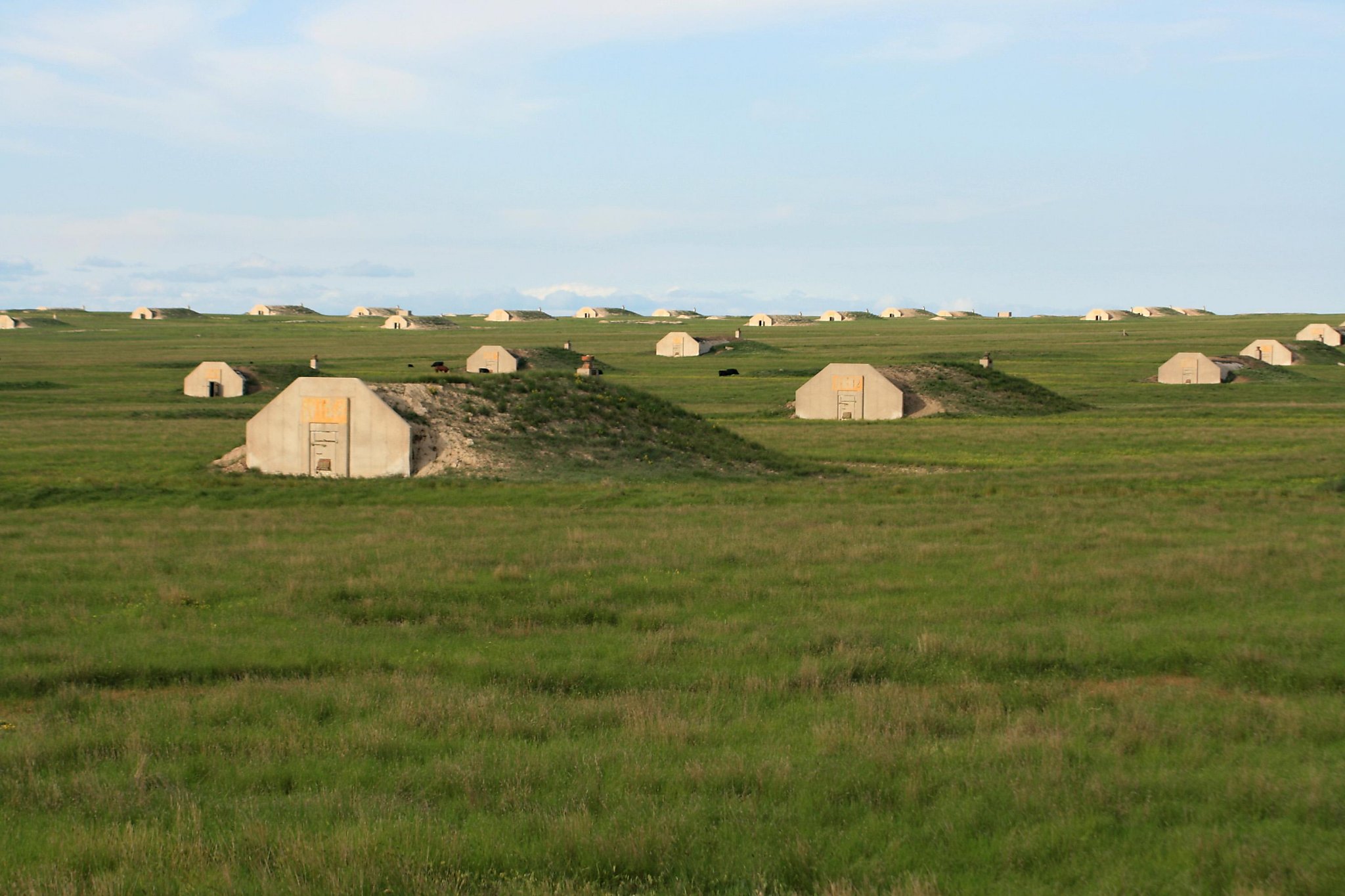
Secondary options have also gained attention. Argentina, Uruguay, and Paraguay provide affordable residency programs, stable climates, and minimal geopolitical exposure. Costa Rica offers residency for relatively modest investment. Iceland draws interest for its geothermal energy and remoteness. Australia, though more visible, remains a strong contender due to its vast land and agricultural capacity.
For those looking beyond Earth, Elon Musk’s SpaceX continues to advance plans for Mars colonization, with unmanned missions potentially launching next year, human landings by 2028, and a self-sustaining colony within two decades. Musk has described Mars as a long-term insurance policy for humanity, though critics argue that resources would be better directed toward preventing catastrophe on Earth.

Politicians and former heads of state typically rely on government continuity-of-government facilities, such as Mount Weather in Virginia or Raven Rock in Pennsylvania for the United States. For those outside official state protection, the pattern remains consistent: prioritize distance, self-reliance, and secrecy.
The quiet buildup of these retreats raises difficult questions. The same individuals who have shaped global technology, finance, and policy are now hedging against the failure of the systems they helped create. While most of humanity would face any collapse with limited options, a small group is positioning itself to endure it, whether underground, offshore, or, in some visions, off-world.
For everyone else, the message is clear: the people with the means to leave are already doing so. Whether that preparation proves prescient or simply self-serving will only become clear if the worst arrives.
 Follow The Daily Campus on Google News