Why Bangladesh Education Budget Fails to Deliver: Too Little Money and Too Much Waste

Picture this: In just one year, 1.94 million young people in Bangladesh, aged 15 to 29, remain without jobs or enrolled in education. Their aspirations are stalled due to lack of suitable employment opportunities. This figure represents one in every 14 young workers, according to the latest Labour Force Survey of the Bangladesh Bureau of Statistics released in late 2024.
Among them, 31.5 percent hold university degrees. These graduates invested years in studies, yet their qualifications often fail to secure employment. The overall unemployment rate in the country has been rising annually.
For educated youth, however, the rate surges to around 11 percent, more than twice the national average. This is not merely a statistic. It signals a brewing crisis. An entire generation risks being sidelined in the nation they were raised to contribute to.
One-third of the country's population is below 25 years of age. This substantial youth demographic should bolster national strength. Yet, as Bangladesh gears up for graduation from least developed country status in 2026, its education system remains inadequate. It is meant to fuel advancement, but falls short.
The budget for 2025-26 fiscal year, presented in June by Finance Adviser Salehuddin Ahmed, allocates Tk 95,645 crore (approximately $7.8 billion) for education. This marks a 13.6 percent rise over the previous year's revised allocation of Tk 84,311 crore. It accounts for 12.1 percent of the total national budget of Tk 7.9 lakh crore.
The figures appear impressive at first glance. A closer examination, however, reveals otherwise. As a proportion of gross domestic product, it stands at only 1.72 percent. This falls far short of the 4 to 6 percent recommended by the United Nations Educational, Scientific and Cultural Organization. Certain reports indicate it could be as low as 1.69 percent. This represents a historic low.
Such underfunding is longstanding. Over the past decade, Bangladesh has consistently allocated around 1.8 percent of GDP to education. This places it among the lowest spenders globally relative to economic size, according to World Bank data.
In comparison with South Asian neighbours, Bhutan allocates over 7 percent. India spends 4.4 percent. Even war-torn Afghanistan manages 4.1 percent. Pakistan allocates 2.38 percent. The global average stands at 4.7 percent.
In Bangladesh, per-student expenditure at primary and secondary levels amounts to only $223 (purchasing power parity adjusted). This equals just 53 percent of India's spending and 29 percent of the South Asian regional average. The gap widens further under local price adjustments. Consequently, schools suffer shortages of essentials. Qualified teachers, updated textbooks and reliable electricity remain scarce. Classrooms often emphasise rote memorisation rather than fostering critical thinking.
Prof Mohammod Moninoor Roshid of Dhaka University's Institute of Education and Research stated bluntly: "The planned amount is not even close to world standards." Experts like him advocate allocating at least 4.5 percent of GDP to education for meaningful impact. The current interim government, formed following student-led protests, has yet to reach this threshold.
Why the inaction?
Revenue inflows remain insufficient while debt servicing burdens increase. Fiscal caution prevails amid political transitions. For the first time, the national budget contracted, shrinking 0.87 percent from the previous year's original plan. This reflects prioritisation of austerity over ambitious targets.
Insufficient allocation is not the sole issue. Even limited funds face poor utilisation due to flawed planning, corruption and oversight lapses. The Annual Development Programme finances infrastructure such as schools and laboratories.
Overall utilisation reached 81 percent last year. In education sectors, however, it plummeted to as low as 2.34 percent during early months of 2025-26. Recurrent expenditures like salaries fared better at 95 percent. Delays persist as funds encounter bureaucratic hurdles or succumb to irregularities.
Consider the Third and Fourth Primary Education Development Programmes, flagship initiatives that collectively expended Tk 33,473 crore ($2.9 billion) over ten years. The third programme (2011-2017) cost Tk 18,153 crore and boosted enrolment to 97 percent and completion to 79 percent, marking gains in access.
The National Student Assessment, however, revealed limited learning improvements, with declining scores in mathematics and language. The fourth programme, launched in 2018, spent Tk 15,320 crore by 2022, prioritising physical infrastructure such as classrooms and sanitation facilities while allocating minimally to teacher training and curriculum reform.
A 2017 Asian Development Bank review rated the third programme "satisfactory" overall but highlighted quality shortcomings, citing procurement delays and uneven fund flows. As the fourth programme concludes in 2025, similar patterns emerge: impressive structures often underutilised.
More than half of children aged 10 to 14, approximately 51 percent, cannot comprehend a simple age-appropriate text. Literacy rates have risen sharply on paper, yet substantive learning progress remains elusive.
What explains this disconnect?
Sixty to 70 percent of the budget covers salaries and allowances, leaving scant resources for innovation, research and skills development. Universities direct less than 5 percent toward research, encouraging plagiarism over original knowledge creation.
Corruption exacerbates the problem. Reports indicate teacher appointments often favour connections over merit. Transparency International Bangladesh highlights widespread nepotism, with bribes facilitating postings worth thousands of dollars.
Textbook production faces irregularities, including errors and kickbacks. Probes in 2024 uncovered contracts that squandered millions. Many teachers absent themselves, citing official duties or private tutoring for supplementary income.
Coaching centres generate billions as public institutions lose enrolment. A World Bank study found 20 to 25 percent absenteeism among rural primary teachers, wasting up to a quarter of the budget. Regionally, South Asia loses $2 billion annually this way, with Bangladesh among the worst affected.
Such inefficiencies erode public confidence. Students view the system as unjust, relying on private tutors, frequently the same absent teachers. Education increasingly resembles a commodity. Urban-rural divides widen.
In Dhaka, select schools feature functional computer laboratories. Rural institutions often lack toilets or fans. A 2025 UNESCO report states 40 percent of rural primary schools have no access to clean water. Girls bear the heaviest burden, facing insecurity or dropout pressures in understaffed settings.
The consequences extend to workforce mismatches. Bangladesh ranks 106th in the 2025 Global Innovation Index out of 139 nations, unchanged from 2024. It trails Ghana (101st) and Kenya (102nd), scoring a mere 21 out of 100.
Among similar-income countries, it places 19th but ranks last in South Asia barring Nepal. High-technology exports and patents remain rare. Curricula cling to outdated content, neglecting problem-solving and digital skills.
A 2025 survey by the South Asian Network on Economic Modeling revealed widespread pessimism: 78 percent of youth believe education offers little employment prospect, rising to 90 percent among the poor. Unsurprisingly, 30.9 percent of youth fall into the NEET category, per International Labour Organisation data.
Skills mismatches drive brain drain costing billions annually. Bangladesh scores 6.7 out of 10 on brain drain indices, exceeding the global average of 4.98 to 5.55. Thousands of engineers, physicians and IT professionals emigrate yearly.
Coaching industries expand to Tk 50 billion annually. Public examinations suffer leaks and irregularities, undermining merit. The COVID-19 pandemic exposed digital divides, with 60 percent of rural students lacking internet access, a gap persisting into 2025. Climate vulnerabilities compound disruptions, with floods closing schools for weeks without resilient infrastructure provisions.
The current budget introduces measures such as Tk 2,164 crore for school feeding programmes covering 65,500 institutions across 150 upazilas to reduce dropouts. It earmarks Tk 1,626 crore for textbooks and an additional Tk 895 crore for technical and madrasa education. Pen imports face zero tax to aid low-income families.
Provisions include 60 lakh scholarships for needy students and digital classrooms for religious institutions. These initiatives promote equity yet appear incremental. Primary education allocation declined by Tk 3,416 crore, weakening foundational levels.
Secondary education received an increase of Tk 3,455 crore, akin to nourishing branches while roots wither. Absent systemic overhaul, outcomes may mirror past programmes: impressive facilities alongside stagnant quality.
Transformative steps are essential. First, commit to raising education spending to 4.5 percent of GDP by 2030, progressively reaching 15 percent of the budget. Reallocate from non-essential areas such as excess official perks. Dedicate 15 to 20 percent of university budgets to research, emulating South Korea's 4 percent GDP investment in research and development that spawned giants like Samsung.
Second, curb corruption through mandatory third-party audits for projects, electronic procurement to minimise graft, and biometric attendance-linked salaries. Indian trials reduced absenteeism by 20 percent.
Third, modernise curricula for employability, introducing practical skills, internships and coding from Class VI. Link institutions with garment factories and technology firms. Expand teacher training coverage, currently at 40 percent, offering higher salaries and rural housing incentives, potentially 50 percent premiums.
Fourth, reverse brain drain via tax incentives for returnees, dual citizenship options and diaspora-funded ventures. Publish transparent performance reports tracking learning outcomes and graduate employment to foster accountability. The ongoing Perspective Plan targeted 3.5 percent GDP allocation by now; failure risks missing Sustainable Development Goal targets for quality education.
Education is fundamental to equity and prosperity. In a nation shaped by rivers and ready-made garments, skilled youth can drive domestic growth rather than overseas remittances. Misplaced austerity, however, jeopardises the future.
Expert Opinion
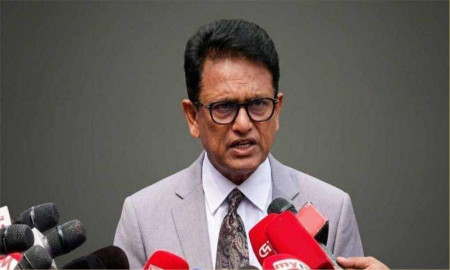
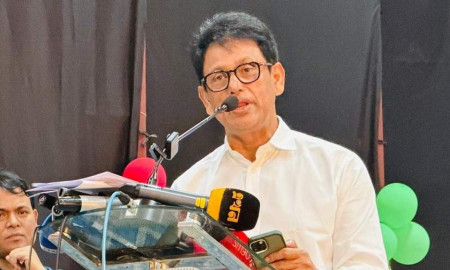
Education quality in Bangladesh exhibits marked disparities domestically and internationally, with experts citing deficiencies in teacher competence, accountability, infrastructure and funding. In an interview with The Daily Campus, Professor Mohammod Moninoor Roshid of Dhaka University's Institute of Education and Research (IER) stressed that raising standards requires competent teachers, relevant curricula, sufficient funding, facilities and supportive environments.
"These indicators allow us to assess quality from either a local or global perspective," he said.
Domestically, Prof Roshid highlighted stark variations. "Are primary schools, English-medium schools or kindergartens on the same level? Is the quality at cadet colleges comparable to that of secondary or higher secondary institutions? The answer is no," he observed.
He credited cadet colleges' superiority to superior facilities, administration, funding, monitoring, accountability and transparency. Government and private secondary schools, along with madrasas, frequently lack qualified staff, resources, laboratories and supervision.
Urban-rural gaps persist, he added.
At primary level, Prof Roshid flagged concerns over salary structures, accountability, attendance, teaching effectiveness, monitoring and facilities for teachers and pupils alike.
"If our education quality were truly improving, officials like upazila nirbahi officers would enrol their children in government schools rather than English-medium ones. Similarly, urban parents prefer private English-medium institutions over government schools," he said.
The educationist underlined acute accountability deficits, noting enforcers themselves often escape scrutiny.
Globally, Prof Roshid said Bangladesh trails neighbours. "There was a time when we competed to increase the number of A+ grades, but we must ask whether those marks truly reflect merit," he remarked.
He questioned international recognition of SSC, HSC and A/O-level qualifications, arguing many fall below global benchmarks. "We need to prioritise standardisation in line with international benchmarks," he urged.
With regret, Prof Roshid noted the post-August 5 priority should have been establishing an education commission, yet politics took precedence.
"Why didn't they focus on education? Because their own children study abroad and do not experience the local system," he observed.
Senior IER colleague Dr S M Hafizur Rahman told The Daily Campus that although shortcomings remain and desired standards are unmet, stakeholders now show greater concern and proactive engagement than before.
"Our education system does not hold a strong position globally," he acknowledged. The core problem, he said, lies in recruiting teachers lacking deep curriculum understanding and delivery capacity.
"Most appointed teachers have their own shortcomings: how can they address those of their students?" he asked.
Prof Rahman recommended elevating recruitment grades, favouring high-achieving graduates and according appropriate recognition. Universities succeed by appointing top talents as faculty, yet schools often do the reverse.
"Without quality teachers, standards will not rise," he stressed.
He criticised budget inadequacy for attracting and retaining qualified educators at school and college levels.
"Such teachers become living resources for students," he said, suggesting even professors could serve at primary level given its foundational role.
The government must reassess priorities for student welfare and ensure equitable, planned fund distribution, Prof Rahman concluded.
A 2025 International Labour Organisation report cautions that failing to create suitable jobs for millions risks unrest. The present government, born of student agitation, bears responsibility for leadership.
Increased allocation must accompany prudent expenditure. Otherwise, 1.94 million deferred aspirations could threaten national stability. Classrooms demand genuine reform, beyond mere instruction.
 Follow The Daily Campus on Google News