Holy Hajj Begins Today
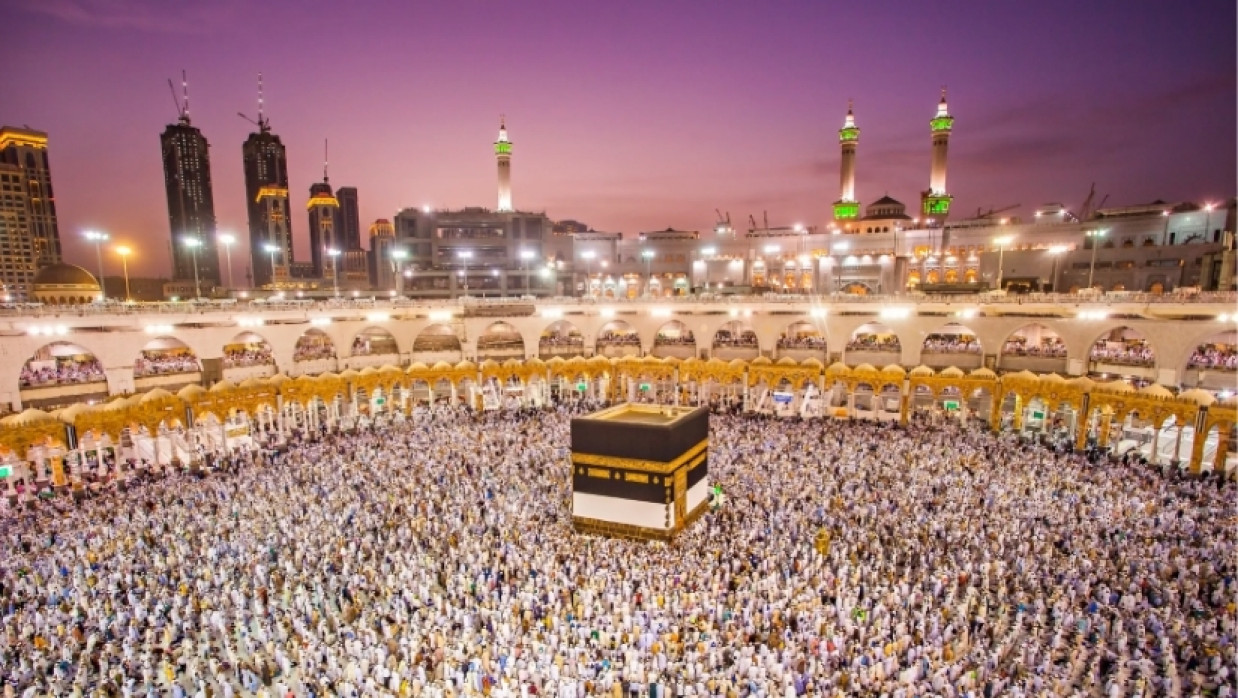
More than 1.5 million Muslims from across the globe have gathered at the plains of Arafat today, Tuesday (9 Dhul Hijjah local time), marking the absolute pinnacle of the annual Holy Hajj pilgrimage. Resounding chants of "Labbaik Allahumma Labbaik" (Here I am, O Allah, here I am) echoed across the desert landscape as an immense sea of pilgrims, unified in seamless white ihram garments, converged on the sacred site.
The gathering represents one of the largest spiritual congregations in the world, with over 78,500 Bangladeshi pilgrims—comprising 4,565 under government management and 73,935 via private agencies—among the global faithful.
The formal proceedings of Hajj commenced on Monday as pilgrims moved from the holy city of Makkah to the massive tent city of Mina. Following the dawn (Fajr) prayers on Tuesday, the pilgrims marched toward the plains of Arafat, staying from sunrise to sunset in deep reflection, prayer, and recitation of the Quran. This desert expanse holds deep historical and spiritual weight, as it is the exact location where Prophet Muhammad (PBUH) delivered his historic Farewell Sermon over 1400 years ago.
This year, Shaykh Ali bin Abdur Rahman al-Huthaify, a senior Imam and Khateeb of Al-Masjid an-Nabawi, is scheduled to deliver the definitive Hajj sermon from the Nimra Mosque. Pilgrims will perform their combined Zuhr and Asr prayers here before dedicating the afternoon to emotional supplications, seeking divine forgiveness for their past transcriptions and praying for global peace across the Muslim Ummah.
Following sunset, the global congregation will move approximately 10 kilometers toward the open plains of Muzdalifah without performing the Maghrib prayer at Arafat. Staying overnight under the open sky at Muzdalifah remains a compulsory (Wajib) ritual of Hajj, during which pilgrims will collect seven small pebbles to be used in subsequent rituals.
On Wednesday morning (10 Dhul Hijjah), the pilgrims will return to Mina to perform the symbolic stoning of the Jamarat al-Aqaba (the large pillar representing the devil). This will be followed by the ritual sacrifice of cattle, shaving or clipping of hair, and the removal of the structural ihram sheets in exchange for regular clothing. Pilgrims will then return to Makkah to execute the mandatory Tawaf al-Ifadah around the Holy Kaaba and perform the Sa'ee between the hills of Safa and Marwa.
To successfully manage the massive logistical scale of the 2026 Hajj season, the Saudi Ministry of Hajj and Umrah has executed an extensive operational strategy. State officials have conducted more than 83,000 field inspections since the start of Dhul Qadah, rigorously evaluating pilgrim accommodations, transportation networks, hospitality hubs, and tent safety standards in the holy sites.
The comprehensive monitoring framework is designed to verify full compliance with state guidelines, resolve operational bottlenecks instantly, and ensure smooth pathways for pilgrims moving through the transit corridors between Mina, Arafat, and Muzdalifah. Following the completion of the final farewell Tawaf later this week, many international pilgrims will travel onward to Medina to visit the final resting place of Prophet Muhammad (PBUH).
 Follow The Daily Campus on Google News