From Grassroots Activism to Secretary-General: The Rise of Rizvi
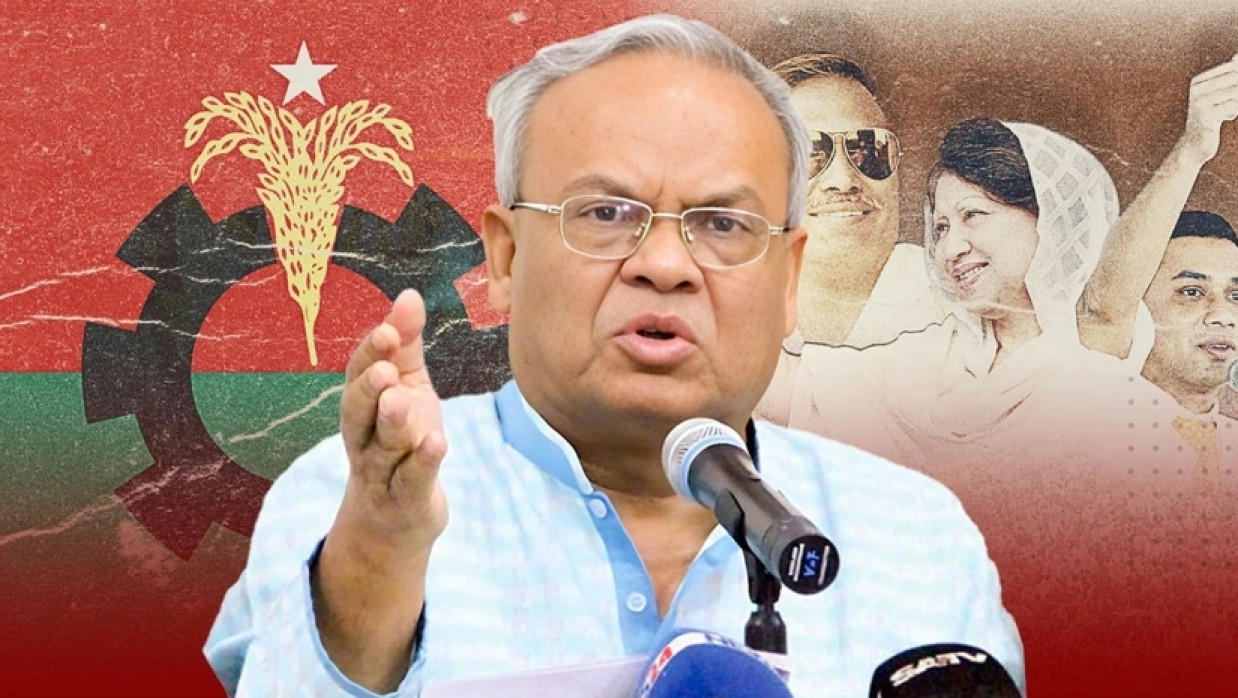
The BNP’s central office in Nayapaltan has long been synonymous with Ruhul Kabir Rizvi Ahmed. At different points, as the party’s office secretary, joint secretary general and senior joint secretary general, he became the central figure for announcing party programmes, holding press conferences, issuing statements and meeting party activists.
During some of the most difficult periods of BNP’s opposition politics, police raids, arrests, lawsuits and blockades failed to keep him away from the office. When regular party activities were disrupted by police harassment and attacks by ruling-party activists, Rizvi continued his political activities from there, helping maintain the morale of party leaders and activists. At one point, he spent 787 consecutive days away from home and family, turning the party office into his address.
Rizvi began staying and spending nights continuously at BNP’s Nayapaltan central office on January 30, 2018. He remained there during Khaleda Zia’s imprisonment and the political crisis to keep the party’s activities running. He returned home after Khaleda Zia was released on March 25, 2020.
Now, Rizvi has returned to Nayapaltan in a new role. After being appointed acting secretary general of BNP, he formally began his duties at the party’s central office on Sunday (August 23). After paying tribute at the graves of Ziaur Rahman and Khaleda Zia in the morning, he reached his office in Nayapaltan around 11am.
For many BNP leaders and activists, Rizvi’s appointment represents more than a routine change of position. It marks the rise of a leader whose political career has been deeply rooted in the party’s central office and its organisational activities to one of BNP’s highest organisational positions.
The office that became his political address
Rizvi’s association with Nayapaltan is longstanding. As BNP remained out of power for an extended period and its central office became the main hub of the party’s political programmes, Rizvi emerged as its most recognisable face.
From hartals and blockades to rallies and police raids, he remained at the office through successive political crises, communicating the party’s programmes and position. When he could not participate in political programmes outside, he often held press conferences from the office, issued statements and maintained communication with the party’s top leadership.
During BNP’s movement demanding a caretaker government in 2013, Rizvi stayed at the Nayapaltan office for nearly two months. He was later arrested from there. His office-based political activities remained a prominent feature of BNP’s politics in the years that followed.
He was also arrested after a police raid on the Nayapaltan office on December 7, 2022, ahead of BNP’s Dhaka divisional rally on December 10. The building therefore carries memories of both Rizvi’s intense organisational activity and the arrests, cases and political pressures he faced over the years.
Now in the top chair
BNP’s secretary general post fell vacant after Mirza Fakhrul Islam Alamgir was elected president on August 20. The same day, BNP’s highest policymaking body, the National Standing Committee, nominated committee member Ruhul Kabir Rizvi as acting secretary general. The appointment was made under Article 7(b-6) of the party’s constitution and took effect immediately.
Just three days later, Rizvi took his seat in his familiar Nayapaltan office in his new role. The symbolism is hard to miss. The same small room from which he spent years communicating the party’s position to the public is now the workplace from where he will perform his duties as BNP’s acting secretary general.
Many party leaders and activists point to Rizvi’s longstanding direct connection with the central office and grassroots politics as one of the defining features of his new role. With many senior BNP leaders now involved in running the government, his continued presence at Nayapaltan could help bridge the gap between the party office and grassroots politics, they believe.
A career shaped by street politics
Rizvi’s political career began in student politics. At Rajshahi University, he served as publicity secretary and later general secretary of the Jatiyatabadi Chhatra Dal. He was elected vice-president of the Rajshahi University Central Students’ Union (RUCSU) in 1989. He was active in the anti-Ershad movement at the time and was injured by police gunfire during the movement.
On June 16, 1992, he was elected president of Chhatra Dal through a vote at the organisation’s central council. He subsequently took on leadership roles in the Jubo Dal and entered BNP’s central politics.
Lawsuits, arrests and imprisonment became part of Rizvi’s political life during BNP’s long period in opposition. His role in running political activities around the party’s central office also made him one of BNP’s most visible leaders.
From office secretary to Standing Committee
Rizvi’s political rise was largely built through organisational and office-based work. Although he was not a member of parliament, he played an important role in BNP’s national politics for years.
Following the party’s sixth national council in 2016, he became senior joint secretary general. For nearly a decade, he remained one of the party’s key figures in communicating its programmes, organisational decisions and political positions to the media.
After BNP formed the government recently, he also became the prime minister’s political adviser. He was then made a member of the National Standing Committee on August 15. Five days later came his appointment as acting secretary general. In a matter of days, his political position shifted significantly, from senior joint secretary general to Standing Committee member and then acting secretary general.
Self-doubt or sense of responsibility?
After taking on the new responsibility, Rizvi spoke with a degree of self-doubt, expressing concern about whether he would be able to perform such a major role properly. While this could be viewed as uncertainty about his own abilities, his long political career offers another interpretation: a tendency to emphasise the weight of responsibility rather than his own stature.
Across nearly four decades in politics, his role has remained visible at every stage, from street movements and difficult periods at the party office to student politics and central leadership. According to BNP Rajshahi divisional organising secretary Syed Shaheen Shawkat, a longtime friend and political associate of Rizvi, each difficult test in his political career has further demonstrated his resilience, sacrifice and sense of responsibility. From student politics to national politics, he has established himself as a committed political worker, Shawkat said.
A major test ahead
Rizvi now faces significant political challenges. Keeping the party organisationally active while the government runs the state, strengthening communication between the centre and the grassroots, maintaining party discipline and ensuring effective coordination between the government and the party will be among his key responsibilities.
The challenge is particularly significant because BNP is now in government. The leader who spent years appearing before the media to announce opposition programmes and communicate the party’s position must now navigate the relationship between the government and the party, the activities of party leaders and activists, and organisational realities at the grassroots.
His return to Nayapaltan on the first day of his new assignment is therefore more than simply taking a seat at an office. The building he spent years guarding through political adversity is now where he will lead BNP’s organisational affairs.
From street protests to the Rucsu vice-presidency, from Chhatra Dal leadership to the party office, from the office to senior joint secretary general, and then to the Standing Committee and acting secretary general’s chair, Nayapaltan has remained a constant presence throughout Ruhul Kabir Rizvi’s political journey.
Now, that same Nayapaltan office has become the workplace from which he must shoulder BNP’s broader organisational leadership. The difference is that he is no longer simply one of the party office’s principal workers and spokespersons. He now sits there as the leader responsible for the party’s overall organisational direction.
 Follow The Daily Campus on Google News