A Shehnai in the Sun: How 'Roid E Aila Ga Juraite' Quietly Rewrites the Bangla Film Music
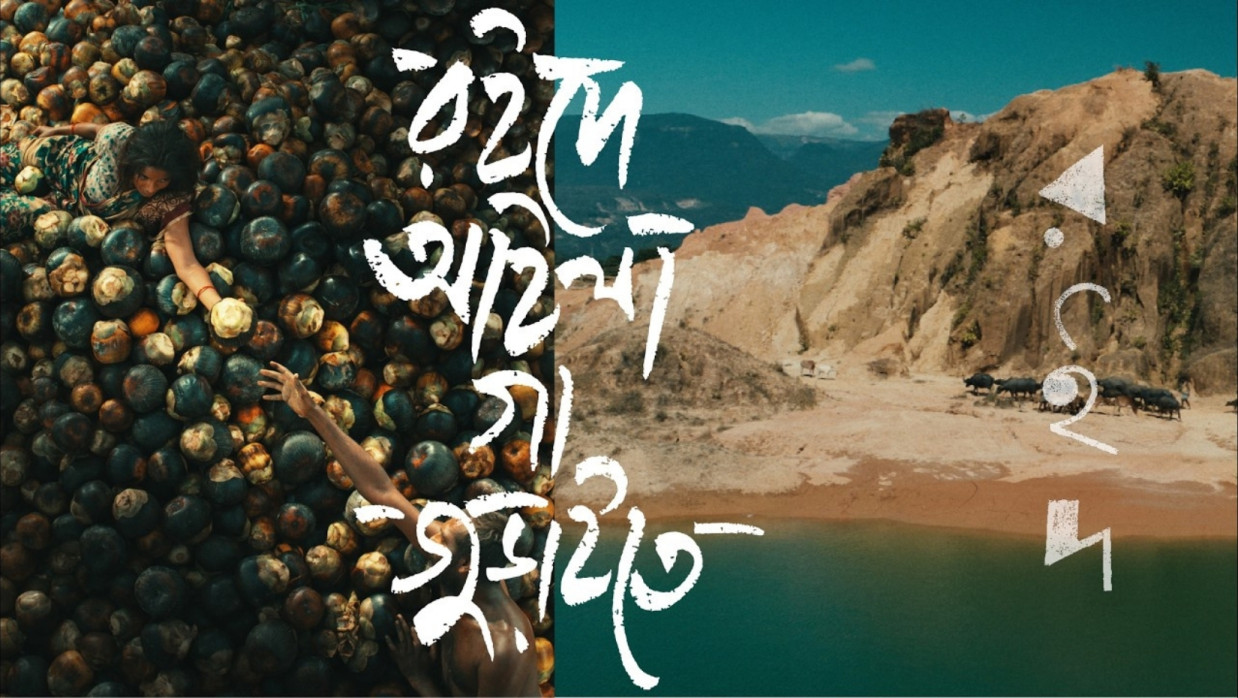
The song opens with a ghost. A shehnai enters — that ancient instrument so inextricably tied to the raucous joy of Bengali rituals — but here it sounds hauntingly solitary, its ceremony drained away, leaving only the feeling underneath. A piano follows, soft as winter rain, and together they build a world that is already fully formed by the time Raju Ahmed Raju's voice finally arrives. When he does, you realize you have not been waiting for a singer. You have been waiting for a confessor.
That is the quiet radicalism of "Roid E Aila Ga Juraite" It does not announce its departure from convention — it simply departs, and trusts you to notice.
The song comes from the upcoming film Roid, directed by Mejbaur Rahman Sumon, whose 2022 debut Hawa announced with considerable force that Bangladeshi cinema had something new and urgent to say. Four years is a long time to wait. But "Roid E Aila Ga Juraite" — a title that translates roughly to "the sun has come, cool the body" — suggests the wait was not idle. Something has deepened.
The song is the brainchild of Raju Ahmed Raju, known widely as Raju Shohojia, who wrote the lyrics, composed the melody, and delivers the vocals with a voice that carries the particular texture of someone who has learned to hold emotion in check — not because they feel less, but because they feel more than words can cleanly contain. His vocal performance does not soar or strain. It settles, like warm light through a window. That restraint is the entire argument of the song.
What makes this piece so remarkable, though, is not any single element but the conversation between all of them. Hassan Haider Khan's Shehnai does not ornament the song from above; it participates, it answers, it grieves alongside the lyric. Faizan Rashid Ahmed on bass guitar provides a pulse that is less a rhythm section and more a slow, involuntary heartbeat. MD Makhon on harmonium brings a modal warmth that roots the song in the subcontinent's classical tradition without ever making it feel museum-bound.
The piano and synth arrangements by Raseed Sharif Shoaib of Meghdal — who also mixed, mastered, and composed the album's music — give the whole structure a gauze-like shimmer, a feeling of light diffused rather than directed.
The sound is clean but not polished. Raw but not rough. It is the sound of musicians playing as if no one is recording — comfortable, alive, warm as a winter afternoon.
The backing vocals — Baby Akhter, Nupur, Tabassum, Nazrul, Makhon — hover at the edges of the mix like breath, like the kind of communal hum that rises in a room when something true has just been said. They do not compete for space. They simply witness.
The lyrics themselves are a study in literary economy. The narrator seeks relief from the sun and finds instead a "Princess of Beauty" — a figure whose presence is its own kind of radiance, a different heat entirely. Her kohl-lined eyes "speak." Her shadow is described as her soul resting on the earth. The sky, the narrator tells us, "knows" his secret. These are not new metaphors.
Bengali poetry has loved the sun, the shadow, the knowing sky for centuries. What Raju Shohojia does is restore their weight — strip away the decorative, leave only the essential — so that by the final image, when moonlight descends and sits upon the ground while the narrator talks to himself, you feel the full arc of a longing that has nowhere left to go except inward.
This is a song about veneration, not possession. About the worship of a sight rather than its capture. In an era of film music that too often mistakes volume for feeling, that conflates a swelling orchestra with earned emotion, there is something almost rebellious about a love song that chooses to whisper.
The music video, too, understands the assignment. Shot with what appears to be anamorphic lenses that give the image its characteristic oval softness and cinematic depth, it leans deliberately into chiaroscuro — into the interplay of light and shadow that the lyrics invoke. A newly married woman, dazzling in the frame, and a husband who cannot look away. The musicians themselves appear in the video, not as performers on a stage but as presences within the world of the song. The effect is of something lived-in, something stumbled upon rather than constructed.
That atmosphere of the unstaged, the uncontrived — it is no accident. The entire album is the work of Shoaib and the Meghdal sensibility: a band that has long understood that the most sophisticated production choice is sometimes to let the room breathe, to let the silence be part of the composition. The result here is music that sounds as if it has always existed and was simply waiting to be found.
Bangla film music has a complicated relationship with its own inheritance. The traditions are rich — the shehnai, the harmonium, the modal vocabulary of the subcontinent — but the pressure to modernize, to compete, to sound like everywhere else, has often pushed those roots offscreen.
Hawa navigated that negotiation brilliantly on screen. "Roid E Aila Ga Juraite" suggests that Roid may do the same in sound — not by borrowing from elsewhere, but by going deeper into what is already here: the Shehnai, the harmonium, the modal melody, the lyric that trusts its audience to sit with ambiguity and find it beautiful.
The film is set for release on Eid ul-Adha 2026. The song, already, feels like an event. Not because it announces itself loudly — it does precisely the opposite — but because, once heard, it becomes one of those pieces of music that quietly reorganizes your internal landscape. The sun comes. The body cools. The sky knows something it cannot say.
That is enough. That is, in fact, everything.
 Follow The Daily Campus on Google News