‘Moho’: Asha Bhosle Brought the Word to Flesh and Blood, The Kinnari-Voiced Legend Departs for the Other Shore
It must have been the mid-1980s. A factory town in the mofussil. Kali Puja had just ended. There was a slight chill in the air. On such a moonlit, misty night, a cultural programme was underway in a neighbourhood where the so-called “respectable” area ended.
The microphone blared all night long — no one complained back then. It was a full-night variety show. The era belonged to “voice artists” — those who performed cover versions of famous singers. The Rafi-voice artist finished his set by 11 PM. The Kishore-voice artist was scheduled much later.
Then came Miss Laila. She stepped onto the stage singing ‘Laila Main Laila’, pushing through artificial smoke under disco lights that turned the misty night electric. Moments later, in that intoxicating voice, she belted out — “Raat Baaki, Baat Baaki / Hona Hai Jo, Ho Jaane Do.”
How close that local singer came to the original magic of Asha Bhosle’s voice is hard to say today. But that cold night, past midnight, one Asha song after another poured over the field — ‘Ekta Deshlai Kathi Jwalao’, ‘Chura Liya Hai Tumne’, ‘Yeh Mera Dil Pyar Ka Diwana’. The clock kept ticking as Asha’s voice dominated. Sometimes a co-singer would add RD Burman-style beats to ‘Monica, O My Darling’. But that night belonged entirely to Asha.
Hundreds of ordinary working people, surrounded by the smell of country liquor and bidis, found something in those songs that Miss Laila could never have imagined. For a few hours, Parveen Babi and Zeenat Aman seemed to float before their eyes, while behind that fantasy stood Asha Bhosle — a kinnari-voiced woman they would never see in person.
It took great effort to get the Kishore-voice artist on stage that night. The organisers struggled to bring Asha down from the stage as the crowd kept demanding more.
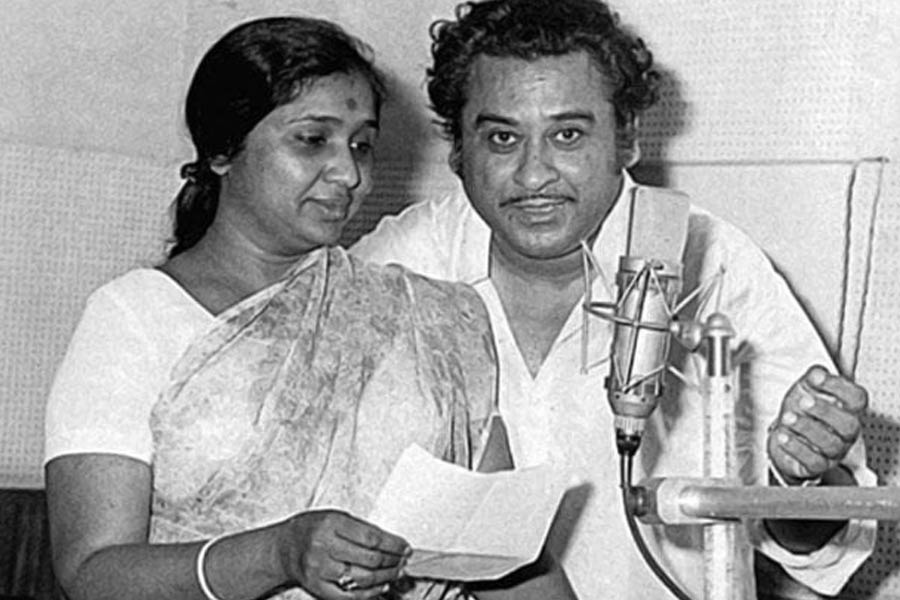
Asha Bhosle was born in 1933 in the princely state of Sangli, in a place called Goa (later part of Maharashtra). Her father was the classical musician Pandit Dinanath Mangeshkar, and her mother was Shevanti. She lost her father at the age of nine. The Mangeshkar family eventually moved to Bombay to survive. The burden of earning fell on young Asha and her extraordinarily talented elder sister, Lata.
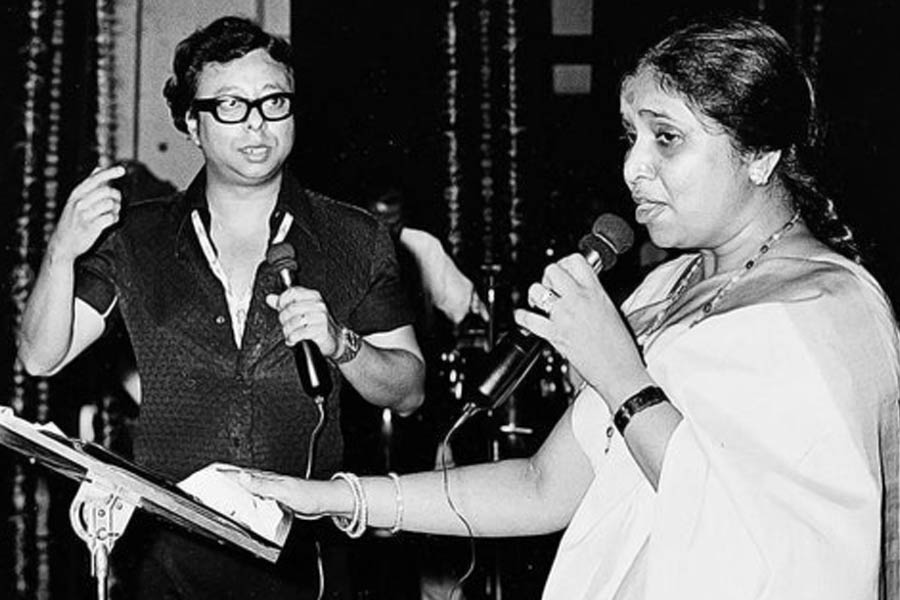
She recorded her first Marathi song at the age of ten in 1943. Her first Hindi playback came in 1948. By the 1950s, she had begun carving her own space in Bollywood. For the next three decades, she was one of the most sought-after singers.
Initially typecast for cabaret and dance numbers (what we now call item songs), Asha later proved her versatility — most notably with her sublime ghazals in Umrao Jaan. She won the Filmfare Best Female Playback Singer Award seven times and received two National Film Awards.
In Bengali cinema too, her voice became inseparable from Puja celebrations. Rahul Dev Burman’s compositions for her — ‘Kine De Reshmi Churi’, ‘Aaj Jai, Asbo Arek Din’, ‘Ekta Deshlai Kathi Jwalao’ — still echo across pandals decades later. She sang beautifully under Salil Chowdhury and Sudhin Dasgupta as well, and even lent her voice to Rabindra Sangeet.
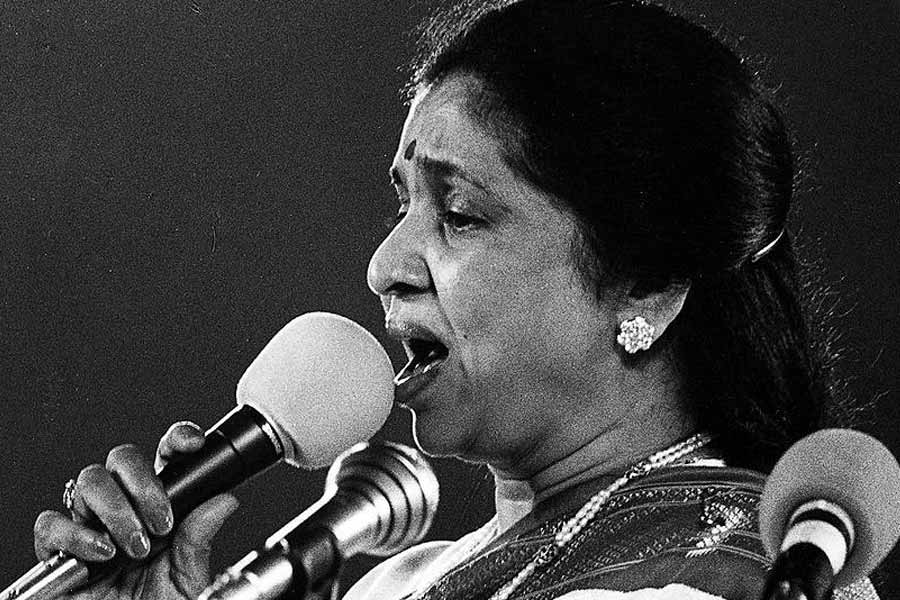
Asha’s personal life had its share of turbulence. At 16, against her family’s wishes, she married 31-year-old Ganpatrao Bhosle. The marriage ended in separation in 1960. In 1980, she married composer R.D. Burman after a long romance — a union that faced strong opposition from his family.
She continued singing into her later years, collaborating with A.R. Rahman in Rangeela and Lagaan, proving her adaptability even in changing soundscapes.
Asha received countless awards, including the Dadasaheb Phalke Award (2000), Padma Vibhushan (2008), and Banga Bibhushan (2018). In 2011, the Guinness Book of World Records recognised her as the most recorded artist in music history.
In her final years, she battled Alzheimer’s. Her voice had fallen silent long before her body gave up.
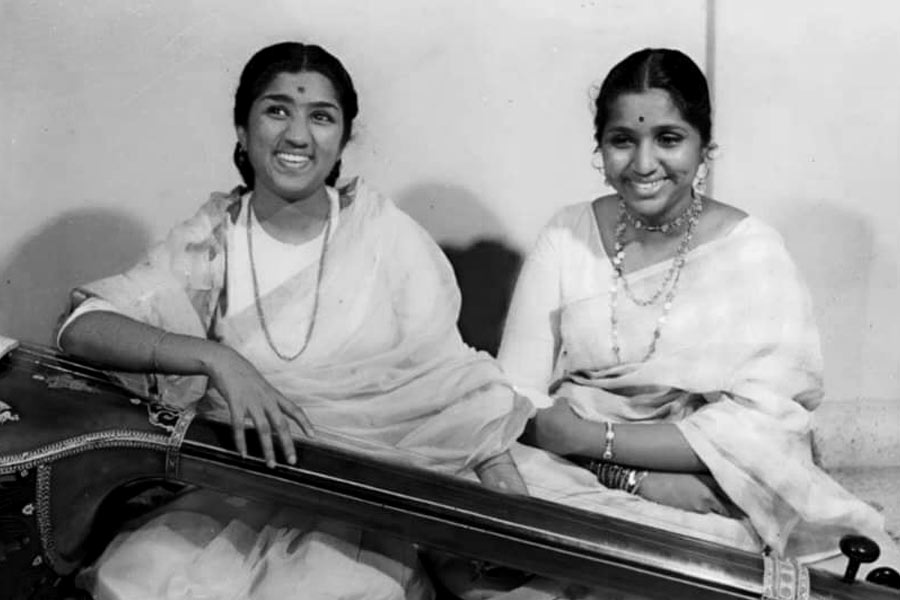
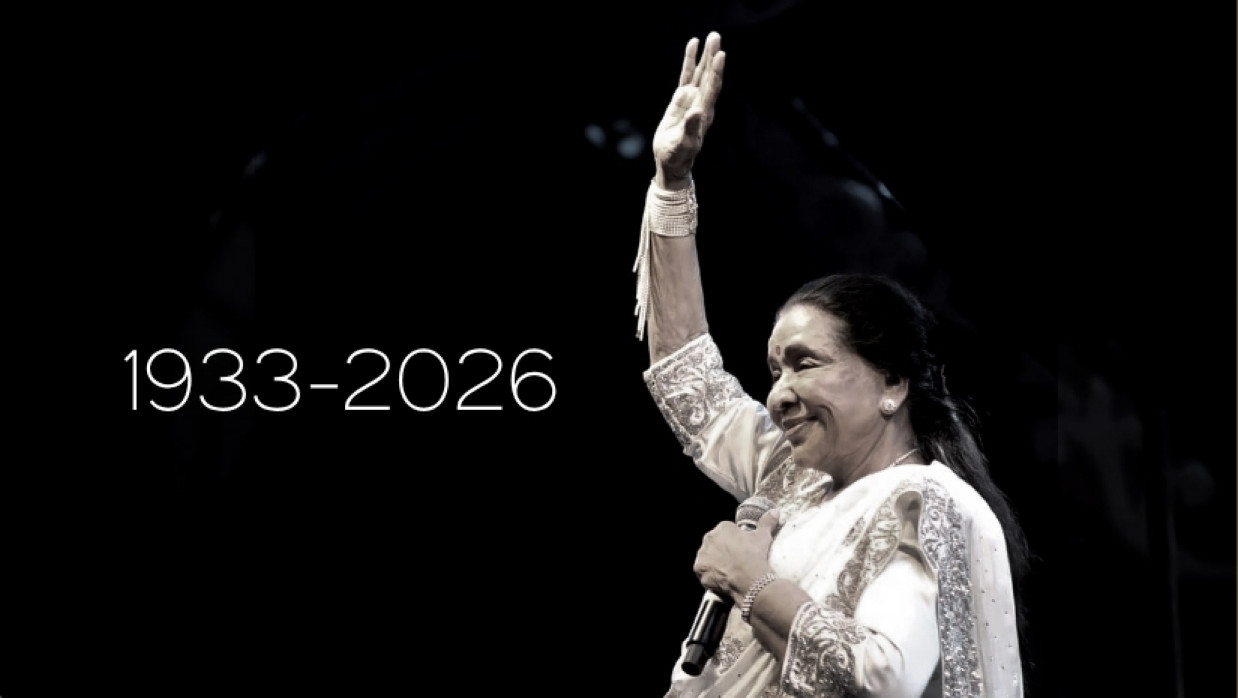
Today, that magical voice has departed for the other shore. The word ‘Moh’ (infatuation) — small yet immensely powerful — found its fullest expression through Asha Bhosle. Even at ninety-two, her passing leaves behind an irreplaceable void.
In countless pandals, homes, and hearts across Bengal and beyond, people will still hum her songs — and for a moment, feel that old enchantment again.
Asha Bhosle didn’t just sing. She wove spells. And those spells refuse to fade.
 Follow The Daily Campus on Google News