
Why Is Your Electricity Bill Going Up? Here Is What Is Actually Happening
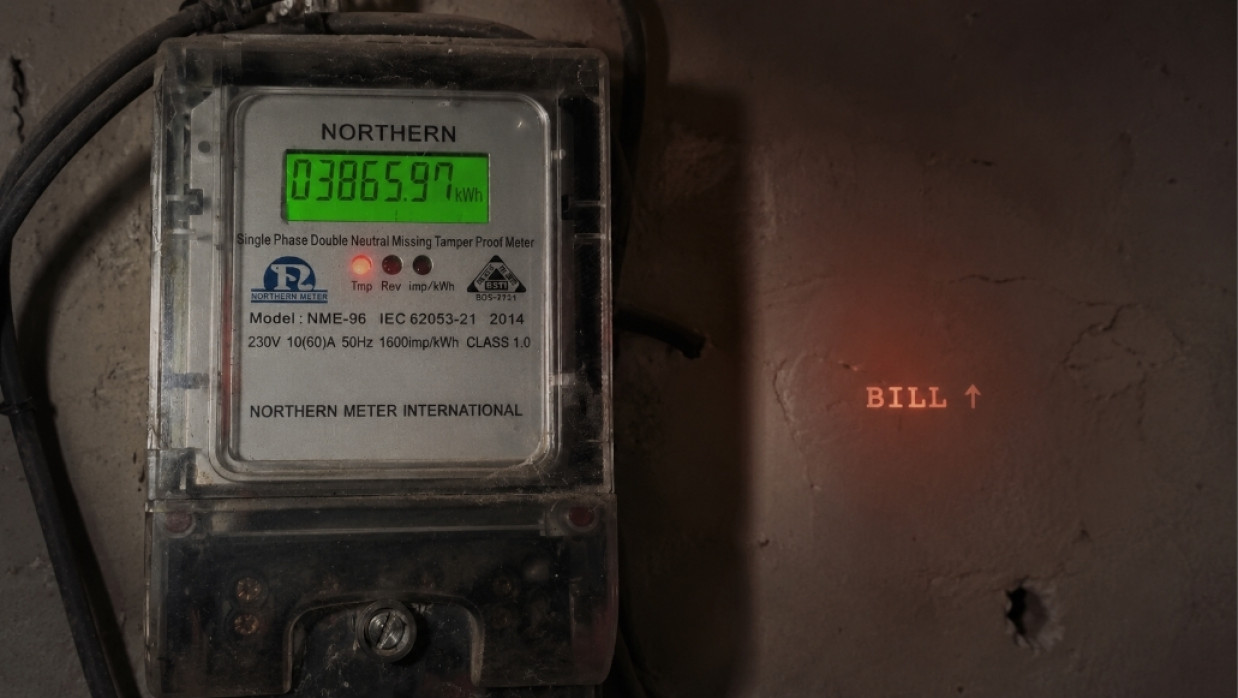
Electricity consumers across Bangladesh have reported unusually high bills in recent months, with some describing increases of double or more compared to previous months. A review of available information points to two distinct and separate causes: an official, regulator-approved price adjustment, and a separate, alleged wiring-related issue affecting an unknown number of households. This explainer examines both.
The official price increase
The Bangladesh Energy Regulatory Commission (BERC) has raised the average retail price of electricity. According to BERC Chairman Jalal Ahmed, the average price rose from 9 taka 11 poisha per unit to 10 taka 63 poisha per unit, an increase of 1 taka 52 poisha. At the consumer level, this has been described as a 16.68 percent increase.
This is not a flat, single rate applied to everyone. Bangladesh's electricity billing works on a slab system, where the rate per unit rises in steps as monthly consumption increases. Under the revised structure:
- The lifeline rate, covering the first 50 units, is 5 taka 32 poisha per unit.
- The first slab, from 0 to 75 units, is billed at 6 taka 18 poisha per unit.
- The second slab, from 76 to 200 units, is billed at 8 taka 50 poisha per unit.
- The third slab, from 201 to 300 units, is billed at 9 taka 10 poisha per unit.
- The fourth slab, from 301 to 400 units, is billed at 9 taka 62 poisha per unit.
- The fifth slab is billed at 15 taka 01 poisha per unit.
- The sixth slab, above 600 units, is billed at 17 taka 35 poisha per unit.
At the wholesale level, the average price stands at 8 taka 39 poisha per unit, with a separate transmission tariff, also known as a wheeling charge, of 38.86 poisha.
What this means for an ordinary household: because the rate per unit increases at each slab, a household that consumes more electricity does not simply pay proportionally more, it pays a higher rate for every additional unit once it crosses into the next bracket.
This is why two households with different consumption levels can see very different percentage increases in their bills, even though the underlying tariff structure is the same for everyone. Importantly, this pricing structure, including per-unit charges, demand charges, and VAT, is identical for both prepaid and postpaid customers. There is no difference in the core rate between the two systems.
Separately, there are some administrative differences between prepaid and postpaid billing that are not related to the price hike. Postpaid customers are not charged a meter rental fee, while prepaid customers reportedly pay a monthly meter charge of 40 taka, intended to offset the cost of the prepaid meter itself over time. Prepaid customers also reportedly receive a 0.5 percent rebate that is not available to postpaid customers. Neither of these factors was described as a driver of abnormal billing; they are described as standard, pre-existing features of the two systems.
Taken together, the BERC-approved tariff increase explains a moderate rise in bills, consistent with roughly 16.68 percent at the consumer level. It does not, on its own, account for bills that have reportedly doubled or more.
Allegations of abnormal, disproportionate billing
Alongside the official electricity tariff increase, consumers across the country have reported unusually high bills, with some claiming that their charges have risen far beyond what the revised rates would account for. Similar complaints have been reported for both prepaid and postpaid meters, including allegations of bills doubling or increasing even further. These claims, however, have not been independently verified at a national or systemic level.
A detailed case study illustrates how one such billing discrepancy was investigated. The consumer first checked whether the applicable electricity slab rates had been correctly applied to the bill. The rates were found to be consistent with the current tariff structure. The meter readings were then examined to determine whether the billed number of units had been calculated correctly, and that calculation also appeared to be accurate.
The main discrepancy was found in the amount of electricity recorded as consumed. The June bill showed 218 units of consumption, compared with 151 units in May—a rise of 67 units. According to the consumer, the increase did not correspond with any significant change in normal household electricity usage.
To estimate actual consumption independently, a power-monitoring device was used to track major appliances, while manual calculations were made for appliances that were not connected to the device, including a refrigerator, water motor and lightbulbs. The combined estimate suggested that the household should have consumed around 155 units during June, broadly in line with the previous month's 151 units but substantially below the 218 units recorded on the bill.
The discrepancy was then examined through a controlled 24-hour test comparing the electricity meter with the independent monitoring system. During the test, the meter recorded approximately 8 units of consumption, while the monitoring device and manual estimates accounted for only around 3 to 3.5 units. This left an unexplained difference of roughly 4.5 to 5 units over a single day.
The findings indicate a significant gap between the consumption recorded by the meter and the amount independently accounted for in the test. However, the case does not by itself establish the cause of the discrepancy or prove that similar problems are occurring across the wider electricity network. Further technical testing would be needed to determine whether the difference was caused by unmonitored electrical loads, measurement limitations, wiring issues, meter malfunction or another factor.
The alleged mechanism: The consumer's meter displayed a warning light labelled "TMP." According to the consumer's own research, this indicator activates when there is a detected mismatch between the electrical current flowing into a household through the "phase" wire and the current returning through the "neutral" wire. Meters are designed to measure both directions of current flow, and a significant mismatch between the two can cause the meter to flag a possible tampering condition, illuminating the TMP light.
The consumer identified a wiring configuration in their home in which the household's earthing wire was connected to the neutral line at the main distribution panel, a setup they said is common in many homes, including their own, and had reportedly existed for a long time without apparent issue. This connection meant that some of the returning electrical current could bypass the neutral wire and travel instead through the earthing wire. Because the meter could not register current flowing through this alternate path, it detected a mismatch between incoming and outgoing current, which the consumer alleges triggered the TMP warning and, potentially, an inflated unit count.
After disconnecting the earthing wire from the neutral line, forcing all returning current back through the neutral wire, the consumer reported that the TMP warning light turned off and a follow-up 24-hour reading showed consumption of 1.88 units, closely matching an independently monitored figure of around 1.1 units plus estimated appliance use, a gap the consumer described as consistent with normal usage.
What remains unconfirmed: The consumer raised two questions that, according to their account, remain unanswered. First, whether there is a specific threshold of current mismatch that, once crossed, triggers an automatic higher unit count as an anti-tampering measure. Second, whether any recent changes, faults, or malfunctions in the broader electricity grid may have made it more difficult for current to flow normally through neutral lines, potentially increasing reliance on alternate paths such as earthing wires and pushing more meters past such a threshold. The consumer stated they could not draw a firm conclusion on either question without further testing or input from grid engineers, and invited people with relevant technical expertise to respond.
The consumer also cautioned that this fix, disconnecting an earthing wire from the neutral line, was specific to their own household wiring and should not be attempted by others without professional or expert guidance, given the safety implications of home electrical wiring.
The response from authorities
According to the account under review, the electricity department has said it will take a stricter stance against what it describes as misinformation regarding billing complaints. The consumer noted that the department's public statements on the matter changed during the course of these events. Public frustration over allegedly abnormal bills and the position taken by authorities have, according to this account, not yet been reconciled.
Two separate issues are contributing to complaints about high electricity bills. One is confirmed and applies broadly: BERC has raised the average retail price of electricity from 9 taka 11 poisha to 10 taka 63 poisha per unit, a 16.68 percent increase at the consumer level, applied through the slab system described above, equally for prepaid and postpaid users.
The other is unconfirmed at a systemic level, but has been alleged by multiple consumers nationwide: bills rising far beyond what the new tariff explains, in some cases described as double or more. One documented individual case traced this to a specific home-wiring configuration, involving the earthing connection at the meter's neutral line, that may have caused a meter to register a current mismatch and, allegedly, inflate the unit count.
Whether this same mechanism explains other consumers' complaints of abnormal billing has not been independently verified, and the underlying technical questions, including whether an anti-tampering threshold is involved and whether any changes have occurred in the wider grid, remain open. Consumers experiencing bills far in excess of what the new tariff would explain may wish to have their home wiring inspected by a qualified electrician, while treating the broader question of whether this affects other households as still unresolved.
Credit: This article was inspired by an explainer video by Imtiazul Haque on the StoryHead YouTube channel, which served as a source for the discussion on rising electricity bills.
 Follow The Daily Campus on Google News