Dhaka University to hold 54th convocation in January after four-year gap, eligibility announced
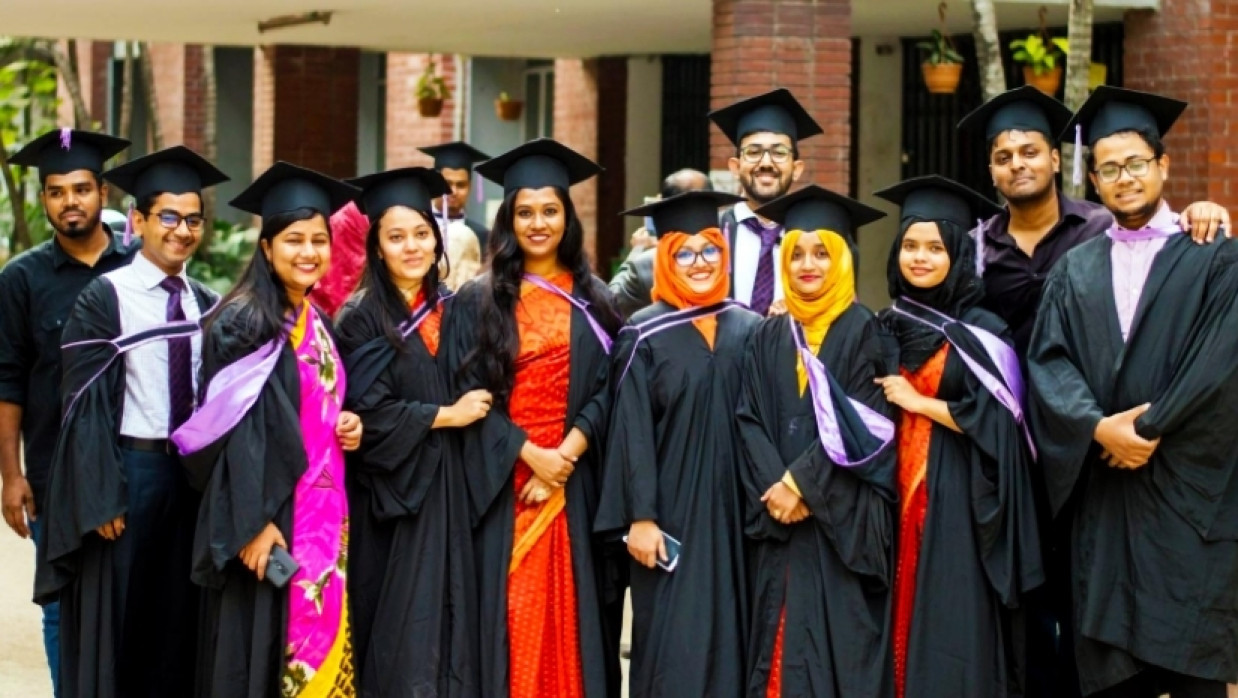
The University of Dhaka (DU) will hold its 54th convocation on January 26, more than four years after its previous convocation, with the university administration announcing who will be eligible to participate.
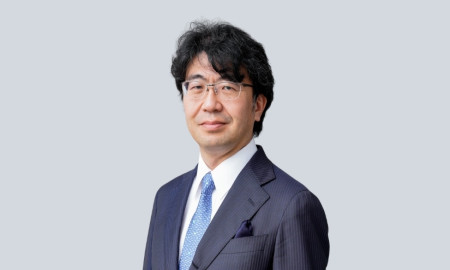
Professor Dr Atsushi Sunami, president of Japan's Sasakawa Peace Foundation (SPF), will attend as the convocation speaker and receive an honorary Doctor of Laws degree.
The university's latest, 53rd convocation was held on November 19, 2022, with 30,348 graduates participating. A total of 153 gold medals were awarded, while 97 recipients received PhD degrees, two received Doctor of Business Administration (DBA) degrees and 35 received MPhil degrees.
According to the university administration, graduates and medal recipients whose examination results were published between November 20, 2022, and November 30, 2026, will be eligible to participate in the 54th convocation. Applications will open on November 1 and continue until November 30.
A meeting on preparations for the convocation was held on Sunday (October 11) at the Nawab Nawab Ali Chowdhury Senate Bhaban auditorium. DU Vice-Chancellor Professor Dr ABM Obaidul Islam chaired the meeting.
The university will also award an honorary Doctor of Science degree to Professor Dr Muhammad Harunur Rashid, one of the donors to a DU trust fund. The decision was taken at a Syndicate meeting following a recommendation from the Academic Council.
President Mirza Fakhrul Islam Alamgir will preside over the convocation, while Prime Minister Tarique Rahman has agreed to attend as the guest of honour.
Dhaka University's convocation history
The University of Dhaka was the first university in the country to introduce convocation ceremonies and has a long history of holding them. After the university began its academic activities on July 1, 1921, its first regular convocation was held on February 22, 1923, during British rule.
At the first regular convocation, Lord Lytton (Ronaldshay CIE), then governor of Bengal and chancellor of the university, delivered the convocation address. Annual convocations were held from 1924 to 1946, a total of 24 ceremonies. The last convocation during British rule took place on November 21, 1946.
The first convocation of the Pakistan period was held at Curzon Hall on March 24, 1948. During the ceremony, Muhammad Ali Jinnah rejected demands to recognise Bangla as a state language, triggering strong protests from students who stood up and shouted “No, no”. The incident further strengthened support for the language movement in East Pakistan.
The convocation scheduled for February 24, 1952, could not be held following the events of February 21, when police killed protesters during the language movement. It was eventually held on December 17 that year. From 1948 to 1970, the university held 15 convocations.
The 1964 convocation ended in disruption. At the time, Professor Dr M Osman Gani was vice-chancellor and Abdul Monem Khan was chancellor. It was the first time in the university's history that both the chancellor and vice-chancellor were former students of DU. However, students refused to receive their degrees from Monem Khan, causing the ceremony to collapse.
The final convocation of the Pakistan period was held on March 8, 1970. It was the university's 39th convocation.
Following Bangladesh's independence, the first convocation, which would have been the university's 40th, was scheduled for August 15, 1975. Bangabandhu Sheikh Mujibur Rahman, then president and chancellor of the university, was scheduled to inaugurate the ceremony. However, the convocation was postponed after he was assassinated in the early hours of that day.
After a 29-year hiatus, the first convocation in independent Bangladesh was held on December 18, 1999. Subsequent convocations took place in 2001, 2004, 2007, 2008, 2009, 2012, 2013, 2014, 2015, 2017, 2018 and 2019.
At the 40th convocation, then Prime Minister Sheikh Hasina and Nobel laureate Professor Amartya Sen received honorary doctoral degrees.
At subsequent convocations, honorary doctoral degrees were awarded to several prominent figures. They included former Malaysian Prime Minister Tun Dr Mahathir Mohamad in 2001; Nobel Peace Prize laureate Professor Muhammad Yunus in 2004; language movement veterans ANM Gaziul Haque and Abdul Matin in 2007; Nobel Prize-winning scientist Professor Yuan T Lee in 2008; renowned scientist Professor Abul Hussam and historian Professor Ranajit Guha in 2009.
At the 47th convocation in March 2012, World Trade Organization Director-General Pascal Lamy was the chief speaker.
The university's 48th convocation was held in 2013, with Indian President Pranab Mukherjee delivering the address entirely in Bangla, the first time a speaker at a DU convocation had delivered the full address in the language.
On April 7, 2014, the university held its 48th convocation, where Professor Rolf Heuer, director-general of the European Organization for Nuclear Research (CERN), was the convocation speaker and received an honorary Doctor of Science degree.
The 49th convocation was held on January 13, 2015, with Francis Gurry, director-general of the Geneva-based World Intellectual Property Organization, as the speaker.
The 50th convocation took place on March 4, 2017. Professor Amit Chakma, president and vice-chancellor of the University of Western Ontario in Canada, delivered the convocation address and received an honorary Doctor of Science degree.
The 51st convocation was held on October 6, 2018, with National Professor Dr Anisuzzaman as the speaker.
At the 52nd convocation on December 5, 2019, Professor Takaki Kajita, director of the Institute for Cosmic Ray Research at the University of Tokyo, delivered the address and received an honorary Doctor of Science degree.
At the latest convocation, held in 2022, Nobel Prize-winning economist Professor Jean Tirole delivered the address and received an honorary Doctor of Laws degree.
 Follow The Daily Campus on Google News