PM Announces 5 Foreign Languages as Third Language Options in Schools
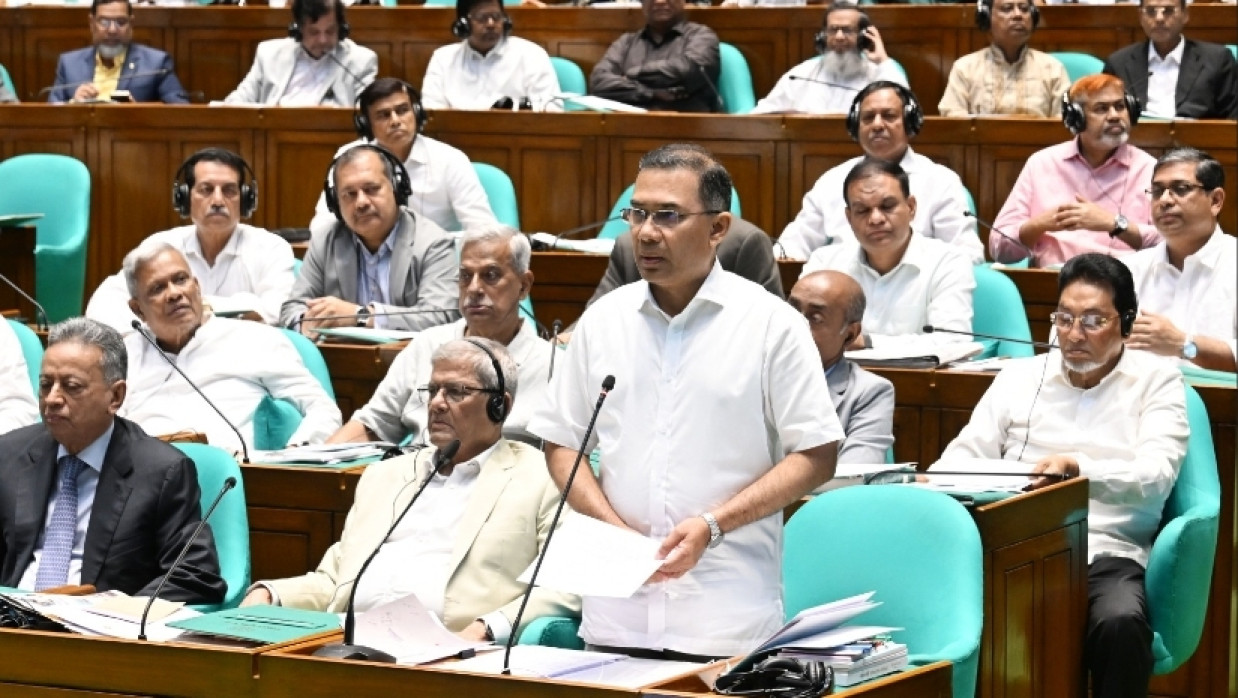
Prime Minister Tarique Rahman has announced a major shift in the national curriculum, identifying five international languages to be introduced as a mandatory "Third Language" at the secondary and higher secondary levels. The Premier made the announcement during a general discussion in the National Parliament on Monday, June twenty-nine, while outlining plans to transition the country away from a certificate-reliant system toward skill-based technical education.
Criticizing the previous regime for systematically destroying the country's academic structure, the Prime Minister revealed a comprehensive restructuring model inspired by Malaysia’s acclaimed "Education First" policy. To successfully fuel this transition, the government has set a target to scale up national education investments to five percent of the country's Gross Domestic Product (GDP) within the next five years.
Mandarin, Japanese, French, German, and Arabic Selected
The Prime Minister emphasized that under the new educational framework, students starting from Class Six will be systematically taught a technical skill and a third international language alongside Bengali and English.
The state has prioritized five global languages to expand international employment pipelines for Bangladeshi youth:
-
Mandarin (Chinese): The Premier confirmed that formal high-level discussions have already concluded with the Government of China. Given China's rapid economic expansion and its rising demand for foreign professionals, the Chinese administration has enthusiastically agreed to support Bangladesh in implementing widespread Mandarin language training.
-
Global Strategic Languages: Alongside Mandarin, the curriculum will incorporate Japanese, French, German, and Arabic to ensure graduates possess the competitive edge needed to enter diverse international labor and corporate markets.
Addressing the national unemployment crisis, Prime Minister Tarique Rahman pointed out that millions of local youth remain unemployed for years despite holding higher academic degrees because their certifications do not align with market demands. The government’s priority is to transform the existing academic infrastructure into a vocational, technical, and skill-oriented architecture.
The Prime Minister concluded by stating that the ultimate goal of the curriculum reform is to build a self-reliant generation. By embedding vocational trades and foreign language fluency into secondary schools, the state intends to ensure that students do not just graduate looking for jobs, but possess the practical skills and confidence necessary to secure employment immediately upon completing their education.
 Follow The Daily Campus on Google News