July Graffiti to be Repainted on DU Campus: Original Artists Invited
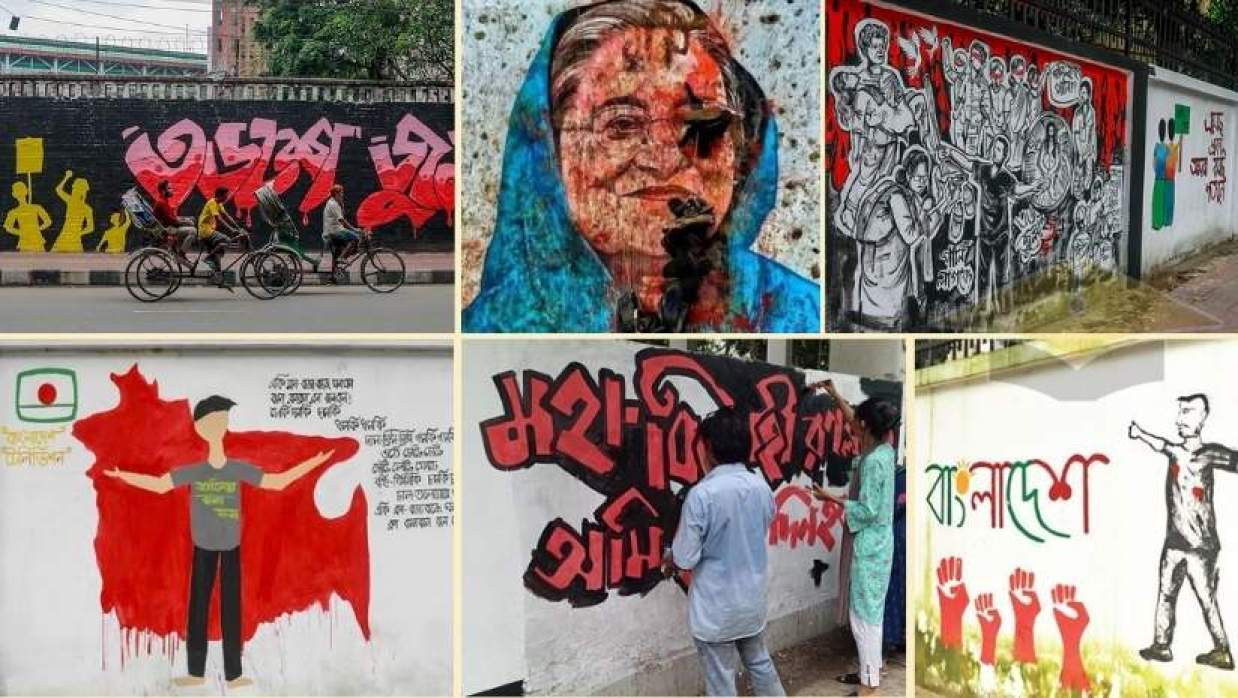
In a major effort to preserve the historic legacy of the July Mass Uprising, the Dhaka University (DU) administration has initiated a comprehensive project to repaint and restore the July graffiti across the campus. The university authorities have formally invited the original student-artists and muralists who created the artwork during the movement to return and participate in the restoration process.
A press release issued by the university's Public Relations Office on Wednesday confirmed that the restoration drive will officially commence on 26 July, keeping the core spirit, original features, and historical significance of the graffiti entirely intact. The restoration drive will be formally inaugurated along the stretch leading from the Vice-Chancellor's residence to Rokeya Hall.
The coordination of the restoration project has been entrusted to a high-level committee comprising the Dean of the Faculty of Fine Arts, the University Proctor, and the Director of the Arbori Culture Center. Alongside the original student-artists of the July Uprising, interested amateur artists have also been invited to join the initiative. Prospective participants must register their name and address via WhatsApp at +8801716116023 by 25 July.
Month-Long Programs Mark 2nd Anniversary of July Uprising
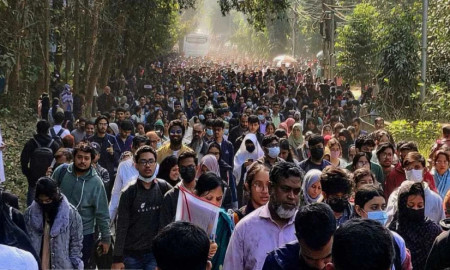
The restoration drive forms part of a broader, month-long series of commemorative events organized across the university to mark the 2nd anniversary of the July Mass Uprising.
As part of the observances, Nawab Faizunnesa Choudhurani Hall hosted a commemorative evening on Wednesday at 7:00 PM, featuring memory-sharing sessions, discussions, essay competitions, personal narrative exchanges, poetry recitations, and cultural performances. Pro-Vice Chancellor (Administration) Professor Dr. Mohammad Almojaddedi Alfe Sani attended the event as the chief guest.
Additionally, the Faculty of Science is set to host a seminar titled "July Mass Uprising 2024: Aspirations of Students and Masses, and the Future Bangladesh" on 26 July. Across various residential halls, the university schedule includes discussion meetings and seminars, photo and poster displays, documentary screenings showcasing key moments of the movement, candlelight vigils, essay and quiz competitions, poetry recitations, and special commemorative publications.
According to the university administration, the primary objective of these month-long programs is to pass down the history, sacrifice, and democratic spirit of the July Mass Uprising to future generations while ensuring the long-term physical preservation of the campus's iconic murals.
 Follow The Daily Campus on Google News