Beyond Hall Gates to the Streets
The Untold Stories of RU's Female Students in the July Uprising
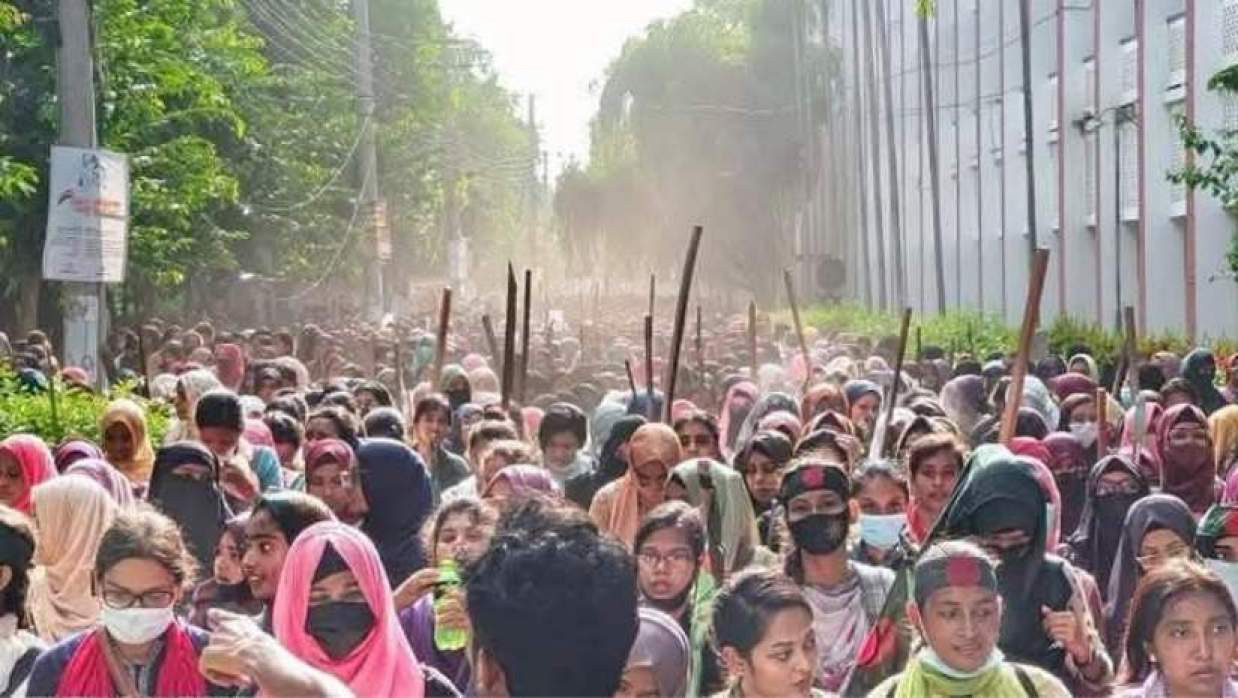
During the turbulent days of the July Mass Uprising in 2024, Rajshahi University (RU) stood as a vital epicenter of resistance against discrimination. From the earliest stages of the Anti-Discrimination Student Movement, hundreds of female students marched alongside their male peers. They spearheaded rallies, rescued and treated injured classmates, defied strict hall curfews, and persevered through blackouts, family isolation, and intense safety threats.
Two years on, as the university reflects on those historic events, a critical question remains: Have the courage, sacrifice, and leadership of RU's female students been properly preserved in national history, or do their stories remain largely in the shadows?
"The July Revolution saw female students step up as frontline organizers and fighters. They were not mere onlookers; they led marches, tended to the wounded, and fortified the movement through human solidarity. Yet, their presence at decision-making tables remains meager, and their sacrifices often lack the formal recognition they deserve."
— Prof. Dr. Iftikharul Alam Masud, Acting Registrar, Rajshahi University
Breaking Locks and Leading the Resistance
While many female students initially observed the emerging quota reform protests, the escalation of violence spurred immediate, organized mobilization across female dormitories, including Rokeya Hall, Mannujan Hall, Begum Khaleda Zia Hall, and the former Begum Fazilatunnesa Mujib Hall (renamed July 36 Hall).
On the night of 14 July 2024, following reports of violence against students at Dhaka University, female residents at Begum Khaleda Zia Hall broke the locks on their gates and poured onto the streets. Other dormitories followed suit immediately. Armed with sticks, bed frame stands, and chili powder for self-defense, students joined mass rallies.
Syeda Hafsa, Female Affairs Secretary of the Rajshahi University Central Students' Union (RUCSU) and an active participant in the July movement, noted that female students had supported the cause both online and offline since 7 July. She highlighted that when tear gas and sound grenade detonations rocked the campus on the evening of 16 July—amid rumors of armed political cadres entering the grounds—female students maintained their composure, forming human shields to safely evacuate injured classmates.
Blackouts, Mess Raids, and the Search for Refuge
Following administrative orders to vacate halls and suspend university operations, female students faced immense uncertainty. Severe disruption to bus and train schedules, coupled with a nationwide internet blackout, left many stranded in Rajshahi, unable to contact their anxious families.
eyewitness and student Sabrina Marjan recounted that those unable to return home immediately sought shelter in off-campus student messes across Rajshahi. However, as rumors spread of police raids on student quarters, these spaces quickly became unsafe. Students relied on local acquaintances, friends, and classmates for temporary housing until transport networks reopened around 26 July, allowing them to return home and continue coordinating local movement activities through 5 August.
"When the university closed the halls to isolate us, I joined the Coordinators' Committee. I prepared myself mentally for the likelihood that I might never return to a normal life—that I would end up in prison or live as a fugitive. I view every day after 5 August as a 'bonus life.' July forced me to realize the weight of conscience."
— Tasin Khan, Former Female Coordinator, Rajshahi University
Frontline Leadership and Unsung Contributions
Sumaiya Jahan, a resident of Mannujan Hall, described how female participation evolved from small groups into massive, spontaneous processions that anchored the movement's frontlines without partisan affiliation.
As the protest structure decentralized and later consolidated into the Anti-Discrimination Student Movement's official coordinating framework, female students managed field-level communications, banner creation, campaign publicity, and logistics.
Jannatun Naeem Tuhina, Vice President of RU Chhatra Dal and a Public Administration student who actively participated in the July movement, emphasized that the uprising offers an enduring lesson in dismantling authoritarianism, urging the new generation to uphold justice, accountability, and human dignity.
Faculty members and researchers argue that the historical record of major political movements remains incomplete without documenting the contributions of women. Prof. Dr. Iftikharul Alam Masud stressed the urgent need for oral histories, interviews, and data-driven research to archive the lived experiences of ordinary female students for future generations.
 Follow The Daily Campus on Google News