Govt Plans to Reduce SSC, HSC Exam Subjects and Duration
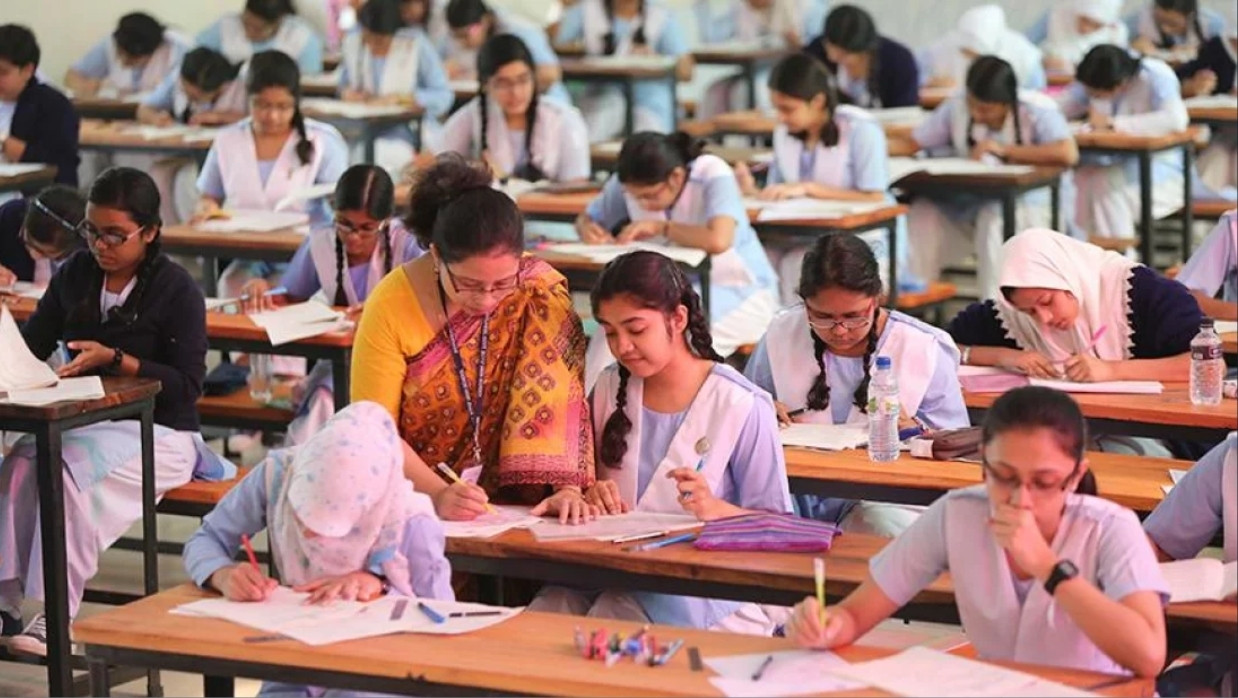
The government has initiated a major plan to restructure the existing public examination system in a bid to shorten the duration of the Secondary School Certificate (SSC) and Higher Secondary Certificate (HSC) examinations and significantly lower academic pressure on students.
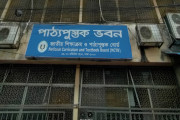
The National Curriculum and Textbook Board (NCTB) has drafted a comprehensive action plan and concept paper aimed at rationalizing the number of examination subjects and drastically reducing the total number of working days required to conduct these public exams under the active curriculum. The textbook board recently forwarded this proposed action plan to the Ministry of Education for official ministerial approval.
NCTB Chairperson Md. Mahbubul Haque Patwary confirmed that a well-defined action plan has been meticulously prepared and submitted to the Ministry of Education for its formal approval and subsequent directives. He stated that following the ministry's guidance, initiatives have been taken to organize a specialized workshop.
The event will bring together renowned educationists, curriculum and evaluation experts, parents, students, representatives from various education boards, and relevant stakeholders. The insights gathered during this workshop will be thoroughly reviewed before finalized decisions are implemented. The NCTB chief firmly believes that the successful execution of this initiative will bring a deeply positive transformation to the country's education system.
The Severe Burden of Long Examination Timelines
According to the concept paper drafted by the NCTB, the current academic structure expends roughly 25 to 30 working days to wrap up the SSC examinations, while the HSC examinations drag on for 30 to 35 working days, if not longer. Because academic institutions across the country are utilized as active examination centers for such a prolonged duration, regular classroom teaching remains suspended at thousands of schools. This operational bottleneck drastically reduces the total learning hours available to students of other non-examinee classes.
Furthermore, these extended examination timelines impose an unbearable psychological and mental burden on the active examinees. The systemic strain does not stop there; conducting these long-term examinations requires pulling a massive number of teachers away from their primary instructional and teaching roles. This extensive withdrawal delays post-examination answer script evaluations, the publication of final results, and subsequent enrollment processes into higher education institutions, creating a compounding risk of session jams across the academic sector.
Strategic Objectives of the Proposed Workshop
Guided by the education ministry's directives, the NCTB has planned a two-day workshop involving all relevant stakeholders. The primary objectives of this upcoming workshop include reviewing the existing subject structures of both the SSC and HSC curricula and designing highly effective strategies to shorten the overall duration of the examinations. It will also focus on assessing the feasibility of wrapping up the SSC examinations by December every year and mapping out the core administrative challenges posed by long examination schedules.
Finally, the experts will work on setting a balanced ratio between continuous and summative student evaluations, while formulating a clear roadmap for implementing recommendations alongside risk mitigation strategies.
The NCTB further stated that the expert panels will conduct comparative analyses based on the global experiences of neighboring countries—such as India, Sri Lanka, Malaysia, and Singapore—to logically deduce the minimum number of subjects that should be tested. The two-day seminar will feature detailed deliberations on which current subjects can be unified or integrated, how compulsory and elective subjects can be completely rearranged, and how the current question patterns can be updated.
Additionally, the modernization of practical exam evaluations and the reliability and expansion of school-based assessment systems will be closely evaluated before a final framework is shaped based on stakeholder feedback.
Expert Panels and Structural Reform Framework
Around 90 selected stakeholders will actively participate in drafting these final recommendations. The invitees include senior officials from the Ministry of Education, the Directorate of Secondary and Higher Education (DSHE), the Directorate of Madrasah Education, the Directorate of Technical Education, and the chairpersons and controllers of examinations from all education boards nationwide.
Experts from the Institutes of Education and Research (IER) of various universities, including Dhaka University, alongside experienced headmasters, parents, and student representatives, will also join the drafting process.
The high-level expert panel features distinguished educationists, including Professor Emeritus Dr. Manzoor Ahmed of BRAC University and Professor Hosne Ara Begum, Director of the IER at Dhaka University. The workshop will be structured into six separate working teams.
These teams will deliver precise proposals on which SSC and HSC subjects can be effectively integrated and determine the logical minimum number of subjects required for summative public examinations. Furthermore, the expert teams will formulate recommendations to maintain syllabus parity between madrasah and technical boards and the general education curriculum, while simultaneously modernizing the logistical management of practical examinations.
This collaborative process will culminate in a finalized set of recommendations containing detailed blueprints of the restructured subject framework, the proposed number of subjects, the targeted total number of examination days, and updated outlines for grading and certification methodologies. The NCTB emphasizes that once these structural reforms are deployed, it will not only compress the timeline of public examinations but will also inject much-needed momentum into the regular academic calendars of educational institutions.
Current Progress and the Textbook Correction Priority
Professor Dr. A.K.M. Masudul Haq, Member (Curriculum) of the NCTB, clarified that the process is being advanced under the direct guidance of the ministry, in close coordination with the NCTB, the Dhaka Education Board, and related stakeholders. He noted that while a preliminary concept paper outlining methods to reduce exam subjects and working days has been formally presented to the ministry, the matter is far from finalized. The core components governing these examination changes will be determined in tandem with the Inter-Education Board Exam Management Committee.
When questioned about the immediate progress of reducing the examination load, NCTB Chief Editor Muhammad Fatihul Qadir revealed that while a preliminary outline has been sent to the ministry, there is currently no new advancement or active operation regarding this specific process. He explained that the entire textbook board team is presently completely immersed in a massive, time-sensitive operation to execute urgent corrections and revisions for the upcoming academic year's textbooks and ensure those modifications are seamlessly inserted into the final prints.
He reiterated that any final implementation regarding the reduction of examination hours and subject counts will ultimately take effect based on the collective opinions and decisions of the Inter-Education Board Coordination Committee.
Abdul Khalek, Secretary of the Secondary and Higher Education Division, also weighed in on the development, confirming that preliminary discussions regarding this restructuring took place during a recent high-level meeting. He assured that all necessary final decisions will be systematically adopted based on the collective consensus and feedback of the relevant academic stakeholders.
 Follow The Daily Campus on Google News