From Level-7 to the Global Stage: North South University’s ECE Department Shines
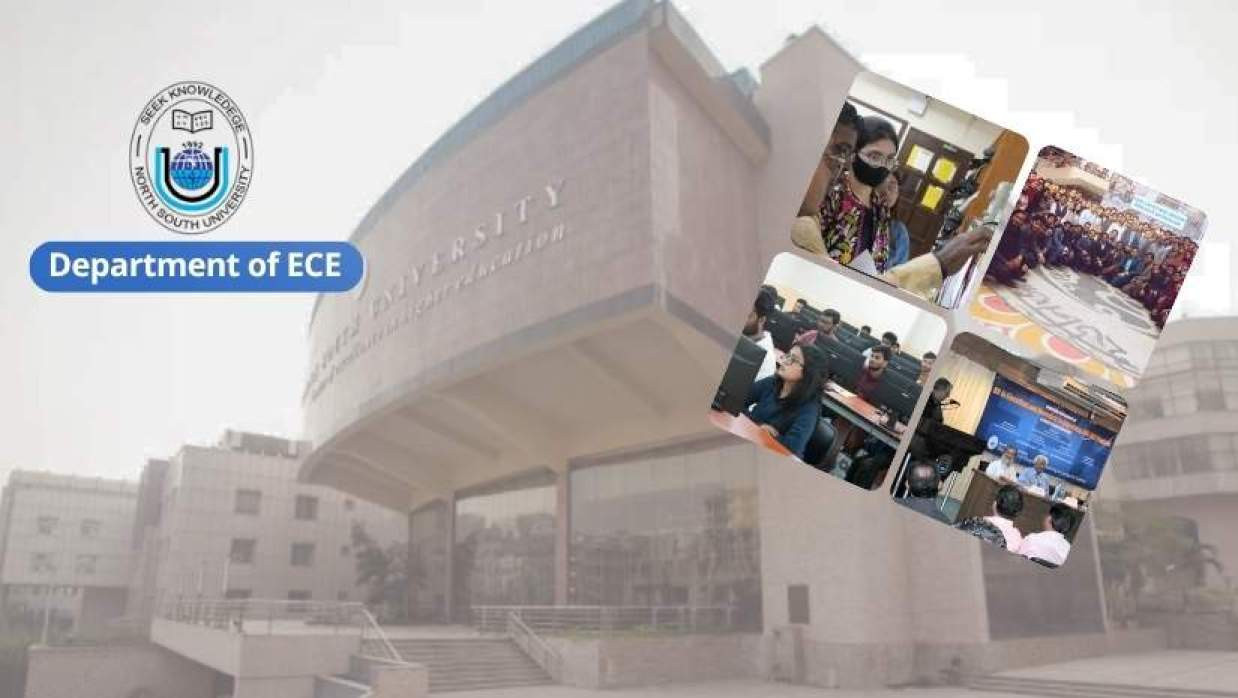
It is late afternoon at North South University (NSU). Inside the Electrical and Computer Engineering (ECE) labs on Level 7, students are deeply engaged in their work. Some are bent over circuit boards with soldering irons, while others are coding on laptops. Despite signs of fatigue, their faces reflect satisfaction and purpose — as if they know the work being done in this modest lab could one day reach much bigger platforms.
This dedication, combined with consistent research efforts and faculty guidance, has produced notable success for NSU’s Electrical and Computer Engineering discipline in the QS World University Rankings 2026 by Subject. For the first time, the Electrical and Electronic Engineering (EEE) programme has secured a position in the global 401-450 band, ranking 2nd among all public and private universities in Bangladesh. Meanwhile, the Computer Science and Information Systems programme has been placed in the 551-600 band, ranking 3rd in the country.
The Story Behind the Achievement
The department’s rise in the rankings is the result of years of focused research, international publications, and maintaining high academic standards. Faculty members are actively involved in research and regularly participate in international conferences. These efforts have gradually helped the department earn recognition on the global map.
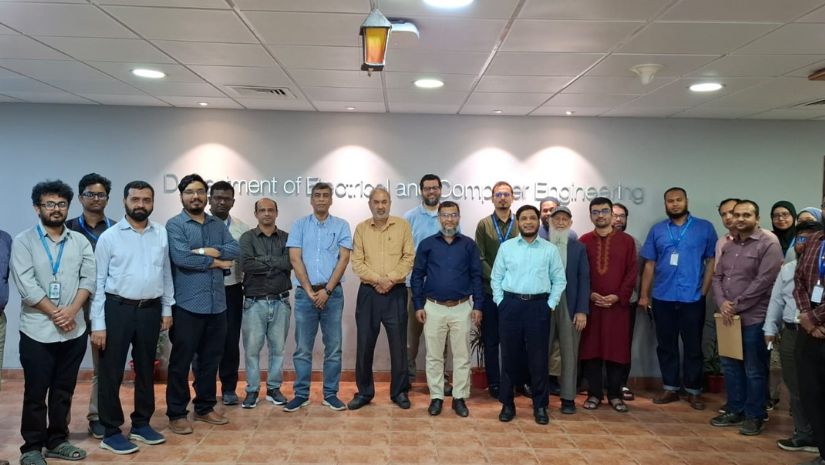
The ECE discipline was formed by merging the earlier Computer Science and Engineering (CSE) and Electrical and Electronic Engineering (EEE) programmes. The CSE programme started in 1993, while EEE was introduced in 2009. Currently, the discipline has 6,413 students — 4,720 in CSE and 1,670 in EEE. At the postgraduate level, there are 148 students (114 in CSE and 34 in EEE).
.jpg)
The department has 63 core (full-time) faculty members, of whom 38 hold PhD degrees. All faculty members have at least one foreign degree, mostly from renowned universities in North America, the UK, and other countries. Additionally, around 40 part-time faculty members support the department.
Hands-on Learning and Industry Focus
Professor Dr. Mohammad Abdul Matin, Head of the ECE Discipline, said: “Our curriculum is fully designed based on Outcome-Based Education (OBE). We regularly update the curriculum by collecting feedback from teachers, students, guardians, and industry partners.”
He added that practical experience is crucial in engineering education. The labs are equipped so students not only gain theoretical knowledge but also real-world hands-on experience. Students regularly work on circuit design, breadboard projects, and experiments — often beyond class hours. The department emphasises project-based and problem-based learning.
Student and Faculty Perspectives
Professor Dr. Sajjad Hossain, Dean of the discipline, told The Daily Campus: “To achieve a good ranking position, we have focused on internationalisation, research output, faculty-student ratio, number of international students, and the quality and quantity of research. We do not focus only on ranking; we also emphasise the social and economic impact of our research.”
Students also appreciate the opportunities. Arif Faisal Saad, an EEE student, said: “Teachers encourage us to publish research papers. I have already published papers at the undergraduate level. The lab facilities are good, which allows us to stay ahead. Through clubs and organisations, we participate in contests and seminars, which boosts our confidence.”
.jpg)
Global Outlook and Future Goals
The ECE department is no longer limited to national boundaries. Many students are pursuing higher studies at world-renowned universities such as Stanford, Harvard, and Wayne State University. Graduates are also working at global companies like Google and Microsoft.
The department has also received recognition under the Washington Accord.
Looking ahead, the department plans to introduce new programmes, especially in Software Engineering, Artificial Intelligence, and Data-related fields at both undergraduate and graduate levels. Faculty members are committed to strengthening industry linkages so that academia and industry work hand in hand.
Despite the achievements, challenges remain. Limited research funding, weak industry-academia collaboration, and resource constraints are areas that need attention for sustainable progress.
 Follow The Daily Campus on Google News