NCP After One Year: How Much of an Alternative Political Force Has It Become?
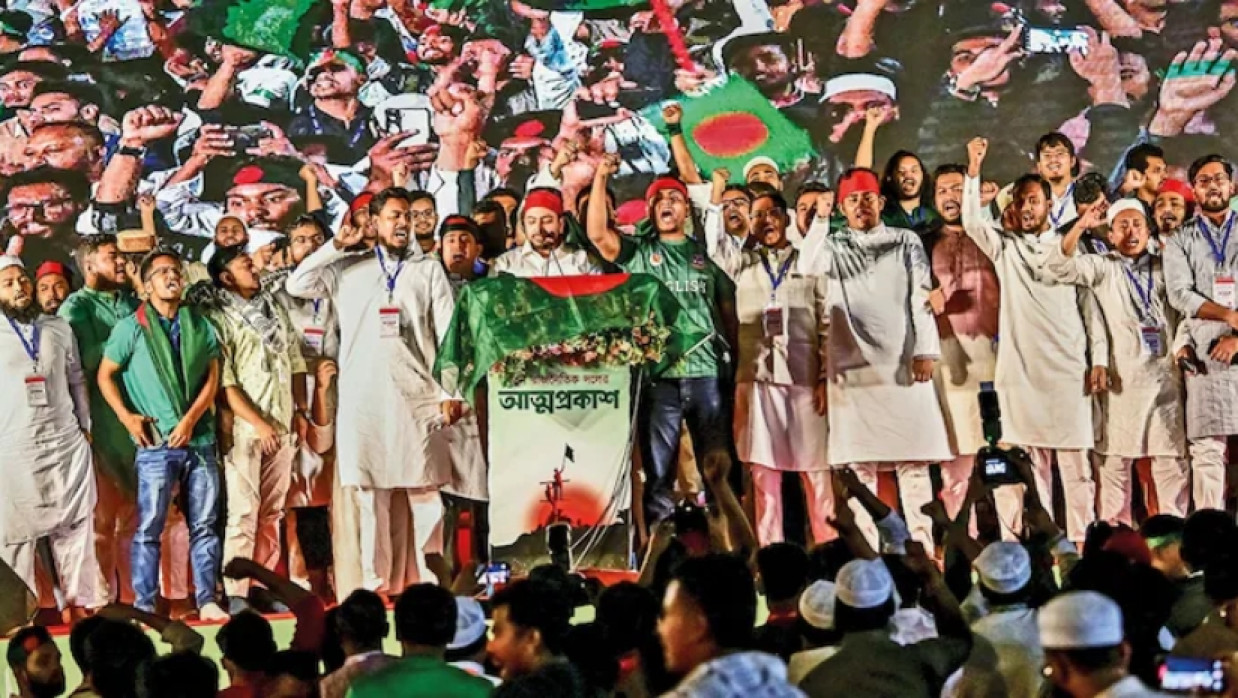
The National Citizen Party (NCP), formed by a group of young leaders who spearheaded the 2024 mass uprising, has completed its first year. Emerging with the promise of a new political settlement after the July uprising, the youth-led party generated high public expectations. In the most recent national election, its candidates received notable public support. However, questions remain about how effectively it has established itself as an alternative political force in just one year.
The party was formally launched on 28 February last year with a public rally in front of the National Parliament building. In its declaration, NCP proposed the idea of a Second Republic.
This vision included forming a constituent assembly to draft a new constitution through national election, building a strong defense system to protect national interests, rebuilding collapsed political, social, economic, and cultural institutions, and preserving their democratic character.
In July last year, NCP launched the July Foot March to Build the Nation, traveling across all 64 districts from Teknaf to Tetulia in one month. Through this nationwide outreach, the party successfully extended its presence from remote areas to district towns.
On 3 August last year, NCP unveiled its 24-point manifesto at the Central Shaheed Minar, outlining its vision for a New Bangladesh or Second Republic. The manifesto emphasized democracy and state institution reform, justice and legal system reform, service-oriented administration and anti-corruption measures, people-friendly law enforcement, independent media and strong civil society, Bangladesh-centric foreign policy, and a national defense strategy.
In the 13th Jatiya Sangsad election held on 12 February, NCP contested 30 seats under the Shapla Koli symbol, some independently and others in alliance. It won six seats.
Across these 30 constituencies, NCP candidates secured 2,269,631 votes, which is 3.21 percent of the total votes cast. In five of the six winning seats, the closest competitors were from the Bangladesh Nationalist Party (BNP), the largest party that won two-thirds of the seats overall. NCP candidates performed strongly in many other seats as well.
How Much Ground Has NCP Gained as an Alternative Force?
The July-August 2024 uprising and mass movement led to the ouster of Sheikh Hasina's government after 17 years in power. There was widespread public hope for a new Bangladesh in the post-fascist era. NCP emerged with the promise of a new political settlement.
Farhad Shakib, a Dhaka University student who participated in the July movement, said: NCP has not been able to act according to the expectations of the July generation in the past 17 months. The sense of duty and empathy of July has been undermined at times.
They bear significant responsibility for damaging the unity among the July generation through mutual mud-slinging like traditional politics. Still, as long as July remains in the hearts of the people of Bangladesh, NCP will retain appeal among the younger generation.
NCP leaders believe that building a strong organizational base in one year is difficult, but they have successfully conveyed a new political message through the election. With limited spending, crowd-funding, cultural campaigns, and truck-based public meetings, they claim to have initiated a shift in the prevailing political culture.
Joint Convener and Election Committee Secretary Monira Sharmin said: A political party stands on two pillars, people and organization. Building a strong organization in one year in Bangladesh's political culture is almost impossible, especially when we talked about a new political settlement and old establishments tried to pull us back. We never claimed full success. The responsibility of realizing a new political settlement has fallen squarely on our shoulders.
She added: We had hoped that after 5 August, all political parties would rethink politics and show collective effort toward a new direction. In reality, most parties continued on the old path. In this context, we had to participate in electoral politics. But the vote share our candidates received proves that the message of new politics has reached the people. In Bangladesh's history, it is rare for any new party to gain such popularity in such a short time. Behind this is not only our new political message but also the sentiment of the mass uprising. We wanted to change election culture as well. Where black money and muscle power are still visible, we ran our campaign with limited resources. The expenditure of our 30 candidates was less than one-third of a single candidate from a major party. We introduced crowd-funding, later other parties followed this model. We gave the message of courage and positivity instead of fear. We incorporated cultural elements in campaigning, theme songs, street songs, truck-based rallies, making politics attractive and vibrant for youth. The truck rally started due to financial constraints, but later we saw other parties adopting the same method.
Political analyst Dr. Ainul Islam of Dhaka University's Centre for Democracy Practice told The Daily Campus: NCP promised a new political settlement when it emerged. But later, it entered the mainstream through alliances and conventional tactics. The promise of a new political path did not materialize distinctly. This is an important lesson for them. The opportunity to emerge as a distinct alternative force was there. In Bangladesh's politics, a binary structure has long existed, one big party on one side, another on the other. The absence of a third force has been repeatedly discussed. People have often searched for an alternative. NCP had the chance to fill that space. Whether they would have won many seats is a different question, but they had the opportunity to establish themselves as an independent alternative. Joining alliances prevented them from standing apart.
He added: NCP rose from a revolutionary context. Leading a movement and participating in electoral politics are two different realities. The spirit of movement can create public opinion, but electoral success requires organization, strategy, inclusive leadership, and broad social acceptance. NCP has not yet fully matured in these areas. Youth leadership alone is not enough; electoral politics needs support from all ages and classes. They have not yet built that broad social base. There is an exclusionary tendency, they have not sufficiently included people from all classes, professions, and ages. For a political party to be sustainable, it must be inclusive and accommodative, giving space to diverse opinions, classes, and professions.
He concluded: One year is not a long time. They have contested one election, and evaluation is happening now. Building organizational structure, expanding to districts, creating leadership, these take time. If they learn from the past year's experience and give revolutionary spirit an inclusive and organized political shape, their potential as an alternative force still exists.
 Follow The Daily Campus on Google News