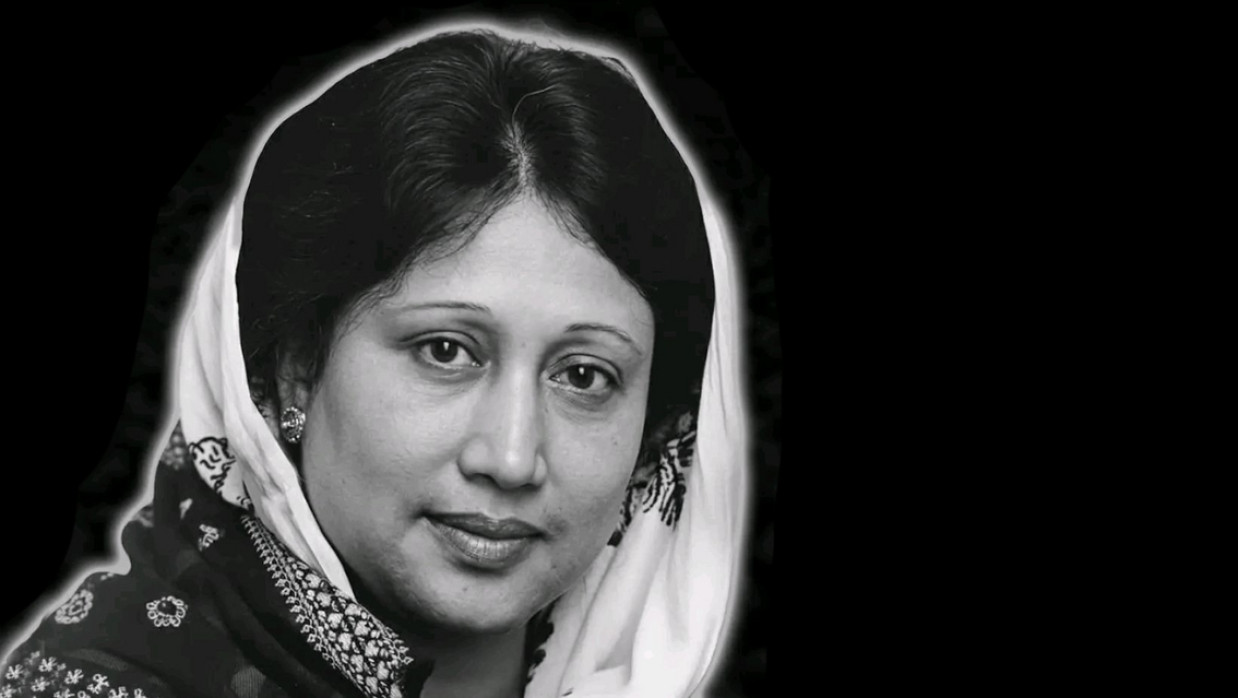
In the political history of Bangladesh, Begum Khaleda Zia is most prominently known by the title “Aposhihin Netri” (Uncompromising Leader). After the assassination of BNP founder Ziaur Rahman in 1981, she joined the party in 1983 and took charge. Until entering politics, Khaleda Zia was a simple housewife. Yet, within just 10 years of her political debut, she led BNP to power and became Bangladesh’s first female Prime Minister.
The title “Aposhihin Netri” is most frequently used before her name. But why? Which events established her with this identity? History records her opposition to military rule, relentless movements, arrests, house arrests, and electoral struggles.
First Major Display of Uncompromising Character (1981–1984)
On 30 May 1981, President and BNP founder Ziaur Rahman was killed in a failed military coup in Chattogram Circuit House. Seven months later, at the request of BNP leaders and workers, Khaleda Zia joined the party. She later became Senior Vice-Chairman in 1983 and was elected Chairperson uncontested in 1984.
At that time, the political environment was shrouded in fear, repression, and military rule. Many historians say this decision itself was the first major demonstration of her uncompromising character. In the 1980s, the most organised resistance against General Hussein Muhammad Ershad’s military regime came through the seven-party alliance. Khaleda Zia led this alliance. She was arrested during the first major movement in 1983. She was arrested again in 1984. Even while virtually under house arrest in 1987, she did not allow the movement to stop.
Historians say that refusing to compromise with any military government during this period was the backbone of her political stance. For this reason, many political analysts describe her as one of the “uncompromising leaders” against autocracy.
Role in the 1990 Mass Uprising
In the 1990 mass uprising, Khaleda Zia was one of the leading faces of the movement. The people wanted democracy to return and military rule to end. In this movement, she did not make any backdoor deals or compromise on power-sharing. At one stage of the movement, Ershad’s fall occurred, paving the way for the 1991 election.
1991 Election and Return to Parliamentary Democracy
In the 1991 election, BNP won and Khaleda Zia became Bangladesh’s first female Prime Minister. Under her tenure, the country returned from the presidential system to parliamentary democracy. According to political analysts, this was the result of her “unwavering stance” in rebuilding Bangladesh’s democratic structure. Even then, she was described as a leader who would never compromise on state policy.
2001–2006 Tenure
During her 2001–2006 term, she faced various political pressures, international criticism, and internal conflicts. Opposition demands, coalition politics, and even international allies’ pressures — she did not easily compromise in any of these areas. Many analysts say her “firmness in policy and decisions” became even more evident during this period.
2013–2015 Political Conflict and 2014 Election Boycott
In 2013 and 2015, amid heightened political confrontation and the 2014 one-sided election, the government and international community repeatedly pressured her for dialogue and compromise. But her party made it clear that she did not engage in compromise politics. In 2018, after being convicted in a corruption case, she rejected the government’s proposed alternative settlements even while imprisoned and ill. This stance further cemented her identity as “uncompromising”.



 Follow The Daily Campus on Google News