Call for Diaspora Engagement System to Mobilise 2.4M Bangladeshis Abroad
Bangladesh must proactively and strategically engage its estimated 2.4 million diaspora members worldwide, particularly in the USA, UK, Canada, Australia, and EU countries, to harness their potential in investment, innovation, knowledge transfer, skills, networks, and policy influence.
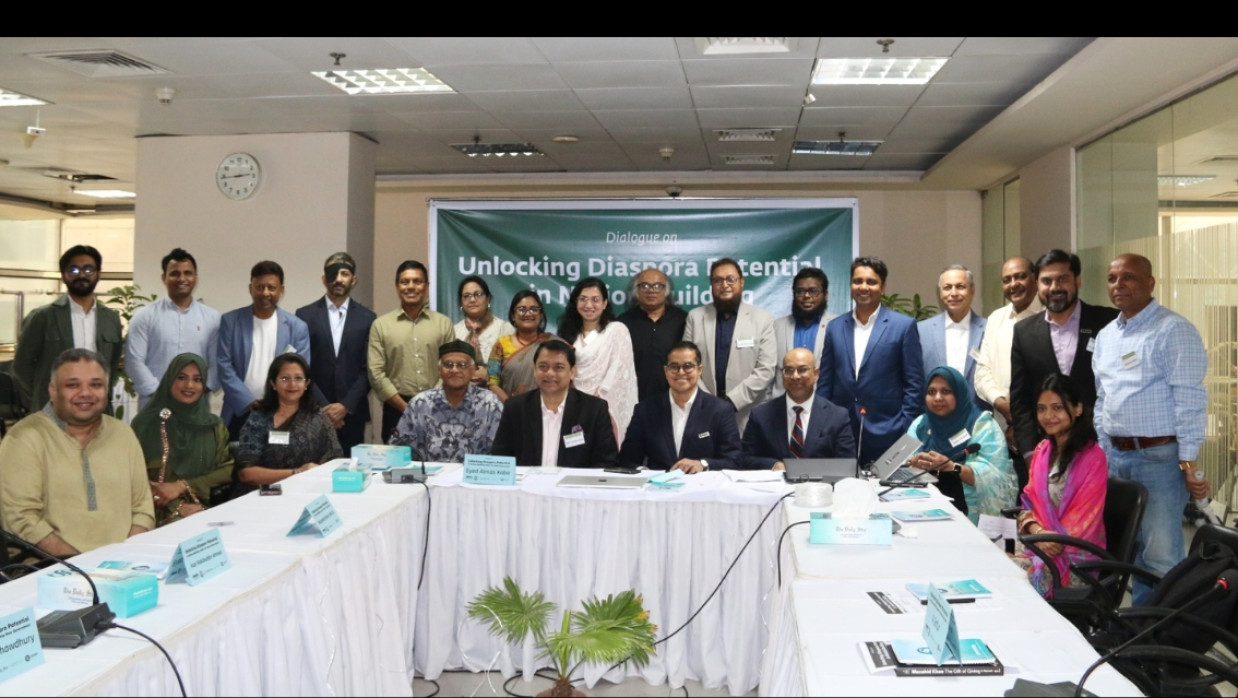
Speakers at today’s dialogue titled “Unlocking Diaspora Potential in Nation-Building” stressed this need as the country enters a new phase under the new government. Jointly organised by BOND, Club JCI, Next 50, The Daily Star, and Oxfam in Bangladesh, the event brought together around 60 participants from Bangladesh and key diaspora locations — both in person and online.
The discussion highlighted the absence of a structured national system for consistent diaspora engagement. Current efforts remain fragmented, with limited institutional mechanisms linking global Bangladeshis to national development priorities.
Keynote speaker Dr Tanzil Shafique, Associate Professor at the University of Sheffield, said the main challenge is not lack of diaspora interest but the absence of credible engagement pathways. Drawing from international experiences, he proposed a four-layer model: a “Front Door” for easy entry, clear pathways for service, investment and knowledge contribution, a trust infrastructure for transparency, and delivery partnerships across government, private sector, and institutions.
Moderating the session, Md Sariful Islam, Head of Influencing, Communications, Advocacy and Media (ICAM) at Oxfam in Bangladesh, urged moving beyond a remittance-only view of the diaspora. He emphasised expanding contributions to investment, entrepreneurship, knowledge transfer, policy engagement, and international representation.
Quazi M. Ahmed, founder of BOND, pointed out gaps in participation mechanisms and called for coordinated platforms that build trust. Anis Rahman, former president of Billions for Bangladesh, stressed the need for a functional, one-stop service to facilitate diaspora investments. Syed Saiful Haque, Chairman of WARBE Development Foundation, highlighted the requirement for policy frameworks linking diaspora engagement with migration, skills, and labour systems.
Diaspora representatives shared their views on opportunities and barriers.
Muzahid Khan MBE DL from the UK said diaspora communities are eager to engage but need accessible platforms and clear processes. From a business and technology perspective, Syed Almas Kabir, former President of BASIS, cited successful international examples (such as India’s) and stressed the importance of mechanisms supporting diaspora investment and collaboration.
Representing the Bangladesh Investment Development Authority (BIDA), Director Shah Nusrat Jahan outlined ongoing efforts to simplify procedures and invited diaspora stakeholders to engage with the agency. Former Ambassador H.E. Mosud Mannan ndc reflected on his diplomatic experience, noting consistent willingness among diaspora members to contribute, but previous initiatives lacked coordination and continuity.
Participants from diverse sectors — including health, technology, logistics, youth engagement, and entrepreneurship — identified opportunities for collaboration in digital innovation, supply chain systems, and enterprise development. Contributions came from A Gafur, Dr Chowdhury H. Ahsan, Iqbal Bahar Zahid, Dr Ferdoush Saleheen, Monjur Chowdhury, Dr. Nehal Mahtab, Dr. Farazi Binti Ferdous, Shehtaz Chowdhury, Gazi Jishan, Belal Breaga Bakht, Imran Kadir, Minhaz Anwar, SM Arifuzzaman, and others.
The dialogue concluded with concrete proposed actions:
- Enact a National Diaspora Engagement Policy
- Establish a dedicated authority
- Create a digital platform for verified opportunities
- Revise the diaspora bond mechanism
- Form diaspora councils in key global locations
- Build transparent systems for investment, reintegration, and dispute resolution
These recommendations will be compiled into a policy brief, underscoring the shift from fragmented efforts to structured, institutionalised systems that enable meaningful diaspora participation in national development.
 Follow The Daily Campus on Google News