From Khaleda Khanam to Begum Khaleda Zia: Life, Struggle, Leadership and Legacy
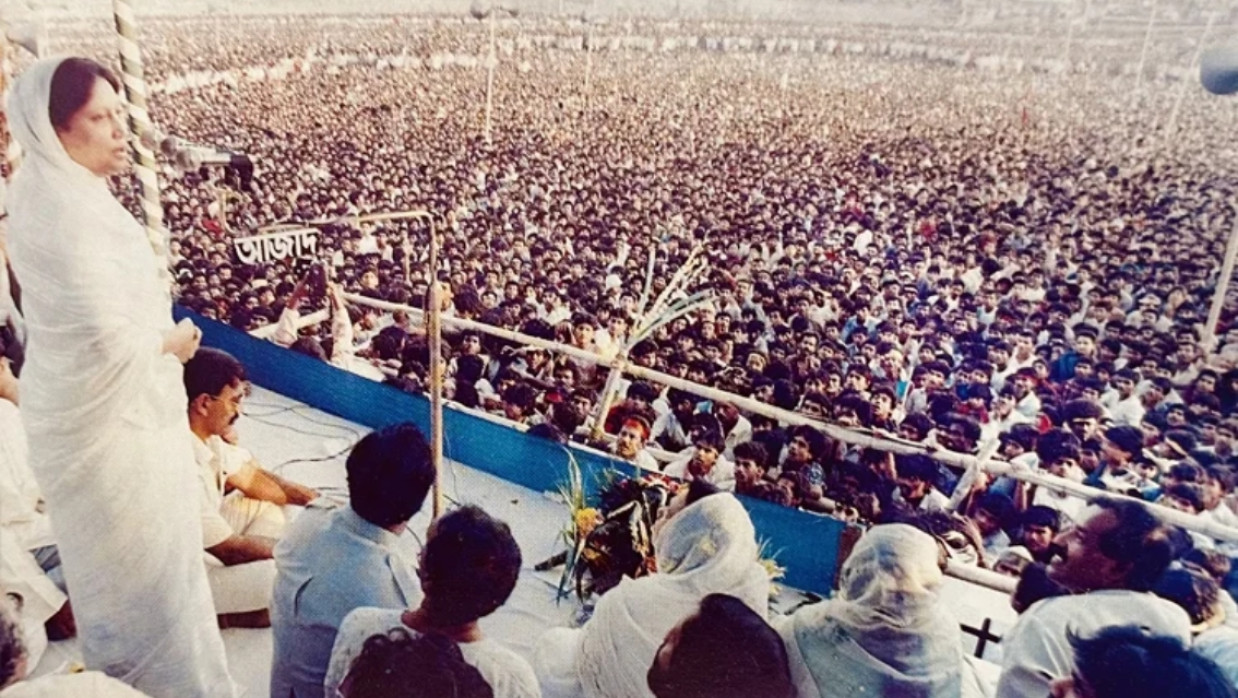
Begum Khaleda Zia was the Chairperson of the Bangladesh Nationalist Party (BNP) and officially held the position of Chairperson. She was born on 15 August 1945 in Jalpaiguri, India, as Khaleda Khanam (nickname Putul). She served as Prime Minister of Bangladesh for a total of 10 years in two terms: 1991–1996 and 2001–2006. She was Bangladesh’s first female Prime Minister and the second female Prime Minister in the Muslim world.
Family and Early Life
Khaleda Zia’s real name was Khaleda Khanam, and she was called Putul. She was born on 15 August 1945 in Jalpaiguri. She was the third among three sisters and two brothers. Her younger brothers were the youngest. Her paternal grandfather was Haji Salamat Ali, and maternal grandfather was Toyabur Rahman of Jalpaiguri. Her father was Iskandar Majumdar, a businessman, and her mother was Begum Tayyaba Majumdar.
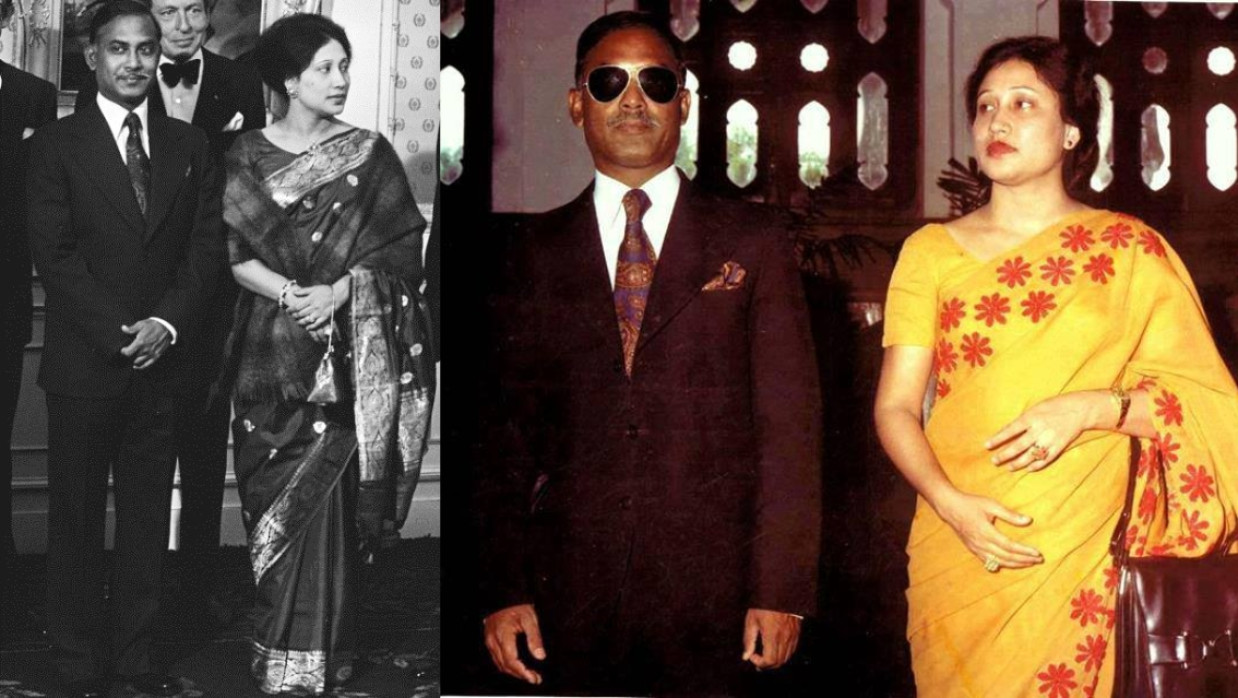
Her husband was Ziaur Rahman, the announcer of Bangladesh’s independence, who led as commander of Z Force (the first brigade formed during the Liberation War) and Sector Commander on the battlefield. He was also a former Army Chief and visionary national leader of Bangladesh. For his bravery in the Liberation War, Ziaur Rahman was awarded the Bir Uttom.
One of her brothers, Major (Retd) Sayeed Iskandar, was elected Member of Parliament from Feni-1 constituency on the BNP ticket. Among her two sons, the elder one is Tarique Rahman (born 20 November 1967), who is the first Vice-Chairman of BNP. Her younger son was Arafat Rahman Koko (12 August 1970 – 24 January 2015). Arafat Rahman Koko, a sports enthusiast, was a businessman and was associated with the Bangladesh Cricket Board and City Club. He passed away on 24 January 2015 due to cardiac arrest at University Malaya Hospital in Malaysia.
Permanent Residence
Although her permanent residence was in Mudipara, Dinajpur town, her ancestral paternal home was the Majumdar House in Shripur village, Fulgazi upazila, Feni district. Her father Iskandar Majumdar was a businessman. Iskandar Majumdar moved from Feni to Jalpaiguri in 1919. There, he stayed at his sister’s house, passed matriculation, and later got involved in the tea business. He married in Jalpaiguri in 1937. He lived in the Nayabasti area of Jalpaiguri until 1947. He passed away on 15 November 1984. Her mother Begum Tayyaba Majumdar was a simple housewife.
Education
Khaleda Zia’s school life began at the age of five at Dinajpur Missionary School. She was later admitted to Dinajpur Girls’ School. She continued her studies at Surendranath College.
Marriage
In August 1960, she married Captain Ziaur Rahman. Ziaur Rahman’s nickname was Kamal. At that time, Zia was a smart captain in the Pakistan Army. He was serving in Dinajpur as a DFI officer.
Family Life
In 1965, Khaleda Zia went to West Pakistan (now Pakistan) with her husband. She stayed with him in Karachi until March 1969. Later she came to Dhaka. After staying in Joydebpur for some time, her husband was posted to Chattogram, and she lived with him there and in Chattogram’s Sholoshahar area. At the beginning of the Liberation War, after staying in hiding for some time, she came to Dhaka by river route on 16 May. She stayed at her elder sister Khurshid Jahan Haque Chocolate’s house until 17 June. On 2 July, Pakistan Army arrested her along with her two sons from the house of S Abdullah in Siddheshwari. She remained captive in Dhaka Cantonment until 15 December 1971. She was released on 16 December when Bangladesh became independent. Until she entered politics, Begum Khaleda Zia was a completely ordinary housewife. Even during Ziaur Rahman’s tenure as President of Bangladesh, she had minimal presence in politics.
Entry into Politics
On 30 May 1981, Ziaur Rahman was martyred in a failed military coup by a group of misguided army officers. After that, following the call of various levels of BNP leaders and workers, she joined BNP on 3 January 1982. On 24 March 1982, then Army Chief Lieutenant General Hussain Muhammad Ershad deposed President Justice Abdus Sattar. Khaleda Zia opposed it. In March 1983, she became Senior Vice-Chairman of BNP. On 1 April 1983, she delivered her first speech at the party’s extended meeting. When Justice Sattar fell ill, she took responsibility as acting Chairperson of the party. On 10 May 1984, she was elected Chairperson uncontested. It was mainly under her leadership that BNP fully developed as a political party.

Movements
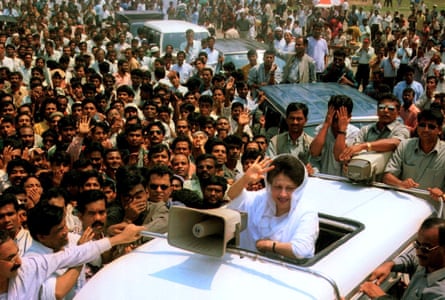
In 1983, under Khaleda Zia’s leadership, the seven-party alliance was formed. At the same time, the movement against Ershad’s military rule began. Initially, she started the anti-Ershad movement through the seven-party alliance from September 1983. At the same time, under her leadership, the seven parties jointly started the movement programme with the 15-party alliance led by Awami League. The five-phase movement continued until 1986. But on the night of 21 March 1986, when Awami League president Sheikh Hasina decided to participate in the election under Ershad by compromising with him, it created a barrier in the united movement. The 15-party alliance broke into 8-party and 5-party alliances. The 8-party went to the election. After that, under Khaleda Zia’s leadership, the 7-party and five-party alliances continued the movement and boycotted the election. From 1987, Khaleda Zia started the “Ershad Hatao” one-point movement. As a result, Ershad was forced to dissolve parliament. The united movement started again. Finally, after eight years of relentless and uncompromising struggle, BNP won a single majority in the parliamentary election held on 27 February 1991. Khaleda Zia became the Prime Minister of Bangladesh. In that election, she contested five seats and won all five.
National Parliament Elections
On 19 March 1991, Khaleda Zia was appointed Prime Minister in the fifth national parliament election of the People’s Republic of Bangladesh. Her government established the parliamentary system in the country. On 2 April, she introduced the bill in parliament on behalf of the government. On the same day, she introduced the eleventh amendment bill to enable Chief Justice Shahabuddin Ahmed, head of the caretaker government, to return to his post. On 6 August 1991, both bills were passed unanimously in parliament.
On 15 February 1996, the sixth national parliament election was held. It later came to be known as the one-party election of 1996. Despite objections from all opposition parties, Khaleda Zia and her party held this one-party election. Awami League and all opposition parties boycotted this election. This parliament lasted only 15 days. Khaleda Zia was the Prime Minister of this parliament. The caretaker government bill was passed in the sixth parliament, and under pressure from the opposition’s demand, Khaleda Zia resigned.
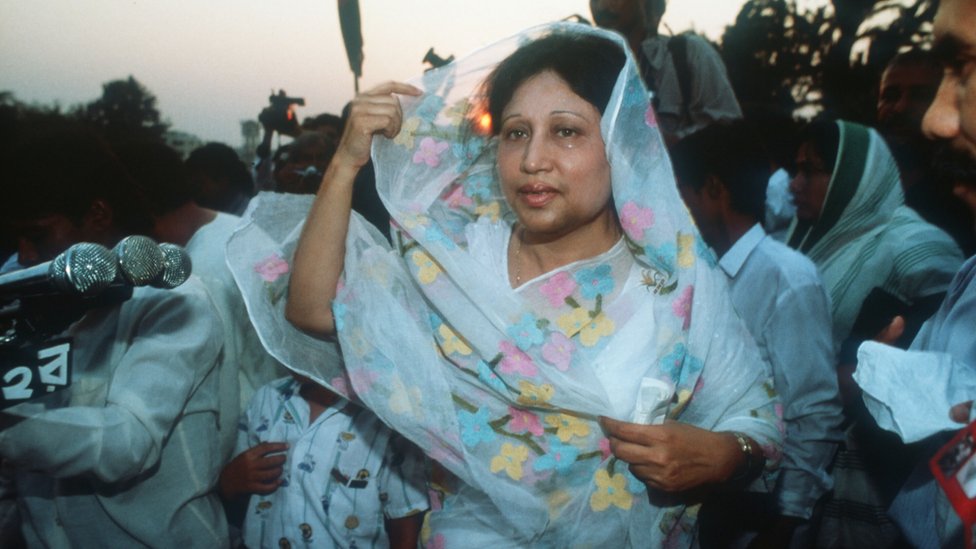
In the seventh national parliament election in 1996, BNP won a total of 116 seats, which was not sufficient to form the government. Awami League won 147 seats and formed the government with the support of Jatiya Party. BNP emerged as the largest opposition party in the history of Bangladesh in the seventh parliament. Khaleda Zia was the Leader of the Opposition in parliament during the five-year rule of Awami League.
Before the eighth national parliament election, BNP formed a four-party alliance with Jamaat-e-Islami, Islami Oikya Jote and Jatiya Party. In the parliament election on 1 October 2001, the four-party alliance won by a huge margin and formed the government. Khaleda Zia served as Prime Minister in this parliament as well. The term of this parliament ended on 28 October 2006.
In the ninth national parliament election held in December 2008, the four-party alliance led by Khaleda Zia was defeated by a huge margin. The grand alliance won nearly 260 seats while the four-party alliance got only 32 seats.
Along with the alliance led by Khaleda Zia, many political parties in Bangladesh boycotted the tenth national parliament election held on 5 January 2014.

Arrest and Imprisonment
First arrest in 1971 by Pakistan Army on 2 July from a relative’s house in Siddheshwari, Dhaka. After joining BNP as a primary member on 3 January 1982, she was arrested a total of 6 times. During the anti-Ershad movement, she was arrested on 28 November 1983, 3 May 1984, and 11 November 1987. On 3 September 2007, she was arrested along with her son on charges filed by the Anti-Corruption Commission. On 11 September 2008, she was released on the order of the High Court. During the one year and seven days she spent in prison after arrest by the caretaker government, no significant progress was made in any of the cases against her, and no charge against her was proved in the ongoing investigation.
The voter-less occupying Awami League government, out of political vengeance, sentenced her through a manipulated verdict in a case filed by the Anti-Corruption Commission on 8 February 2018. She remained in prison until 2 June 2024. Later, due to the severity of Covid, she received treatment at home under an executive order of the government.

Eviction from Cantonment Residence
On 13 November 2010, the then Awami League government evicted Begum Khaleda Zia from her 28-year-old residence. She alleged that she was forcibly and rudely thrown out of the house with only the clothes she was wearing. However, the government side claimed that she left the house voluntarily. After independence, from 1972, she moved into house number 6 on Shaheed Moinul Road in the cantonment along with Ziaur Rahman as Adjutant General. On 30 May 1981, when President Zia was killed in a failed military coup in Chattogram, interim President Abdus Sattar allotted that house in the cantonment to Khaleda Zia on 12 June.

Relentless Struggle
After boycotting the 5 January 2014 election, Khaleda Zia lost the position of Leader of the Opposition. Since then, she had no presence anywhere in the state administration. Many leaders of her party have been accused of collaborating with the Awami League government in politics. A total of 20 cases were filed against Khaleda Zia. Among them, five cases were filed by the Anti-Corruption Commission. The rest were petition cases of violence, sabotage, sedition and defamation filed in various police stations across Dhaka and the country.
First Female Freedom Fighter, Bangladesh’s First Female Prime Minister, Mother of Democracy, Deshnetri, BNP Chairperson Begum Khaleda Zia
Notable Events
- 8 February 2018: Sent to prison by the Awami fascist government through a manipulated verdict in a politically harassing case
- 6 October 2018: Brought from prison to PG Hospital in sick condition
- 25 March 2020: Came home from PG Hospital under government executive order
- 11 April 2021: Covid-19 virus positive report came
- 15 April 2021: CT scan at Evercare Hospital
- 27 April 2021: First admitted to Evercare Hospital for Covid-19 positive treatment
- 19 July 2021: Took first dose of Covid-19 vaccine
- Second dose on 18 August
- Third dose on 24 February 2022
- First operation on 25 October 2021
- 11 June 2022: Suddenly fell sick at midnight and was admitted to Evercare Hospital
- 24 June: Came home from hospital at 5:00 pm
- 22 August 2022: At 3:57 pm went from Gulshan Chairperson’s residence to Evercare Hospital for regular health check-up
- 28 August 2022: Admitted to Evercare Hospital
- 31 August: Came home from hospital
- 27 February 2023: At 3:00 pm went to Evercare Hospital for health check-up
- 29 April: Admitted to Evercare Hospital
- 4 May: Came home from hospital
- 13 June: Admitted to Evercare Hospital at 1:30 am
- 9 August 2023: Admitted to hospital
- 25 October: 3 American specialist doctors arrived
- 26 October: American specialist doctors operated on the Chairperson
- 28 October: Those doctors left
- 11 January: Came home from hospital at 5:00 pm after 5 months and 2 days
- 8 February 2024: Went to Evercare Hospital again for health check-up
- 31 March 2024: Admitted to hospital
- 2 April 2024: Came home from hospital
- 1 May 2024: Wednesday went to hospital for health check-up
- 2 May 2024: Came home from hospital
- 22 June 2024: Admitted to hospital at 3:00 am
- 2 July 2024: Came home at 6:00 pm
- 8 July 2024: Left home for hospital at 4:20 am
- 21 August 2024: Returned home
- 6 August: Granted release by presidential executive order
- 11 September 2024: Went to hospital at 1:30 am
- 7 January 2025: Departed from Dhaka for treatment in London
- 5 May 2025: Departed from London for Dhaka after completing treatment
- 19 June 2025: Admitted to Evercare Hospital
- 24 July 2025: Admitted to Evercare Hospital at midnight
- 28 August 2025: Went to Evercare Hospital for health check-up
- 15 October 2025: Admitted to Evercare Hospital at 11:00 pm on Wednesday
- Last admission: Admitted to Evercare Hospital at night on 23 November 2025
Today, Tuesday, 30 December 2025, in the month of victory, at 6:00 am, she bid farewell to the world forever. (Inna lillahi wa inna ilaihi raji’un.)

Last Events of Khaleda Zia
- Last public gathering: 12 November 2017 (‘Revolution and Solidarity Day’) at Suhrawardy Udyan
- Last 7 November Revolution and Solidarity Day gathering: 2010 at Nayapaltan BNP central office front
- Presided over by: Sadeq Hossain Khoka. It was also the last gathering of four-party alliance top leader Fazlul Haque Amini.
- Last Iftar and Eid greetings exchange programme: 2016 at Bangabandhu International Conference Center
- Last visit to martyred President Ziaur Rahman’s grave: 2018
- Last press conference, executive committee meeting, standing committee meeting, and 20-party alliance meeting: February 2018
- Last road journey outside Dhaka: Visit to Hazrat Shahjalal (R) shrine in Sylhet, February 2018
- Last travel abroad for advanced treatment: Travelled to London on a special plane provided by the Emir of Qatar
- Last birthday celebration: Cut cake and exchanged greetings at Gulshan Chairperson’s office in 2015
 Follow The Daily Campus on Google News