Earthquake death toll rises to 10 as injuries mount
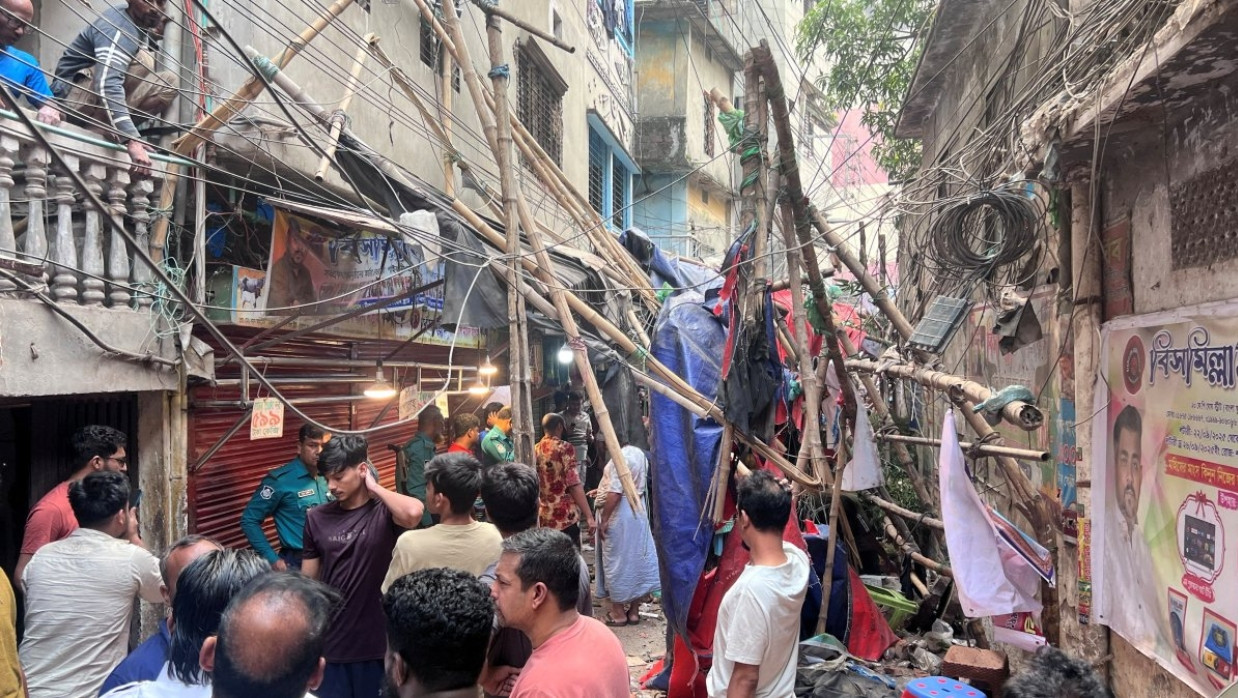
The death toll from Friday's (21 November) powerful earthquake has climbed to 10, with hundreds injured across central Bangladesh. The 5.7-magnitude tremor, centred in Madhabdi upazila of Narsingdi district about 40 km east of Dhaka, struck at 10:38 am, shaking the capital and surrounding areas for around 26 seconds.
Tremors were also felt in Kolkata and parts of eastern India, but the worst damage occurred in Narsingdi, Dhaka, and Narayanganj. Over 500 people have been hospitalised, many due to panic-induced injuries and building collapses.
Narsingdi: 5 killed at epicentre
District administration confirmed five deaths in Narsingdi, where the quake was strongest. The victims include Delwar Hossain (37) and his son Omar Faruk (11), killed by falling bricks from a construction site; Nasir Uddin (65), who suffered a fatal heart attack from fear; Forzan (40), who fell from a tree; and Kazem Ali Bhuiyan (75), crushed under his mud house.
Dhaka: 4 dead in building incidents
In the capital's Bangshal area, three people – Rafiqul Islam (a 52nd-batch student at Sir Salimullah Medical College), Haji Abdur Rahim (47), and Meharab Hossain Rimon (12) – were killed when railings collapsed from a five-storey building. In Mugda, security guard Md Maksud (50), from Noakhali's Ramgati upazila, died in a similar incident at a construction site. His body is at Dhaka Medical College Hospital morgue.
Narayanganj: Toddler dies in wall collapse
In Rupganj upazila, one-year-old Fatima was killed when a tin-shed wall collapsed on her mother Kulsum Begum and neighbour Jesmin Begum as they fled in panic. Both women were injured.
Authorities have set up emergency control rooms for damage assessments. Power outages affected several stations, causing rolling blackouts. Rescue efforts continue, with over 200 garment workers injured in Gazipur due to locked factory gates during evacuation.
The quake, the strongest in recent Bangladeshi history, has prompted warnings from BUET earthquake expert Prof Mehedi Ahmed Ansary, who called it an "alarm bell" for the country's vulnerable structures.
 Follow The Daily Campus on Google News