Samay’s 81-Minute ‘Still Alive’: A Comeback for the Ages
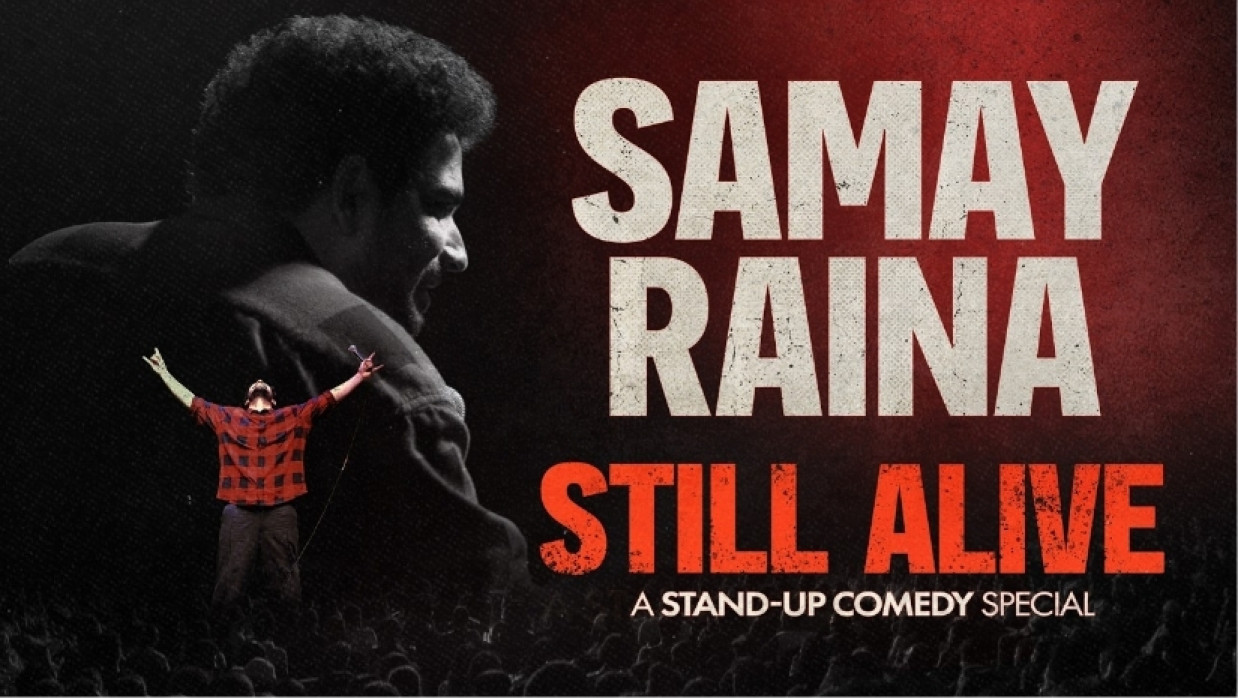
Inside the Good Shepherd Auditorium, the atmosphere felt less like a comedy club and more like a high-stakes sanctuary. After a year of being the most hunted man on the Indian internet, Samay Raina is back. His debut stand-up special, Still Alive, clocking in at 1 hour and 21 minutes, is not a traditional set of setups and punchlines. It is a raw, jagged dissection of the fallout from the "Beer Biceps" episode of his show, India’s Got Latent — a platform that, until its sudden deletion, was the frontier of unscripted, chaotic roasting and "latent" talent.
To an audience in Dhaka — a city that intimately understands the intersection of digital expression, state overreach, and public backlash — Samay’s performance is a harrowing study of what happens when the "internet game" turns into a real-world war.
The Architecture of the 'Gaandu': Performance as a Bulletproof Vest
The intellectual backbone of Still Alive is Samay’s theory of the "Gaandu". He posits that in the modern digital landscape, a "clean" image is a liability. If you are a saint, the world waits for your first sin. But if you are a "villain," you are free.
He admits to crafting an internet persona that is "more of a jerk" than his real self to lower expectations. He contrasts this with Ranveer Allahbadia (Beer Biceps), whose decade-long brand of "meditation and spirituality" made his crude slip-up on Samay's show a fatal character break. Samay’s thesis is cynical but pragmatic: in the subcontinent, the internet isn't an art gallery; it’s a game played to set a "high score" in a bank account.
The 1% Pandemic and the State of Psychosis
Samay takes us into the editing room, explaining how he cut a five-hour raw recording of India’s Got Latent down to one hour. He thought he had sanitized the footage — the "99% Germ-Kill" approach. The psychological horror lies in the realization that in the age of viral outrage, the 1% you leave behind is enough to cause a "pandemic."
The special reaches its darkest peak when Samay describes his descent into psychosis. While on tour in the US, he discovered that three FIRs had been filed against him. The scale was staggering: the Assam Chief Minister had moved against him, and the Maharashtra CM had turned as well. This wasn't just "cancel culture"; it was the full weight of the state.
He describes a state of dissociation in Seattle, where he began touching objects to see if they were solid, wondering if he was trapped in a nightmare. This "Digital Psychosis" occurs when the state reacts with "missiles" to what was intended as a "slingshot." When the media narrates your life as a "national threat" while you are just trying to play poker to distract yourself from an 8-crore potential loss, the mind fractures.
Racism, Bullying, and the Kashmiri Shadow
The most moving part of Still Alive is Samay’s reclamation of his past. He corrects the narrative on his upbringing, detailing a childhood defined by displacement. As a Kashmiri Pandit whose home was shot at and burned, leading his family to flee for their lives, the current controversy felt like a secondary trauma.
He recounts the racism and bullying he faced in Hyderabad for being the "different kid" — the fair-skinned Kashmiri among Telugu peers. He speaks of the Maruti 800, his family’s humble car, and the shame he felt being seen in it at a prestigious school. Yet, the emotional anchor of the special is his relationship with his parents. His father, a man who had already lost everything once, stood as a rock. For a man who had seen his house burn, a few FIRs and internet trolls were nothing. Samay describes the agonizing process of opening up to his mother, hiding his torn shirts and his tears for years to protect her from the guilt of his suffering.
The Emotional Poverty of the South Asian Male
Samay pivots to a critique of South Asian masculinity through his interaction with panelist Apoorva. When she cried backstage, feeling she wasn't "funny enough," Samay admits he "hugged-up" (failed) the moment. He tried to "logic" her out of her feelings, telling her she wasn't funny because she wasn't a professional.
This segment explores Alexithymia — the inability to express emotions. We see the classic trope of the South Asian male: a "fixer" who has no vocabulary for being a "feeler." However, he celebrates Apoorva's eventual "victory" — a sharp, instinctive comeback to a sexist remark from a rapper — as a "Lagaan" moment for women standing up for themselves in a patriarchal setup.
The Ancestral Wound: The Maruti 800 and the Poker Face
Samay delves deeper into his ancestral wound — the trauma of being a Kashmiri Pandit forced into exile. The Maruti 800 becomes a symbol of both humility and shame in his childhood. He hid his pain for years, wearing a poker face to protect his parents, especially his mother, from the guilt of his suffering. His father, who had already lost everything, became his pillar of strength.
The Emotional Deficit: Fixing vs. Feeling
Samay’s interaction with Apoorva highlights the emotional deficit common in South Asian men. Instead of offering empathy, he tried to "fix" her feelings with logic. This moment becomes a broader commentary on the cultural conditioning that turns men into problem-solvers but leaves them emotionally illiterate. Yet he honours Apoorva’s sharp comeback as a powerful act of resistance.
The "Friendly Fire" of Media and the TRP Machine
Samay does not hold back on the media, which he describes as a "TRP-sucking" parasite. He notes that he and the media are on the same "Team of Distraction" — he distracts the youth with jokes, and they distract the nation with him to avoid reporting on real crises. When the media turned on him, he calls it "friendly fire" — a scathing commentary on how public figures are used as disposable content fodder.
The Resurrection: Season 2 and the Wild, Wild West
In a defiant turn, Samay announced the revival of India’s Got Latent. Looking back at the controversy, he quipped that Season 1 couldn't have ended on a "higher point" — a double entendre referencing both the viral peak and the legal fallout. He confirmed the show will return, but with a new "Wild West" rule: he will take away the audience's phones. "I will do a wild, wild show," he promised, making it clear that as long as he is alive, the fun will not stop, even if it has to happen behind closed doors.
Final Lesson: The Productive Day Reimagined
Samay concluded the night with a piece of hard-won wisdom. He urged the audience to approach work — whether a 9-to-5 or a startup — with a "smart detachment" rather than just the heart. His closing argument was a radical flip of modern productivity culture: the day you spend making PowerPoint presentations for money is a wasted day. The truly "productive" day is the one you spend chilling with friends and family.
Still Alive is the story of a man who has been through the absolute highs of viral fame and the lowest of lows — from taking half a bottle of sleeping pills and faking it to everyone, to now standing on stage showing his real self. He has completed tours across continents, sold out shows, and made enough money for a lifetime. He has accepted his fate as it comes, understood his parents deeply, seen the true meaning of friendship, and learned how life, work, and the internet truly operate.
Samay Raina has not just survived—he has returned stronger, sharper, and more self-aware. In today’s South Asia, humor is high-stakes warfare, where every punchline can provoke power and every silence can be strategic. As George Orwell wrote, “Every joke is a tiny revolution.” But Samay’s lived reality as a Kashmiri Pandit adds a sobering footnote: sometimes, here, survival itself becomes the revolution. And if saying “sorry” is what it takes to keep the mic on, then perhaps the bravest act is not just speaking truth—but choosing to stay in the game.
 Follow The Daily Campus on Google News