Budget Speech Reveals Plans for New Pay Scale Implementation
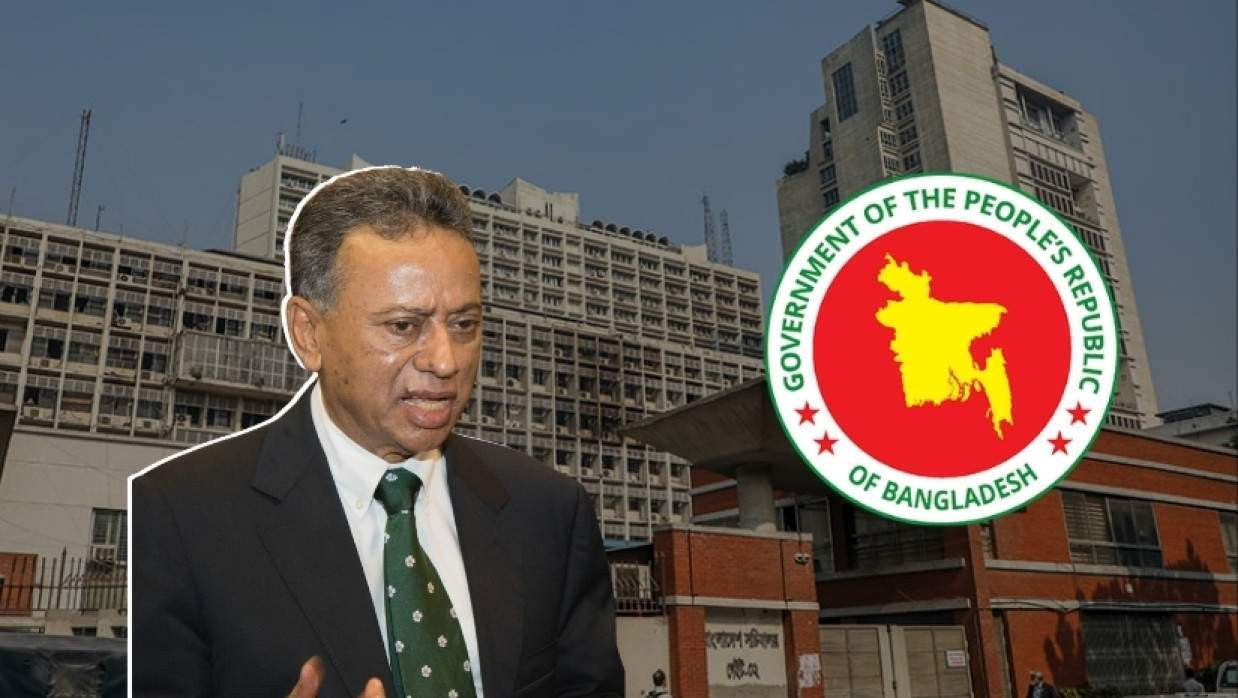
The interim government has formally declared the execution of the much-anticipated 9th National Pay Scale for public servants, set to take effect from July 1, 2026. However, in a strategic fiscal maneuver to cushion the state exchequer against sudden monetary shocks, the newly placed national budget for the 2026–27 fiscal year contains no direct additional sector-wise allocations under the regular wages and salaries header.
Instead, Finance and Planning Minister Amir Khosru Mahmud Chowdhury’s budget speech has explicitly clarified the administration's roadmap, acknowledging that state employees have been operating under an unchanged wage architecture for nearly 11 years while facing steep inflationary pressures on living standards.
Inside the Salary Ledger: Strict Caps on Baseline Allocations
The proposed budget sets the total consolidated allocation for regular public sector pay and allowances at BDT 89,380 crore. This total figure represents a modest expansion from the original BDT 84,114 crore allocated in the outgoing FY 2025–26 budget, which was later revised upward to BDT 84,739 crore.
Within the newly proposed payroll structure, the government has earmarked BDT 13,874 crore specifically for the salaries of cadre officers, alongside BDT 30,671 crore for the wages of non-cadre employees. The remaining chunk of BDT 44,835 crore has been set aside to cover the stated allowances for both officers and staff across the republic.
Secretary Committee to Recalibrate Pay Commission Revisions
Finance Ministry officials have confirmed that the 9th National Pay Scale will not be implemented verbatim from the initial blueprint drawn up by the Pay Commission. Instead, the government has set up a high-level Secretary Committee tasked with reviewing the fiscal feasibility of the recommendations.
The committee is currently fine-tuning its final reports and is widely expected to recommend a slight downward adjustment in the initial salary growth rates to preserve macroeconomic stability. To bridge any immediate funding gaps when the pay scale goes live in July, the Finance Division is bypassing direct payroll adjustments by tapping into multi-sectoral block allocations and unexpected emergency expenditure funds. Over BDT 37,000 crore has been secured across various block headers specifically to fund the initial wage transition without inducing a currency deficit.
Staggered 3-Phase Execution Strategy
To successfully navigate global economic volatile conditions and internal fiscal challenges, the executive has structured the pay scale's deployment across three distinct financial cycles. Under this strategic timeline, government workers will begin drawing exactly half of their newly approved basic salary increment starting next month.
The second 50 percent installment of the basic salary adjustment will be unlocked in the subsequent 2027–28 fiscal cycle. Finally, all enhanced allowances, benefits, and subsidiary perks under the 9th Pay Scale will be integrated into the automated payroll system during the 2028–29 fiscal year.
Digital Enterprise Reforms: 'Banglabiz' and NBR Automation
The national budget speech also prioritizes extensive institutional deregulation alongside state payroll reforms. State news agency BSS corroborated that the government is launching a centralized, comprehensive digital platform named 'Banglabiz' to serve as an integrated one-stop commercial portal for corporate licensing, permits, and tax management.
Simultaneously, the National Board of Revenue (NBR) is moving forward with deep digital automation. The upcoming fiscal guidelines lay out structural shifts to move tax return filing entirely online, initiate direct automated bank transfers for tax refunds, and establish specialized tribunals to rapidly resolve long-standing tax disputes.
Expanding the Social Safety Net and Macroeconomic Hurdles
On the social welfare front, the state is rolling out an ambitious 'E-Health Card' pilot program to provide digitized healthcare tracking and medical access to 2.5 million citizens. This is backed by an expanded layout for core social security safety nets, including a higher financial backing for the newly introduced Family Cards and specialized Farmer Cards.
Despite these welfare commitments, financial analysts remain focused on how the interim administration plans to accelerate the Annual Development Programme (ADP) while absorbing massive, rigid subsidy burdens across the domestic natural gas, power, and fertilizer sectors. Furthermore, with the sovereign debt repayment schedule facing tight pressure due to maturing foreign loans, many are keeping a close eye on the government's upcoming legislative steps to aggressively expand internal tax collection and maximize revenue from domestic sources.
 Follow The Daily Campus on Google News