Demonstrator Crisis: HSC Candidates Forced to Take Practical Exams Without Practical Knowledge
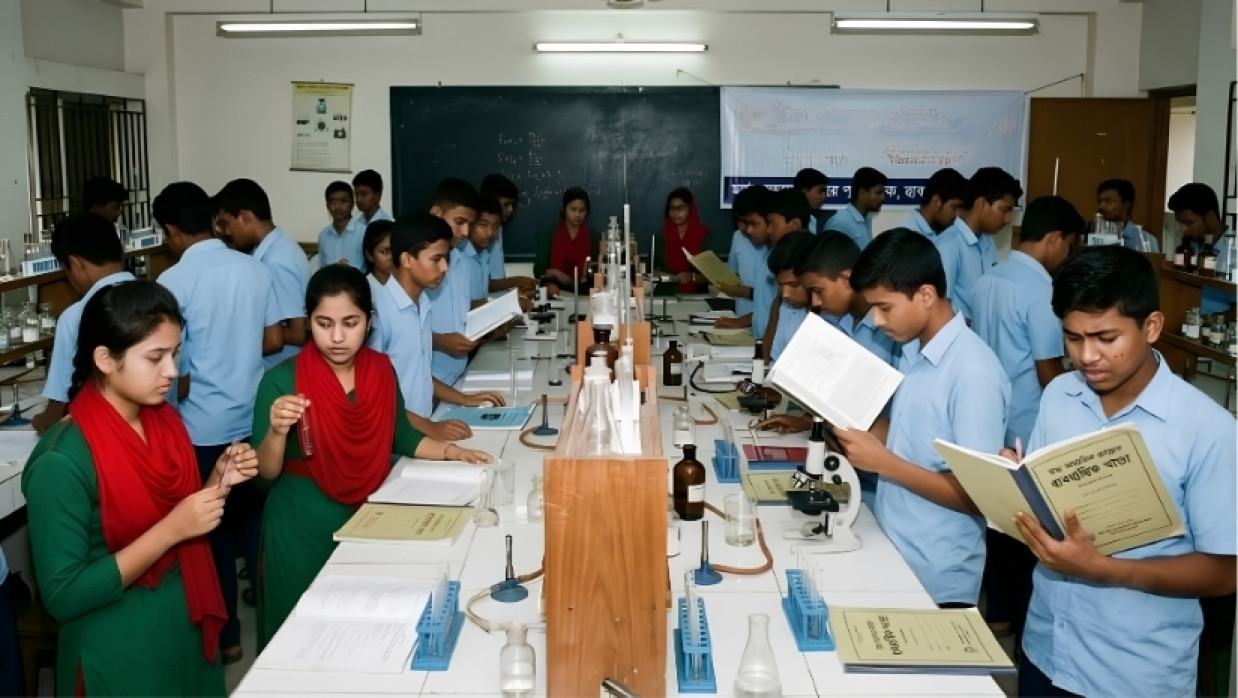
With the Higher Secondary Certificate (HSC) and equivalent examinations rapidly approaching, thousands of candidates across Bangladesh are staring at a structural crisis. Practical laboratory sessions, a mandatory and vital component of science education, have been effectively reduced to mere paperwork. An investigation by The Daily Campus across 20 different colleges nationwide reveals that a massive segment of science students is entering the examination halls without ever gaining hands-on laboratory experience or learning how to operate basic scientific apparatus.
Khadiza Meheli, an HSC candidate from Lalmonirhat Government College, expressed her helplessness regarding the situation, stating that there are no active demonstrators in her college. Instead of conducting experiments, classroom teachers merely instructed students to copy vital topics into their practical notebooks. When the matter was brought to the principal's attention, the administration cited a complete lack of government recruitment for demonstrators.
A identical situation prevails for Md. Samin, an examinee at Sreebardi Government College in Sherpur, who noted that he never even had the opportunity to step inside a laboratory. For the vast majority of secondary students, practical education has been reduced to an administrative formality of maintaining a notebook, missing out entirely on observation, experimental methodology, and data analysis.
The Root Cause: An Acute Operational Deficit in Government Colleges
According to data from the Bangladesh Bureau of Educational Information and Statistics (BANBEIS), there are currently 708 government colleges across the country. In these institutions, demonstrators are explicitly designated to manage lab operations and conduct practical classes across core disciplines, including Chemistry, Physics, Botany, Zoology, Agriculture, Biology, Mathematics, Geography, Soil Science, and Home Economics.
Currently, approximately 2,000 demonstrator posts sit completely vacant across the nation. The last formal recruitment drive for college demonstrators took place nearly a decade ago in 2017. While those recruited during that window have since received promotions, their actual postings remain unexecuted. Educational insiders warn that if these promotions are finally implemented, 95 percent of government colleges will be left without a single demonstrator, threatening to trigger a complete collapse of institutional laboratory ecosystems.
To compensate for this massive deficit, lecture-focused personnel—including lecturers, assistant professors, and associate professors—are being forced to take on the extra burden of conducting practical lab classes. This operational stopgap creates immense additional pressure on teaching staff, ultimately degrading the overall quality of routine theoretical lectures and leaving students deprived of comprehensive scientific training.
The Higher Education Trap: Long-Term Consequences on Science Careers
The absolute absence of hands-on technical training at the higher secondary level directly damages the academic trajectory of students pursuing elite higher education. Upon securing admissions into premier universities, medical colleges, engineering institutions, and specialized science faculties, these students immediately face a massive learning gap.
In higher education ecosystems that prioritize intensive research, advanced instrumentation, and independent lab work, these students find themselves significantly disadvantaged compared to peers with robust foundational training. This lack of practical literacy destroys student confidence, severely impedes their ability to grasp advanced scientific concepts, and systematically dampens the nation's capacity to produce future innovators, researchers, and technical professionals.
Professor Mohammad Mojibur Rahman of the Institute of Education and Research (IER) at Dhaka University criticized the current paradigm as highly insufficient. He stressed that resolving this systemic crisis requires an immediate surge in the recruitment of both teachers and demonstrators, alongside targeted administrative policies to bridge the widening learning gap.
Bureaucratic Bureau: A Six-Year Legal and Administrative Deadlock
The worsening vacancy crisis is tied directly to a prolonged bureaucratic deadlock within the Directorate of Secondary and Higher Education (DSHE). A recruitment drive initiated by DSHE in 2020 for 610 vacant positions—including demonstrators, research assistants, and lab assistants—remains legally paralyzed for six years.
Although the oral examinations were finalized in June 2024, the publication of final results stalled due to allegations of institutional corruption and recruitment irregularities, prompting an active investigation by the Anti-Corruption Commission (ACC). Desperate for a resolution, a panel of 10 candidates filed a writ petition with the High Court, which subsequently ordered the ACC to submit its formal investigation report.
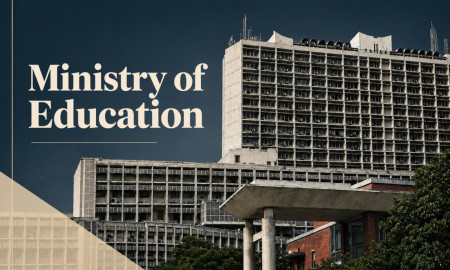
While candidates argue that the career prospects of thousands of eligible job seekers are being ruined by administrative delays, the institutional leadership remains non-committal. When pressed for a statement, Professor Dr. Khan Moinuddin Al Mahmud Sohel, Director General of DSHE, acknowledged the legal complexities and stated that no definitive comments could be made until the active court cases and ACC investigations are officially resolved. Concurrently, Education Minister Dr. A N M Ehsanul Hoque Milan downplayed immediate accountability, indicating that the ministry would review the demonstrator results at a later date.
 Follow The Daily Campus on Google News