Introducing Bengal to the Slavs
For any international student, the journey abroad is as much about self-discovery as it is about academic pursuit. Since beginning my studies in Russia, I have often found myself navigating a subtle, yet persistent, identity crisis. While Russia may not be the first destination that springs to mind for Bangladeshi students dreaming of studying overseas, its affordable living costs, low tuition fees, and high-quality educational system have made it an increasingly popular choice in recent years.
Amidst the varied narratives and controversies surrounding life in Russia, there is an untold story that deserves to be brought to light—the story of its students. From my perspective, this identity crisis stems from two primary factors: a general lack of awareness about Bangladesh among the local population, and our own occasional struggle to represent our nation's rich heritage effectively.
I felt this acutely from my very first day in the university dormitory. This realization sparked a thought: we needed to present Bangladesh in a way that would leave a lasting impression. This was the genesis of our event, which we aptly named "Get to Know Bangladesh." It was born from a simple conviction: to hold our heads high, we must first tell our story properly.
Moscow Polytechnic University, situated in central Moscow, facilitating 5 campuses, each dedicated to different faculties such as Faculty of Economics and Management, Faculty of Electric Engineering and Technology, Faculty of Printing and Media-industry, is a renowned technical institution that has become a top choice for Bangladeshi students. In the last year alone, nearly a hundred students from Bangladesh were admitted here.
Life as an international student comes with its challenges, but I have found that the academic structure itself is surprisingly accessible and rewarding. An academic calendar in Russia typical starts from September and ends in August, July and August being the summer vacation period. From the very first semester, we were encouraged to write articles, present at conferences, and earn certificates for our participation and achievements.
A typical semester is divided into three months of lectures followed by three months dedicated to personal research, culminating in presentations. It is a system designed to foster independent thought and academic rigor. Yet, despite these accomplishments, we often felt unseen—a silent presence in a vast, bustling metropolis.
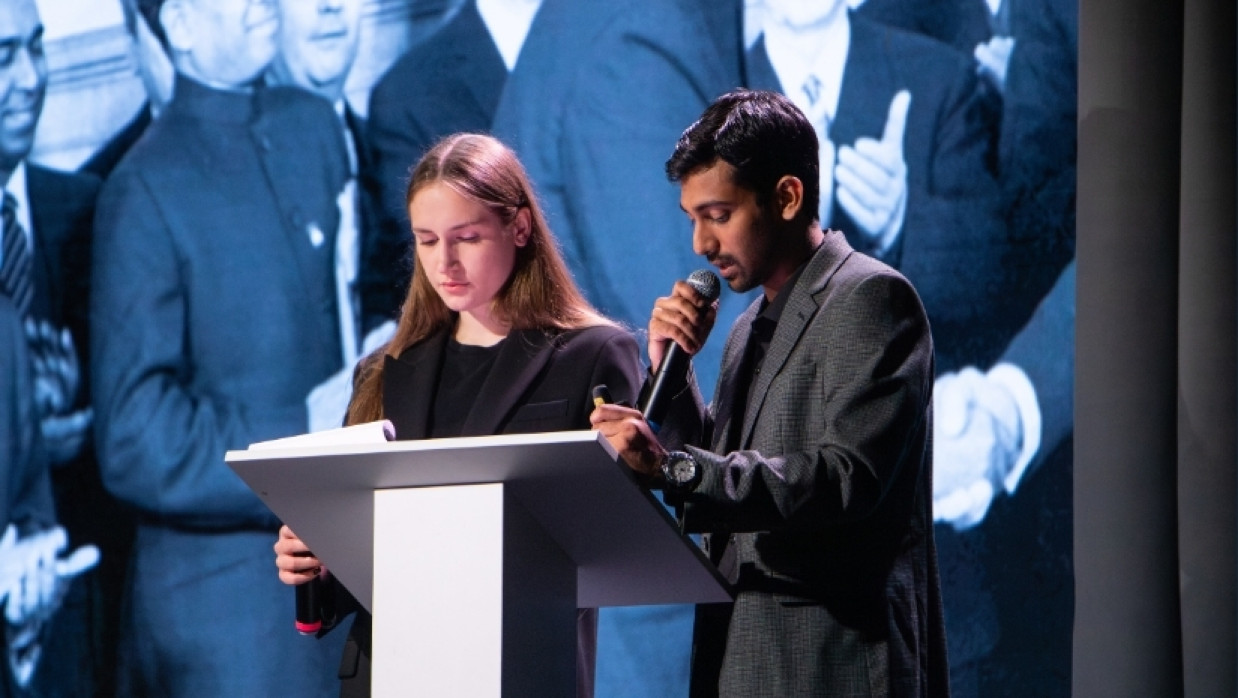
That feeling of invisibility changed on Friday, May 29, 2026. With the support of the Faculty of Economics and Management, a group of Bangladeshi students organized an event that would transform perceptions. We began with a photo exhibition tracing our history from ancient times to the modern era.
This visual journey, which remained on display for an entire week, served as a powerful prelude to the main program. In the main conference hall, before an audience of faculty members, Russian students, and other international students, we screened a compelling documentary. It depicted the journey of Bangladesh from the birth of its flag in 1971 to the vibrant nation it is in 2026, showcasing its traditions, serene beauty, and natural wonders.
But the highlight of the program came next, as we posed a crucial question to our audience: "But did our history only start in 1971?" What followed was a deep dive into the millennia-old civilization of Bengal. Through a meticulously prepared presentation, we traced the narrative from the ancient Vanga Kingdom and the prosperous Gangaridai Empire, through the era of regional empires, to the Bengal Subah as one of the wealthiest regions in the world.
When I told the audience that the British had to actually defeat Bengal to give birth to British India, most of the world knows before the British came, India held 27% of the worlds GDP but no one knew that Bengal alone held almost 15% making it the richest region on earth, the audience was flabbergasted.
We navigated the complexities of British rule, the partitions, and the eventual birth of Bangladesh in 1971. We also highlighted the nation's strategic importance on the ancient Silk Route and its burgeoning potential as a key player in modern South Asia. I will never forget the look of sheer amazement and mesmerization in the eyes of the faculty members as they absorbed a story they had never encountered before. The storytelling part of the event ended with a smooth joke that Russians living in Ruppur are happier because its always summer.
Following the thunderous applause, we captivated our guests with a spectacular fashion show, showcasing the vibrant cultural attire worn in Bangladesh today. We concluded the event with a traditional tea party, where we delighted our guests with the iconic sweet treats, Shada Mishty and Balushai. It was a fitting end to an evening that had blended history, culture, and hospitality in equal measure.
"Get to Know Bangladesh" was more than just an event; it was a spark. It marked a turning point for the Bangladeshi student community at Moscow Polytechnic University. It demonstrated that our identity is forged not only through academic excellence but through unity, shared purpose, and the courage to share our heritage with the world.
This is just the beginning. Our goal is to establish a lasting presence in the university, creating a supportive and vibrant community for both current and future Bangladeshi students—ensuring they will always hold their heads high and prove to be competitively brilliant anywhere in the world.
Disclaimer: The opinions expressed in this article are those of the author, Faijul Anam Efat, and do not necessarily represent the views or editorial position of The Daily Campus.
 Follow The Daily Campus on Google News