New Education Model Proposed: 40% Academic, 30% Practical, 20% Internship, 10% Intrapreneurship
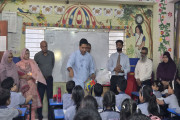
The government has initiated a comprehensive structural overhaul of the country's higher education framework to make it more skill-based, employment-oriented, and modern. The proposed model reallocates traditional academic learning weights by integrating practical skills, mandatory internships, and entrepreneurship modules. Dr. A.N.M. Ehsanul Hoque Milon, the Minister for Education and Primary and Mass Education, announced the framework on Sunday during the inauguration ceremony of National University's 12,000-teacher training program held at the Bangabandhu International Conference Center (BICC) in the capital.
The Education Minister emphasized that bridging the existing gap between academic curricula and the evolving demands of the industrial sector is an urgent requirement. Under the proposed system, the curriculum will transition away from a strictly certificate-based track toward building an internationally competitive, skilled, and capable workforce.
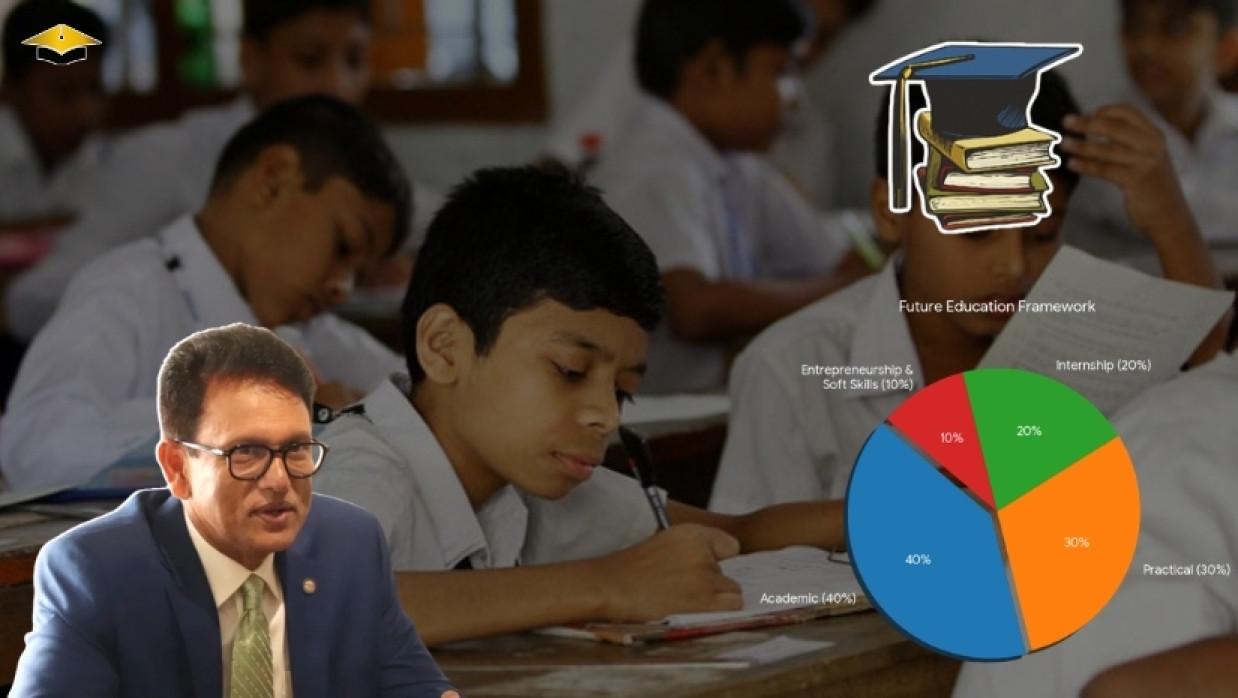
The framework systematically restructures university-level assessments into four core functional domains. According to the guidelines presented by the minister, the distribution of higher education learning modules will be structured around specific ratios:
"Under the proposed educational framework, 40 percent will be dedicated to academic knowledge, 30 percent to practical and professional skills, 20 percent to internships, fieldwork, and project-based learning, and 10 percent to entrepreneurship, soft skills, and career development. We want to build an education system that focuses not just on achieving degrees, but on producing skilled and efficient human resources. This framework has been proposed with that exact goal in mind." — Dr. A.N.M. Ehsanul Hoque Milon, Minister for Education and Primary and Mass Education
To facilitate this massive transformation, the government is placing heavy emphasis on expanding and modernizing the Technical and Vocational Education and Training (TVET) sector. This initiative aims to ensure that students can directly align their institutional knowledge with real-world professional requirements upon graduation.
The country's higher education apparatus currently spans 57 public universities and 116 private universities. The state plan outlines an ambition to transform Bangladesh into an international educational hub. To elevate these domestic institutions to international standards, the Ministry of Education and the University Grants Commission (UGC) are designing strategies to enhance cross-border education, promote advanced research collaborations, and expand global academic partnerships.
Reflecting on the historical growth of this extensive tertiary network, the minister noted that both the National University and the private university framework were originally established during the tenure of former Prime Minister Begum Khaleda Zia through the landmark 1992 Act. He concluded by asserting that if these modernization blueprints are executed with genuine sincerity, the country can successfully transition into an innovative, skilled, and knowledge-based nation.
 Follow The Daily Campus on Google News