The Ministry of Education has made several changes to the previously proposed structure for Dhaka Central University. Under the revised plan, the institution will remain an independent university and the seven government colleges in the capital will be linked to it through an ‘affiliation’ model rather than full integration. Additionally, academic activities will begin in a rented building until a permanent campus is constructed.
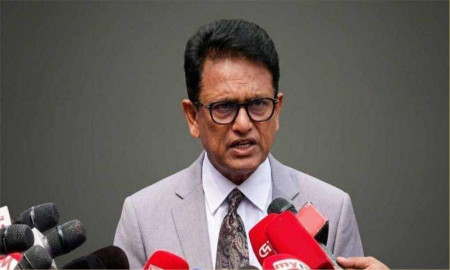
According to sources, a meeting was held on 25 December at the Secretariat conference room to finalise the draft ordinance for Dhaka Central University. Education Adviser Dr C R Abrar, Secondary and Higher Education Division Secretary Rehana Parvin, representatives of seven ministry secretaries, UGC officials, principals of the seven colleges, and other concerned officers attended the meeting.
During the meeting, various demands, opinions, and suggestions received on the proposed ordinance were analysed, leading to the adoption of these decisions. It was also informed that another meeting will be held to finalise the draft ordinance.
As per the new decision, after the formal launch of Dhaka Central University, its operations will commence in a rented building. In this context, the authorities are looking for a suitable building in the Dhanmondi area of the capital to rent. Once the draft ordinance is finalised, academic activities will begin in the rented premises.
The draft ordinance mentions that a new university named ‘Dhaka Central University’ will be established. A self-sufficient infrastructure will be constructed for the university’s operations. Until the permanent campus is ready, it will be possible to rent buildings or spaces as needed to run activities.
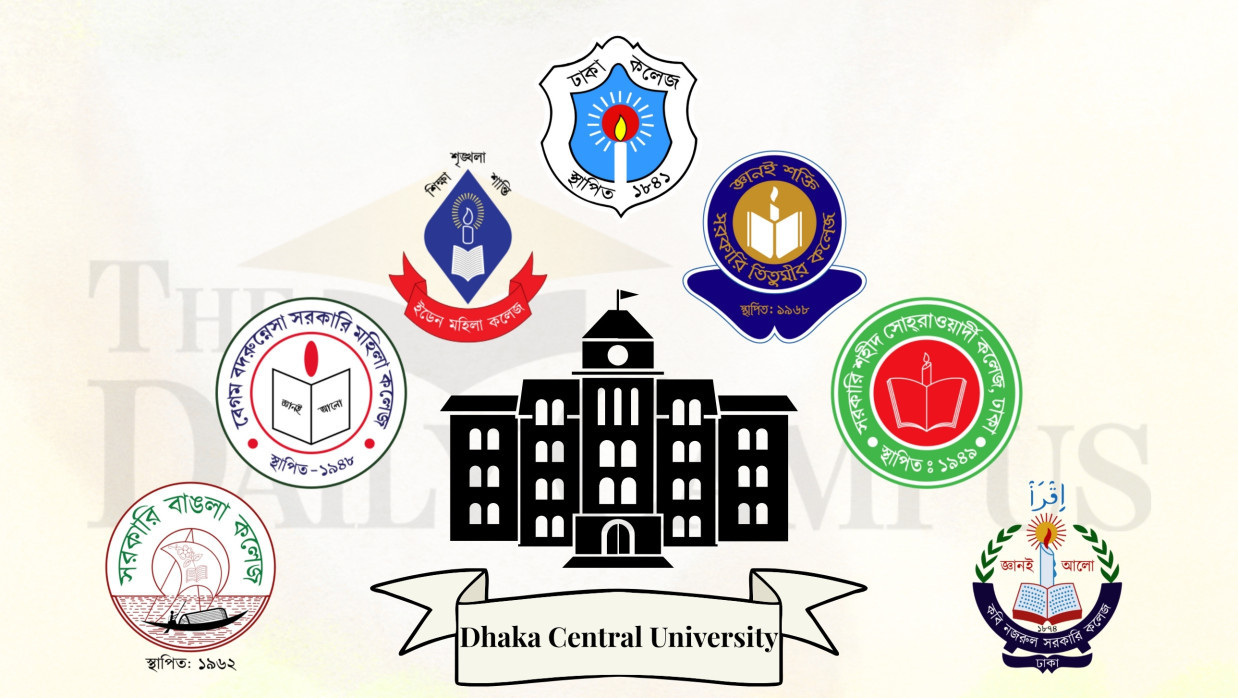
The seven government colleges in Dhaka metropolitan area — Dhaka College, Eden Mohila College, Begum Badrunnesa Mohila College, Shaheed Suhrawardy College, Kobi Nazrul College, Government Bangla College, and Titumir College — will remain attached to Dhaka Central University as ‘affiliated colleges’. The existing identity, characteristics, infrastructure, movable and immovable properties, and other facilities of the affiliated colleges will remain intact.
Furthermore, a statutory body named ‘Dhaka Central University’ will be formed with the vice-chancellor, pro-vice-chancellor, treasurer, syndicate, and academic council members.
In addition, the university will handle approval and cancellation of affiliation, curriculum determination, examination conduction, degree awarding, and various other academic activities related to education. Decisions on affiliation and de-affiliation will be taken by the university syndicate based on the recommendation of the academic council.
The university will also arrange in-service and research-based training for teachers of the affiliated colleges. Moreover, admission tests will be conducted centrally by the university authority. Five out of the seven colleges currently offer higher secondary education, and these five colleges will continue to do so.
The draft also states that the annual operational expenditure (excluding capital expenditure) of the university will be determined through regulations on tuition and fees payable by students, payment methods, and scholarship provisions. Students will have to pay the fixed semester-based (or monthly, where applicable) tuition and fees.
It is pertinent to mention that in 2017, the seven government colleges were affiliated with Dhaka University without adequate preparation, leading to various crises since then. In January this year, the affiliation was cancelled before the new university was finalised, further complicating the situation. Currently, the seven colleges are being run under an interim arrangement with the principal of Dhaka College as administrator.
The government initiated the formation of ‘Dhaka Central University’ by integrating the seven colleges and published a draft ordinance including four school-based and ‘hybrid’ education system proposals. However, due to disagreements and movements by teachers and students regarding this structure, classes for students admitted in the 2024-25 academic year could not begin. At that time, the Ministry of Education stated that the draft ordinance was being revised and finalised.
Meanwhile, around 10,000 students admitted in the 2024-25 academic year have not received any classes even after one year and are suffering from an identity crisis. While new admissions have started in other universities, students here are frustrated due to prolonged session jams.
However, following recent approval of the operational manual and decisions, classes for first-year students are scheduled to begin on 1 January in the campuses of the seven colleges.



 Follow The Daily Campus on Google News