PM Vows to Implement Teesta Barrage Master Plan at Any Cost
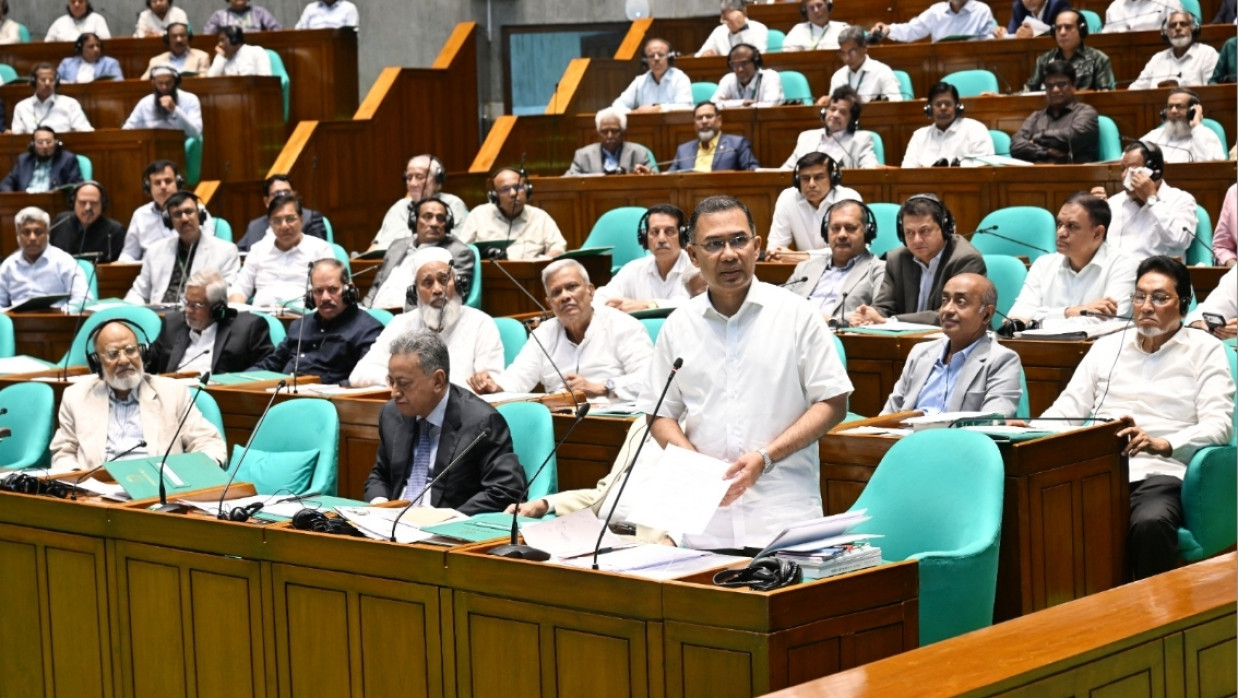
Prime Minister Tarique Rahman has categorically declared that the Teesta Barrage Master Plan will be implemented at any cost to protect Bangladesh's long-term water security, revive agriculture, and secure the livelihoods of millions in the northern region.
Addressing the House, the Premier acknowledged the persistent concerns raised by lawmakers from the water-stressed Rajshahi and Rangpur divisions regarding the drying flows of the Padma and Teesta rivers.
Padma Barrage and Nationwide Canal Excavation Schemes
To counter severe dry-season water scarcity, the Prime Minister outlined a series of monumental engineering and water-conservation initiatives:
-
The Padma Barrage Project: The government has initiated concrete steps to construct the massive Padma Barrage.
Designed to capture and preserve the vast volumes of surplus monsoon water, the barrage will store and distribute water during dry seasons, sustaining agriculture and maintaining water levels across southwestern and northern farmlands. -
20,000-Kilometer Canal Grid: The administration has launched a nationwide canal excavation and re-excavation master plan targeting twenty thousand kilometers of canals over the next five years.
The Prime Minister reported rapid momentum, confirming that approximately nine hundred kilometers of canals have already been successfully excavated or cleared within the past three months alone.
Direct Support Instruments for Millions of Farmers
Highlighting the administration's immediate post-election steps to safeguard the agrarian economy, the Prime Minister detailed two major fiscal relief measures:
First, the government has fully waived all outstanding agricultural loans up to ten thousand Taka, including all accumulated interest, directly benefiting one point three million smallholders across the country.
Turning to energy security and governance, Prime Minister Tarique Rahman criticized the previous administration's systematic neglect of domestic gas exploration, which created a volatile reliance on foreign energy cartels.
Pointing to the ongoing geopolitical crisis in the Middle East as proof of how dangerous import dependency can be, he affirmed that Bangladesh is aggressively diversifying its energy infrastructure through domestic exploration and rapid renewable energy investments. The Premier concluded by reiterating that comprehensive institutional reforms are simultaneously underway in the education sector to build an advanced, high-skill generation capable of driving independent economic growth.
 Follow The Daily Campus on Google News