Dipen Dewan Resigned Judicial Service for Politics, Why Did He Quit Ministry Within 3 Months?
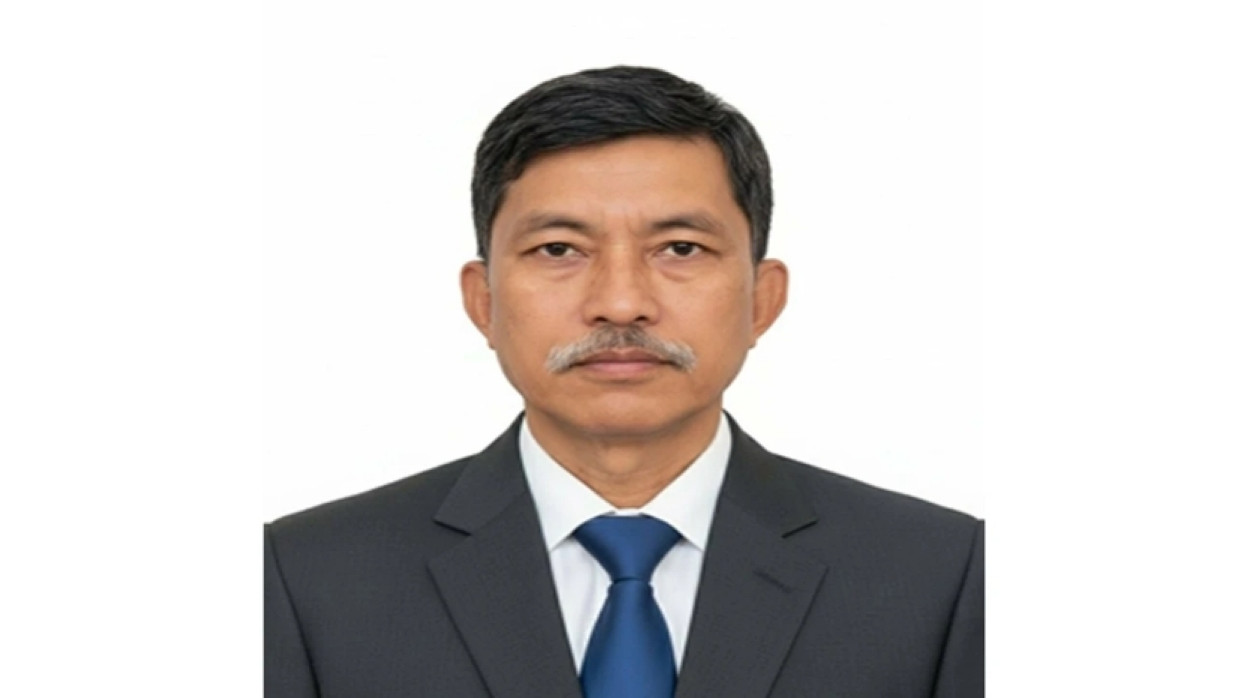
Prime Minister Tarique Rahman has officially accepted the resignation of Chittagong Hill Tracts (CHT) Affairs Minister Dipen Dewan. Additional Press Secretary to the Prime Minister, Atikur Rahman Rumon, confirmed the matter to The Daily Campus today, Monday, stating that the minister chose to step down citing prolonged physical complications that hampered his day-to-day administrative obligations.
While Dewan’s exit is officially framed around deteriorating health, his departure marks the very first resignation within Prime Minister Tarique Rahman's newly formed cabinet. In a political culture where stepping down voluntarily due to health is exceedingly rare, this sudden move has sparked intense national speculation and pulled back the curtain on deep-seated administrative pressures within the ministry.
A Career Swapped: From the Judicial Bench to Central Politics
Dipen Dewan’s journey into the upper echelons of state administration is rooted in an expansive family legacy and personal sacrifice. Born on June 8, 1963, in Rangapani, Rangamati, he is the son of Subimal Dewan, a founding leader of the Rangamati district BNP who served as an influential state minister-ranked adviser to the party's founder, late President Ziaur Rahman.
Though deeply connected to the student wing Jatiyatabadi Chhatra Dal during his academic years at Dhaka University, family pressures led Dewan to sit for the Civil Service exams. He qualified in the 7th BCS examinations and entered the judicial service, embarking on a prestigious career as a judge that spanned nearly two decades.
His defining political turning point arrived in late 2006. Following the high-profile defection of the then-Deputy Minister Mani Swapan Dewan, the BNP faced a severe leadership vacuum in the hill tracts. Responding to a direct call from BNP Chairperson Begum Khaleda Zia, Dipen Dewan took the bold step of resigning from his permanent judicial post to step into active politics.
However, his political debut was instantly disrupted by the "One-Eleven" political crisis, which stalled national elections and locked him out of the 2008 parliamentary race due to newly imposed regulatory hurdles. Undeterred, he rebuilt his base, eventually being elected Rangamati District BNP President in 2010 and serving as the central committee's Assistant Religious Affairs Secretary since 2016. Following the regime change on August 5, 2024, Dewan emerged as the ultimate guardian-figure for the party in the hill tracts, leading movements through thick and thin.
The Historic Mandate and Subsequent Cabinet Inductions
Following the 13th National Parliamentary Election, which saw the BNP secure a powerful two-thirds majority to form the government, Dewan achieved a historic landslide victory. Running with the Sheaf of Paddy (Dhaner Sheesh) symbol, he bagged a record-breaking 201,544 votes, defeating his nearest independent challenger, Pohel Chakma (under the Football symbol), by a staggering margin of 170,322 votes.
On February 17, Dipen Dewan took his formal oath as a Member of Parliament and was concurrently inducted into Tarique Rahman's cabinet as the full Minister for CHT Affairs, alongside Mir Helal, who took charge as State Minister. His appointment triggered widespread celebrations across the hills, ending a 12-year drought for the region without a full cabinet minister. Dewan also achieved the rare distinction of becoming the first-ever full cabinet minister from the BNP to hail from the CHT region.
Behind the Scenes: Administrative Overload and the Council Crises
Despite the monumental mandate, Dewan’s historic tenure survived a mere three months. While the official resignation letter focuses entirely on his medical inability to sustain the rigorous operational demands of the government, insider sources within the ministry and regional political grids paint a far more complex picture.
According to reliable sources, the CHT Affairs Ministry has recently been the epicenter of intense institutional volatility regarding the reformation and restructuring of the powerful Hill District Councils. The ministry was reportedly hit with an overwhelming influx of recommendations, lobbying, and aggressive administrative pressure from various regional factions and political heavyweights. Allegations of massive financial transactions and bribery surrounding these lucrative regional appointments created a toxic working environment.
Compounding this external pressure was a brewing internal crisis. Bureaucrats and local leaders had raised serious complaints regarding the controversial, high-handed actions of a politically appointed official who was exceptionally close to the minister. Navigating these compounding administrative scandals, policy gridlocks, and aggressive lobbying proved too taxing for the ailing Dewan.
Recognizing that his compromised health could no longer withstand the grueling, high-pressure demands of the ministry, the former judicial officer chose to protect his legacy by making the difficult decision to step down from the cabinet.
 Follow The Daily Campus on Google News