Ramisa Murder Case: Sohel Admits Rape, Names ‘Dollar’ as Mastermind
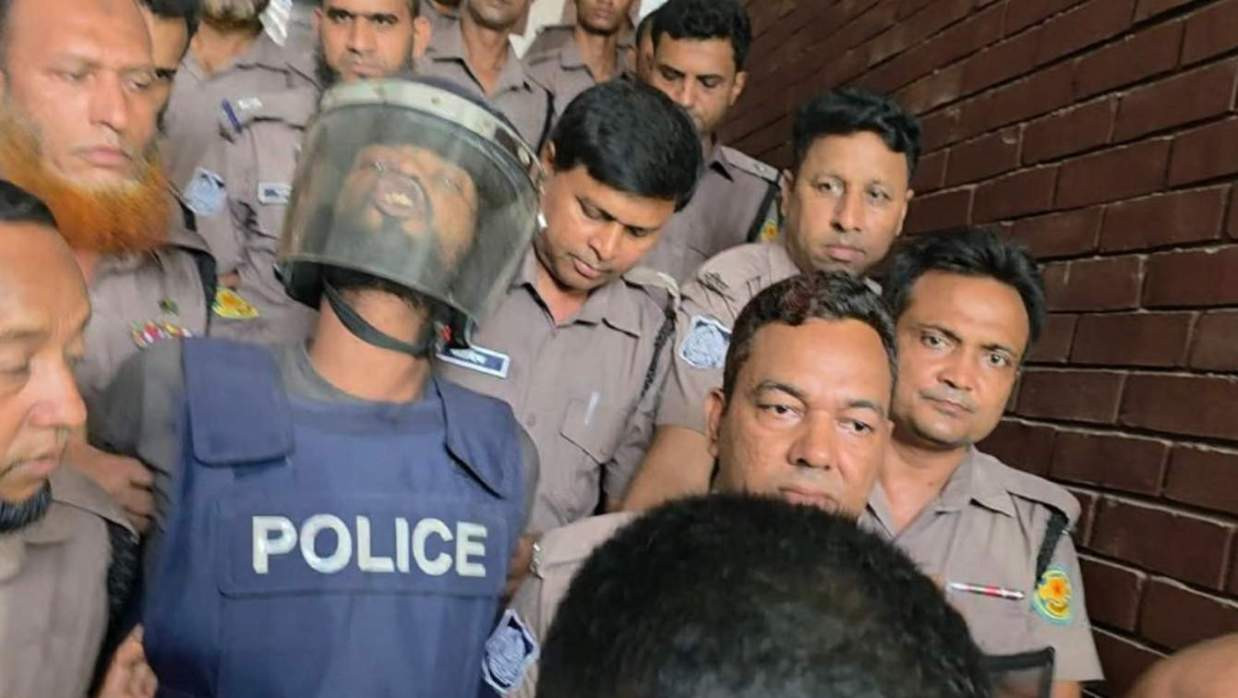
In a major development in the brutal rape and murder case of seven-year-old Ramisa Akter in Pallabi, the prime accused, Sohel Rana, has publicly confessed to raping the child while providing sensational details regarding the murder. The disclosures came today, Monday, as Sohel Rana and his co-accused wife, Swapna Akter, were produced before the Dhaka Metropolitan Child Violence Suppression Tribunal for their formal charge hearing.
The two suspects were escorted from prison to the Dhaka Metropolitan Sessions Judge Court lockup at approximately 7:45 AM. Sohel was brought in from the Keraniganj Central Jail, while Swapna was transported from the Kashimpur Prison. Later, at around 11:00 AM, they were presented before the court of Judge Masroor Salekin.
While being escorted to the courtroom, Sohel Rana made startling claims to waiting journalists, alleging that a wealthy individual from the Mirpur-11 area, whom he identified as "Dollar," orchestrated the killing. Sohel claimed that he was not solely to blame for the crime, asserting that his wife had no involvement. According to his statement, "Dollar" allegedly paid him 200,000 BDT to commit the crime, declaring, "I committed the rape, but Dollar did the killing."
Furthermore, Sohel raised objections regarding the investigative procedure, claiming that the judicial records were written automatically without conducting his DNA profiling. When pressed by reporters to reveal the exact identity of the financier named Dollar, Sohel only specified that he is an immensely wealthy person operating out of the Mirpur 11 territory.
The trial has progressed at an unprecedented pace. On May 24, the case’s investigating officer, Sub-Inspector (SI) Ohiduzzaman of the Pallabi Police Station, submitted the formal chargesheet to the Dhaka Chief Metropolitan Magistrate Court. The chargesheet details conclusive proof of rape and murder against Sohel Rana, and charges of abetment against his wife, Swapna Akter. The prosecution has listed 18 individuals as formal witnesses.
With the chargesheet's submission, the case was immediately transferred to the Child Violence Suppression Tribunal, which fixed June 1 for the charge hearing. Legal experts note that the case has rapidly completed four monumental phases: the preliminary field investigation, DNA analysis, chargesheet formulation, and formal judicial cognizance.
Public Prosecutor (PP) Azizur Rahman Dulu expressed his commitment to ensuring a speedy trial, stating that he will perform his assigned duties diligently to conclude the case swiftly, leaving subsequent procedural decisions to the discretion of the tribunal. Commenting on earlier assurances of a fast-track trial by high-level state executives, the PP maintained that he would strictly focus on his legal mandate without making any political observations.
Providing a critical overview of the post-verdict landscape, Dhaka District Legal Aid Advocate Rayhana Nazneen Jui observed that while the lower court trial might conclude quickly, the actual execution of the final verdict remains the most challenging aspect. She explained that complex appellate procedures in higher courts often drag out final settlements. However, she emphasized that if the Chief Justice and central prison IG maintain rigorous oversight alongside the lower court, the timeline can be compressed; otherwise, standard procedures like the Death Reference could take a prolonged duration to conclude.
The tragic incident dates back to May 19, when seven-year-old Ramisa Akter, a second-grade student at Popular Model High School, left her home at 9:30 AM. According to the case files, Swapna Akter systematically lured the child into her flat. Following a frantic search, family members and neighbors broke down the flat's door, discovering Ramisa's decapitated body on the bedroom floor and her severed head submerged in a bucket inside the bathroom. Although Sohel Rana initially cut a window grill to flee to Narayanganj, he was quickly apprehended by the police. Both suspects have previously recorded confessional statements in court.
 Follow The Daily Campus on Google News