‘Khaleda Zia, Symbol of Bangladesh’s Democracy’
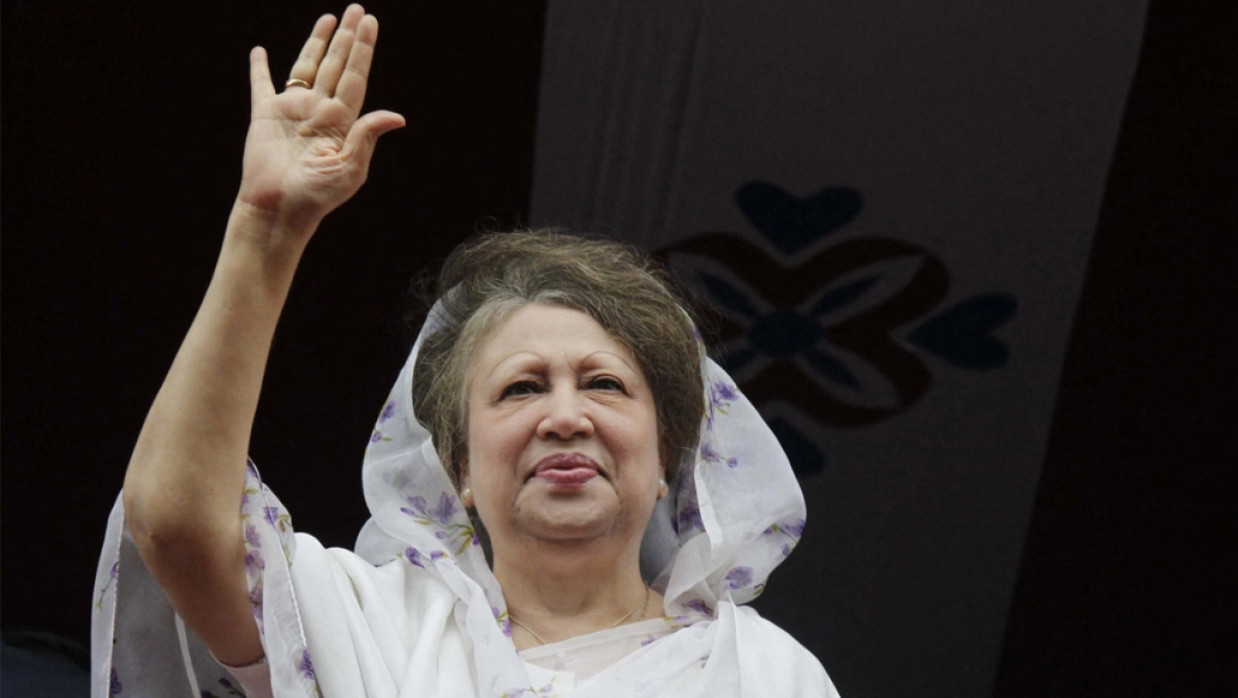
In Bangladesh, democracy and Khaleda Zia were complementary to each other. She was the first female Prime Minister of the country. At one time, she fought to restore democracy in a nation plagued by military autocracy in South Asia. She became acceptable and trustworthy to the common people and was widely praised. Various initiatives she took played a special role in women’s empowerment. Her repeated stance in favour of democracy turned her into a symbol of democracy in Bangladesh.
The three-time Prime Minister Khaleda Zia passed away on Tuesday, 30 December, at 6:00 am. At the time of her death, she was 80 years, 4 months, and 16 days old. Khaleda Zia and her party BNP were once praised for their struggle to bring Bangladesh back from military rule to democracy.
However, towards the end of her life, she had to spend several years in prison on corruption charges. BNP claims that the cases filed against Khaleda Zia were politically motivated. At the same time, she became a victim of the personal vengeance of the then Prime Minister Sheikh Hasina. After Sheikh Hasina fled to India on 5 August 2024 amid a mass uprising and relinquished power, all cases against Khaleda Zia were cancelled. From an ordinary housewife to a powerful politician, Khaleda Zia became Bangladesh’s first Muslim female Prime Minister.
She was also the second female Prime Minister in any Muslim country in the world. Pakistan’s former Prime Minister Benazir Bhutto was the first female Prime Minister in the Muslim world. In 1981, when her husband, the then popular President Ziaur Rahman, was killed in a failed military coup in Chattogram, she entered politics.
Ziaur Rahman was the announcer of independence, one of the sector commanders, and the commander of Z Force during the Liberation War. The Bangladesh government awarded him the Bir Uttom for his bravery in the war. He founded BNP on 1 September 1978.
Although she had no prior experience in politics, Khaleda Zia quickly emerged as one of the most influential politicians in Bangladesh by building civilian political resistance against military rule. While Ziaur Rahman’s party was centre-right, she succeeded in weakening Ershad’s autocratic regime by forming joint movements with both left- and right-wing political parties on the political field.
In the national election on 27 February 1991, Zia’s party won 140 out of 300 seats, and Khaleda Zia became the first female Prime Minister. During her tenure as Prime Minister, Khaleda Zia took various steps to reform the social and economic situation of Bangladesh. She was particularly active in increasing female literacy and creating employment opportunities for women. For this, she arranged free education for girls and played a role in the growth of the export-oriented garment sector in Bangladesh, where a large number of women found employment.
In a Muslim-majority country, her government, in addition to free education, also arranged separate stipends exclusively for girls to encourage them to go to school. With the help of foreign donors, initiatives were also taken to provide free midday meals to students in schools. Overall, during her tenure, the enrolment rate of girls increased significantly at primary and secondary levels.
On 17 November 1993, a report in the American newspaper The New York Times praised Khaleda Zia for her role in women’s empowerment in a Muslim-majority country. Highlighting the contrast with the policy of Pakistan’s first female Prime Minister Benazir Bhutto, the newspaper wrote: “As Prime Minister, Begum Khaleda Zia has actively encouraged education and vocational training, especially among girls.”
During her third term between 2001 and 2006, for several years she featured in the list of the 100 most powerful women in the world by the American Forbes magazine. The magazine wrote: “Once a shy and reserved housewife, Begum Khaleda Zia, as Prime Minister, has brought about a revolution in the education sector, especially in female education.”
Sheikh Hasina considered Khaleda Zia her arch-rival. Khaleda Zia’s entry into politics helped bring Bangladesh back to the democratic path, but she quickly became the arch-rival of Awami League’s top leader Sheikh Hasina. The two women have ruled the nearly 200 million-population country in various terms since 1991. Due to their intense political rivalry, Western diplomats came to know them as the “Battling Begums”. For several decades, Bangladesh’s politics has revolved around these two women.
South Asia researcher Michael Kugelman, based in Washington, said: “When I hear the name Khaleda Zia, the first thing that comes to mind is her fierce rivalry with Sheikh Hasina. There has been intense rivalry between Khaleda Zia and Hasina for a long time, and it has influenced Bangladesh’s politics.”
Khaleda Zia paid the price for mistakes
Sheikh Hasina remained in power from December 2008 to August 2024. However, during this long tenure, even after holding three controversial elections in 2014, 2018, and early 2024, she did not face any strong political resistance.
Political analysts believe that by involving her arch-rival Khaleda Zia in various cases, Sheikh Hasina succeeded in keeping her politically inactive during this period. During Awami League’s continuous rule, nearly 200,000 cases were filed against about 4 million leaders and activists of BNP. According to the party’s statistics, during this time, at least 600 leaders and activists were victims of enforced disappearance and 3,000 were victims of extrajudicial killings. At one point, the staunch supporter of democracy, Khaleda Zia, could not prevent Sheikh Hasina’s tendency to turn authoritarian by holding power for a long time.
Washington-based South Asia researcher Michael Kugelman said that Khaleda Zia made many mistakes in the last decade. By boycotting elections, she lost opportunities. More importantly, by abandoning the middle path and adopting disruptive and confrontational positions, she lost many possibilities.
He said that her party sometimes aligned with Islamist political parties, especially the hardline ones, which caused her to lose the support of those who believe in secular and centrist Bangladesh.
Before becoming the Law Adviser of the interim government, Asif Nazrul told Deutsche Welle in an interview that Khaleda Zia’s lack of interest in gaining the confidence of Dhaka-based elite intellectuals and Western diplomats played a role in her loss of political strength. It is believed that neighbouring India has special influence in Bangladesh’s politics.
Asif Nazrul told Deutsche Welle: “In 2013, her decision not to meet Indian President Pranab Mukherjee during his visit to Dhaka and rejecting Sheikh Hasina’s proposal regarding the election-time government caused her significant political damage.”
He said she failed to win over Dhaka-based elite intellectuals and Western diplomats. Her failure to keep BNP and its allies away from separatists who fought against the Indian government in the past also weakened her.
Political analysts believe that although Khaleda Zia had massive support in the country, Sheikh Hasina tactfully kept those voters away from the ballot box during the controversial elections.
Reasons why Khaleda Zia will remain memorable
Dhaka University Professor Laila Noor Islam believes that Khaleda Zia was able to bring many positive changes in Bangladesh. Reintroducing parliamentary democracy in Bangladesh, providing employment to millions of women in the garment sector, ensuring free primary education for all, and establishing the caretaker government system to ensure free, fair, and inclusive elections are among the reasons she will remain memorable.
Asif Nazrul believes that because of Khaleda Zia’s fight for democracy and the suffering she endured towards the end of her life due to that struggle, she will remain in people’s hearts for generations.
He said that Khaleda Zia could have gone abroad during the political instability of 2006–2007 or while cases were ongoing against her. She was elderly and ill. Despite understanding the suffering she would face, she did not surrender to the Hasina government and did not take any opportunity to leave the country.
 Follow The Daily Campus on Google News