Begum Khaleda Zia: A Flashback Through Key Events in Her Personal and Political Life
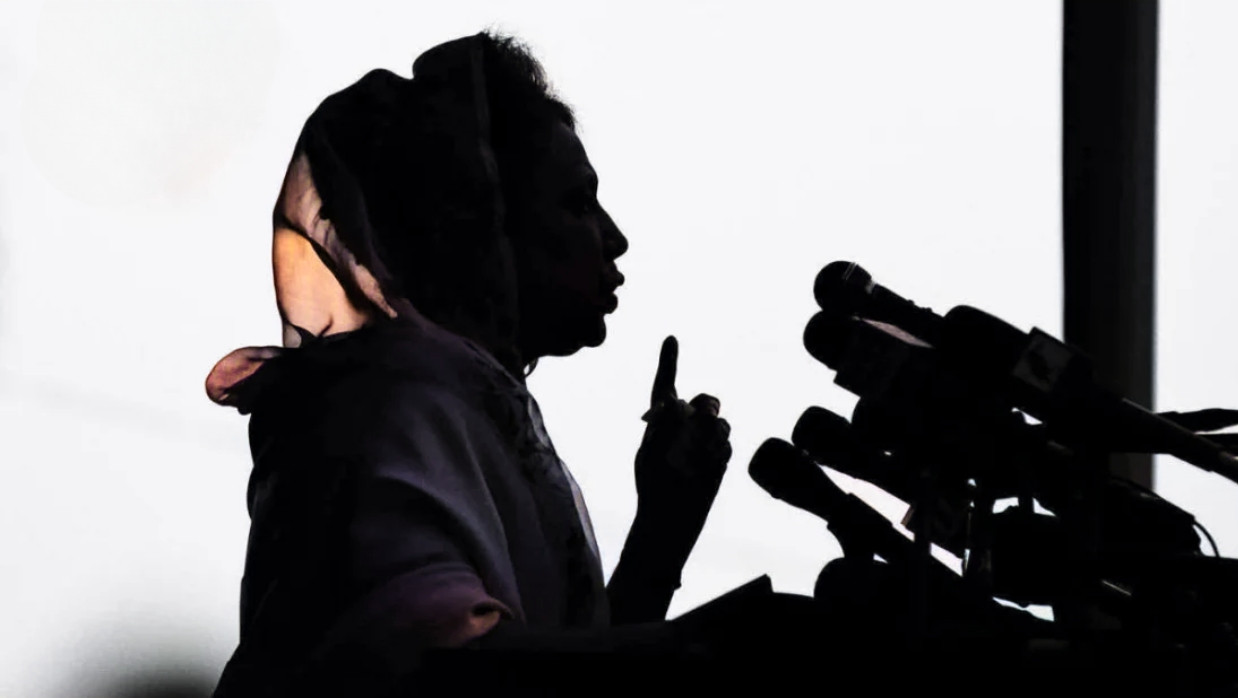
Begum Khaleda Zia led the Bangladesh Nationalist Party (BNP), one of the country’s largest political parties, for more than four decades. She served as Prime Minister of Bangladesh for more than 10 years across three terms. Throughout her long political life, Khaleda Zia faced rises and falls of power, imprisonment, physical ailments, and various forms of political hostility. Below is a record of some of the most significant moments in the personal and political life of the recently deceased former Prime Minister.
15 August 1945 – Birth
Khaleda Zia was born in Jalpaiguri, India, as Khaleda Khanam (nickname Putul). Her father Iskandar Majumdar, a businessman, had moved from Feni to Jalpaiguri. Their ancestral home was primarily in Shripur village, Fulgazi upazila, Feni district in southeastern Bangladesh. She was the third among three sisters and two brothers. Her name was given as Khaleda Khanam, with the pet name “Putul”.
August 1960 – Marriage
While studying at Surendranath College in Dinajpur, she married Captain Ziaur Rahman of the then Pakistan Army. After marriage, she added “Zia” to her name. Ziaur Rahman’s nickname was Kamal. At that time, Zia was a smart captain in the Pakistan Army, serving as a DFI officer in Dinajpur.
1965–1971 – Family Life and Liberation War
In 1965, Khaleda Zia went to West Pakistan (now Pakistan) with her husband. She stayed with him in Karachi until March 1969. Later she came to Dhaka. After staying in Joydebpur for some time, her husband was posted to Chattogram, and she lived with him there and in Chattogram’s Sholoshahar area. At the beginning of the Liberation War, after staying in hiding for some time, she came to Dhaka by river route on 16 May. She stayed at her elder sister Khurshid Jahan Haque Chocolate’s house until 17 June. On 2 July, Pakistan Army arrested her along with her two sons from the house of S Abdullah in Siddheshwari. She remained captive in Dhaka Cantonment until 15 December 1971. She was released on 16 December when Bangladesh became independent. Until she entered politics, Begum Khaleda Zia was a completely ordinary housewife. Even during Ziaur Rahman’s tenure as President of Bangladesh, she had minimal presence in politics.
30 May 1981 – Assassination of President Ziaur Rahman
In a failed military coup, BNP founder and former President of Bangladesh Ziaur Rahman was killed. At that time, Khaleda Zia was 36 years old.
2 January 1982 – Entry into Politics
She joined BNP as a general member, marking her entry into Bangladesh politics. Later, on 7 November 1982, she delivered her first speech while paying tribute at the grave of former President Ziaur Rahman.
March 1983 – Elected Vice-Chairman
Khaleda Zia was elected Vice-Chairman of BNP. At that time, to end Ershad’s autocracy, she formed the seven-party alliance. From 1983 to 1990, she was arrested three times.
August 1984 – Elected Chairperson
Within a short time after joining BNP politics, Khaleda Zia was elected Chairperson. After that, she led the party continuously for 41 years from the top position.
7 May 1986 – Boycott of Election
In the third national parliament election held before the fall of the Ershad government, BNP led by Khaleda Zia boycotted the election raising allegations of vote rigging. While other political parties continued the movement against Ershad, Khaleda Zia remained firm in her position by boycotting the election. In that movement, she earned recognition as an uncompromising leader.
27 February 1991 – Victory in Election
After the fall of the Ershad government amid movements by all political parties in the country, in the fourth national parliament election, Khaleda Zia won and became Bangladesh’s first female Prime Minister. Her first term lasted from 1991 to 1996.
15 February 1996 – Victory in Election
Amid movements and election boycott by opposition parties including Awami League, BNP led by Khaleda Zia held a one-sided parliament election. Through the sixth national parliament election held on 15 February, BNP formed the government again and Khaleda Zia became Prime Minister for the second time. This parliament lasted only 12 days, and the government lasted about two months. In this parliament, the thirteenth amendment was introduced in the constitution as per the demand of the movement parties, establishing the caretaker government system.
June 1996 – Defeat
In the seventh national parliament election, BNP faced defeat. In that election, BNP secured 116 seats, becoming the largest opposition party in parliament.
1999 – Formation of Alliance
Under Khaleda Zia’s leadership, BNP formed the four-party alliance with Jatiya Party, Jamaat-e-Islami, and Islami Oikya Jote, and started several joint movement programmes against the ruling Awami League.
1 October 2001 – Victory in Election
With the promise of eradicating corruption and terrorism, BNP won the eighth national parliament election. Khaleda Zia served as Prime Minister for the third term from 2001 to October 2006.
16 October 2002 – Operation Clean Heart
Within a year of the four-party alliance government led by BNP coming to power, law and order deteriorated severely. In this context, starting from midnight 16 October (effectively 17 October) 2002, a joint force led by the army began operations across the country, named Operation Clean Heart. The 84-day operation resulted in the arrest of 12,000 people. Media reported the death in custody of more than 40 detainees arrested by the army at various places. This caused widespread criticism of the government. The day before the soldiers were withdrawn to barracks, the “Joint Operation Indemnity Ordinance 2003” was issued.
26 March 2004 – Formation of RAB
Even after the end of “Operation Clean Heart” in Bangladesh, there was no significant improvement in law and order. To curb crime, RAB was formed on 26 March 2004. However, the force began its activities in June of that year. Members were recruited from the army, air force, navy, then BDR (now BGB), police, and Ansar. Due to extrajudicial killings, this force faced much criticism later.
21 August 2004 – Grenade Attack
In a grenade attack on an Awami League public rally in Dhaka, 24 people were killed. The then opposition leader Sheikh Hasina and many leaders and activists of the party were injured. The incident drew strong reactions at home and abroad. In particular, the international community, i.e., world leaders at the time, strongly condemned the incident and called upon the then BNP-led coalition government to bring the guilty to justice.
2005 – Forbes List
After becoming Prime Minister for the third time, Khaleda Zia was ranked 29th in the Forbes magazine’s list of the world’s most powerful women, in recognition of her role in girls’ education and women’s empowerment.
29 October 2006 – Transfer of Power
Amid complications over the formation of the caretaker government and the movement of the then opposition parties, power was handed over to President Iajuddin Ahmed. When President Iajuddin Ahmed formed the caretaker government under his own leadership to conduct the election, the political movement of the opposition turned violent.
3 September 2007 – Arrest
When the military-backed caretaker government came to power, Khaleda Zia was arrested at that time. She was arrested from her residence on Moinul Hoque Road in the cantonment by police. When her bail application was rejected, she was detained in a special sub-jail set up in the National Parliament Building area. At that time, her two sons Tarique Rahman and Arafat Rahman Koko were also imprisoned. After spending nearly 372 days in prison, Khaleda Zia was released on bail on 11 September 2008.
23 November 2010 – Eviction from House
On this day during Awami League rule, Khaleda Zia was evicted from her house on Moinul Road in Dhaka Cantonment. She left the cantonment house, came to Gulshan office, and broke down in tears during a press conference. She alleged that she was dragged and thrown out of the house with only the clothes she was wearing.
30 June 2011 – Protest Against Abolition of Caretaker Government System
During the Awami League government, the fifteenth amendment bill was passed in parliament abolishing the caretaker government system. The related gazette was published on 3 July 2011. After that, Khaleda Zia and her party started a movement demanding the restoration of the caretaker government system. She called for road marches toward every divisional city.
3 March 2013 – Cancellation of Meeting with Pranab Mukherjee
Although a courtesy meeting with then Indian President Pranab Mukherjee was scheduled during his visit to Dhaka, Khaleda Zia could not meet him due to hartal. At that time, Jamaat-e-Islami had called a 48-hour hartal across the country rejecting the verdict in the war crimes case against Jamaat’s Nayeb-e-Amir Delawar Hossain Sayeedi.
29 December 2013 – March for Democracy
In protest against the abolition of the caretaker government system, Khaleda Zia called for “March for Democracy”. On that day, while trying to leave her Gulshan office to join the programme in Nayapaltan, she could not come out due to police obstruction. At one point, Khaleda Zia got out of the car and stood at the main gate of the Gulshan office and told the police: “Where is your officer? You talked so much earlier… why is your mouth shut now?” Later, several trucks were placed across the gate of her Gulshan office, blocking the road. Police and water cannons were deployed.
5 January 2014 – Election Boycott
In protest against the abolition of the caretaker government system, BNP alliance boycotted the election. As a result, the election was one-sided and controversial for Awami League. Even before that, the opposition alliance led by BNP had called for hartal along with blockade programmes to thwart the election. At one stage, that movement took a violent form.
24 January 2015 – Death of Koko
Khaleda Zia’s younger son Arafat Rahman Koko passed away. At that time, BNP’s press wing said Arafat Rahman died of heart attack in Kuala Lumpur, Malaysia. He was 46 years old. He had been suffering from heart disease for a long time. Three days later, on 27 January, when Koko’s body was brought from Malaysia to Khaleda Zia’s office in Dhaka, she broke down in tears seeing her son’s body. At that time, BNP’s continuous blockade was ongoing. Khaleda Zia had been staying at her Gulshan office since 3 January. At that time, police had blocked her by placing sand-laden trucks in front of the office.
12 November 2017 – Last Public Gathering
Khaleda Zia addressed a public rally organised by BNP at Suhrawardy Udyan in Dhaka on the occasion of “National Revolution and Solidarity Day”. There, she demanded the holding of elections under a neutral caretaker government and deployment of the army during voting. This rally was her major political comeback after a long break. However, after this, strict restrictions were imposed on her political programmes. After this public gathering, she was not seen addressing any open public rally.
8 February 2018 – Imprisonment
When Khaleda Zia appeared in court, she was sent to prison without bail. In two corruption cases related to Zia Orphanage Trust and Zia Charitable Trust, she was first sentenced to five years, later increased to 10 years.
30 December 2018 – Election Result Cancellation
Although BNP participated in the eleventh national parliament election, it later demanded cancellation of the results raising allegations of vote rigging. Although Khaleda Zia was in prison at that time having been convicted in a corruption case, she had a role in various party activities. BNP had been alleging that the case and sentence were politically motivated harassment.
25 March 2020 – Conditional Release
During the time of coronavirus infection in Bangladesh and worldwide, following a family application, Khaleda Zia was released from prison on conditional basis for six months. The conditions were that she had to stay at her own residence in Dhaka during this period and she could not go abroad. Later, her release period was extended several times. Until the mass uprising in July 2024, she remained politically captive.
11 April 2021 – Covid Infection
Khaleda Zia tested positive for Covid. At that time, the CT scan report showed 5% infection in the lungs. Due to breathing difficulties, she had to receive treatment at Evercare Hospital’s coronary care unit on 27 April.
23 June 2024 – Pacemaker Implantation
A permanent pacemaker was implanted in the heart. Earlier, three blocks in Khaleda Zia’s heart had been treated and one ring was also placed. She was suffering from various diseases including heart, kidney, and liver simultaneously. Liver treatment was also done by bringing doctors from abroad.
6 August 2024 – Release
After the fall of the Awami League government in the July uprising of 2024, the situation changed. Khaleda Zia was released by executive order of President Mohammad Shahabuddin. At that time, a press release from Bangabhaban stated that following the decision of the meeting of President Mohammad Shahabuddin with the chiefs of the three armed forces, leaders of various political parties, representatives of civil society, and leaders of the anti-discrimination student movement, Khaleda Zia has been released. On 27 November of that year, the higher court acquitted her in two cases. Khaleda Zia had been staying at her Gulshan residence since 25 March 2020.
8 January 2025 – London Visit
She went to London, United Kingdom, for advanced treatment. After staying under treatment at London Clinic for 17 consecutive days, she stayed at her son Tarique Rahman’s residence from 25 January. After nearly four months, she returned to the country from London.
23 November 2025 – Hospital Admission
She was admitted to Evercare Hospital in Dhaka on 23 November with various complications including kidney, liver, heart, and lung problems. She had been suffering from various physical complications for a long time. She had been admitted to hospital several times before. This time, she passed away after being under treatment in hospital for more than a month. Two days before her last hospital admission, while setting out to attend the Armed Forces Day programme, Khaleda Zia felt discomfort as soon as she got into the car.
30 December 2025 – Death
Former Prime Minister of Bangladesh and BNP Chairperson Khaleda Zia passed away at 6:00 am on 30 December. She was 80 years old. She will be buried beside her husband and BNP founder martyred President Ziaur Rahman in Dhaka.
 Follow The Daily Campus on Google News