Ad-din Women’s Medical College Crisis Leaves 300 Indian Students Facing Degree Invalidation
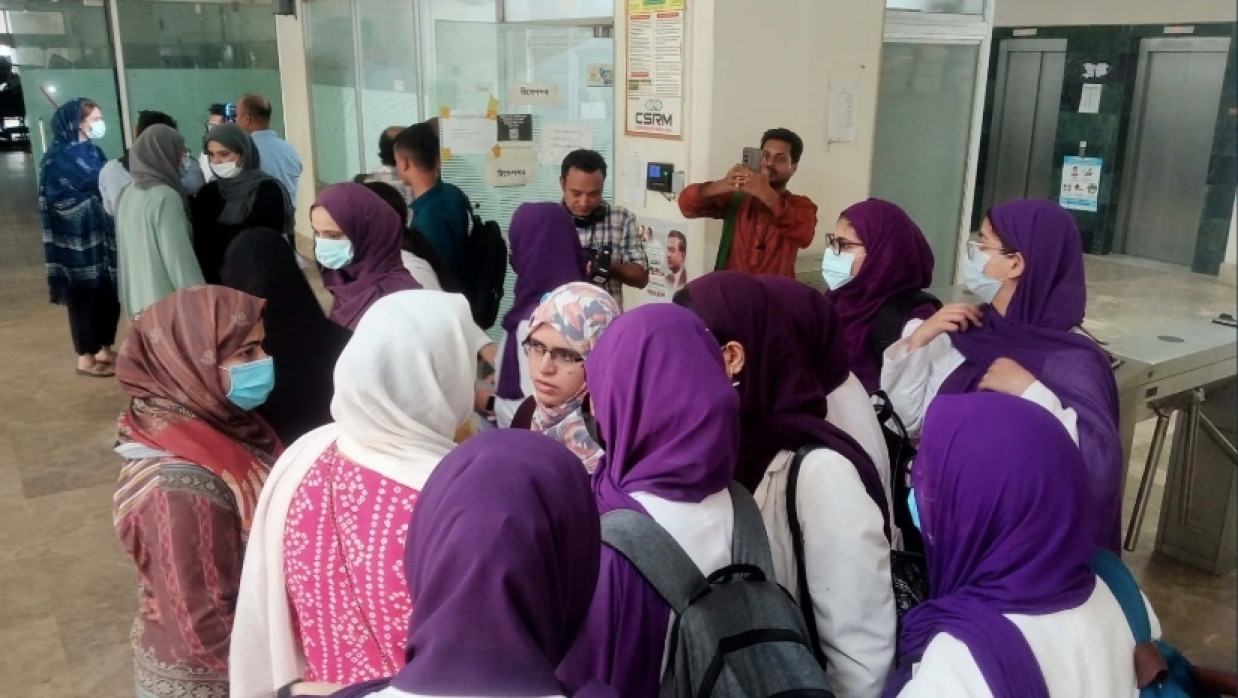
Over 200 Indian medical students and 86 interns enrolled at Ad-din Women’s Medical College in Dhaka have been plunged into deep academic uncertainty following the government's sudden cancellation of Ad-din Hospital’s operational license. The regulatory shutdown has not only halted the practical clinical exposure mandatory for their MBBS program but also threatens to render their medical degrees completely invalid back in India due to strict home-country regulations.
The government revoked the hospital's license following a tragic incident on May 27, where six newborns passed away within a three-hour window. Following a subsequent investigation, the authorities canceled the facility's license, shutting down normal medical operations, though the institution is currently allowed to provide care to critical patients who were already admitted.
While political leaders, activists, and civil organizations like the Gonoshasthaya Kendra have contested the complete closure of the medical facility, arguing that punishing an entire institution is not a viable solution, the Directorate General of Medical Education (DGME) instructed the college on June 14 to forge clinical training partnerships with alternative healthcare institutions to fulfill curriculum requirements.
The Legal Trap: Indian National Medical Commission Regulations
The stopgap solution proposed by Bangladeshi authorities—migrating students or interns to external hospitals—has sparked immense panic among the foreign student body. Ad-din currently hosts around 295 international students out of its 645 total pupils, and the vast majority of these foreign students are from India, particularly from the Jammu and Kashmir, Delhi, and Rajasthan regions.
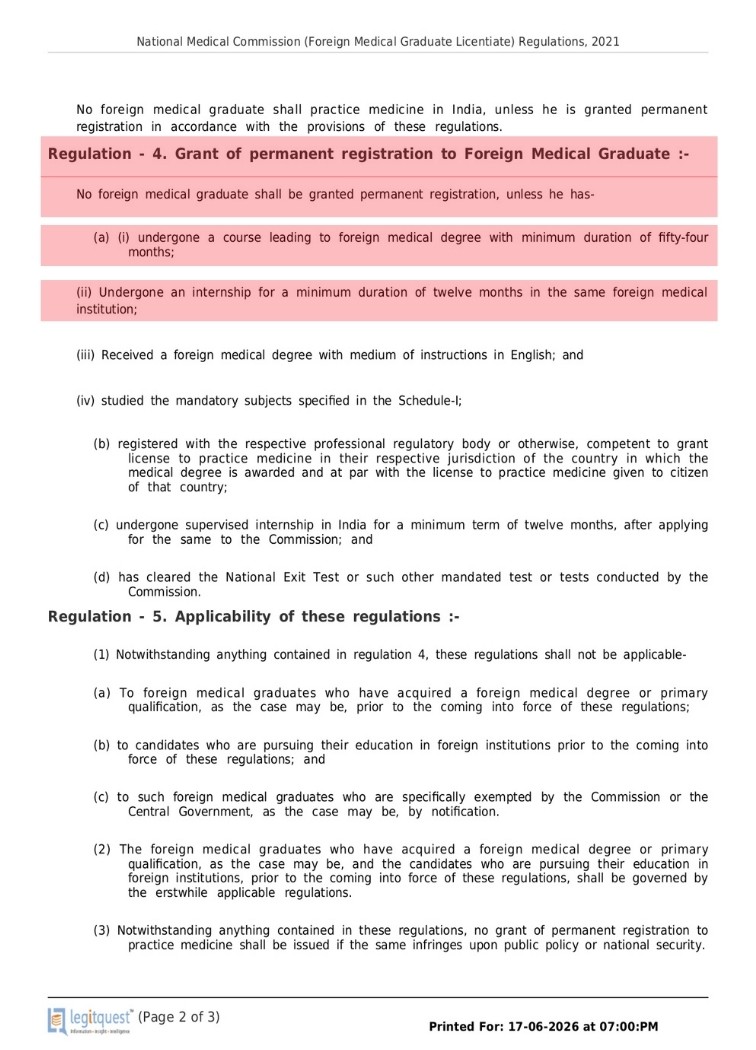
According to Section 4(a)(2) of the Indian National Medical Commission (Foreign Medical Graduate Licentiate) Regulations, 2021, no foreign medical graduate will be granted permanent registration or a license to practice in India unless they complete their entire course of study and a mandatory 12-month internship at the exact same foreign medical institution.
"According to the Indian NMC policy, we must complete our degree and our internship from the same college and its affiliated hospital. Migrating to another facility, as suggested here, will cause massive legal issues when we return to India. We have been here for over four years just for this degree, and now we face invalidation. Many students are slipping into severe depression."
— Fatima and Muskan Banu, Final-Year Indian Students from Delhi and Rajasthan
Desperate for a resolution, a delegation of affected students recently approached the High Commission of India in Dhaka. However, embassy officials declined to intervene, explicitly stating that the shutdown is strictly an internal administrative issue of the Bangladesh government and remains beyond their diplomatic jurisdiction.
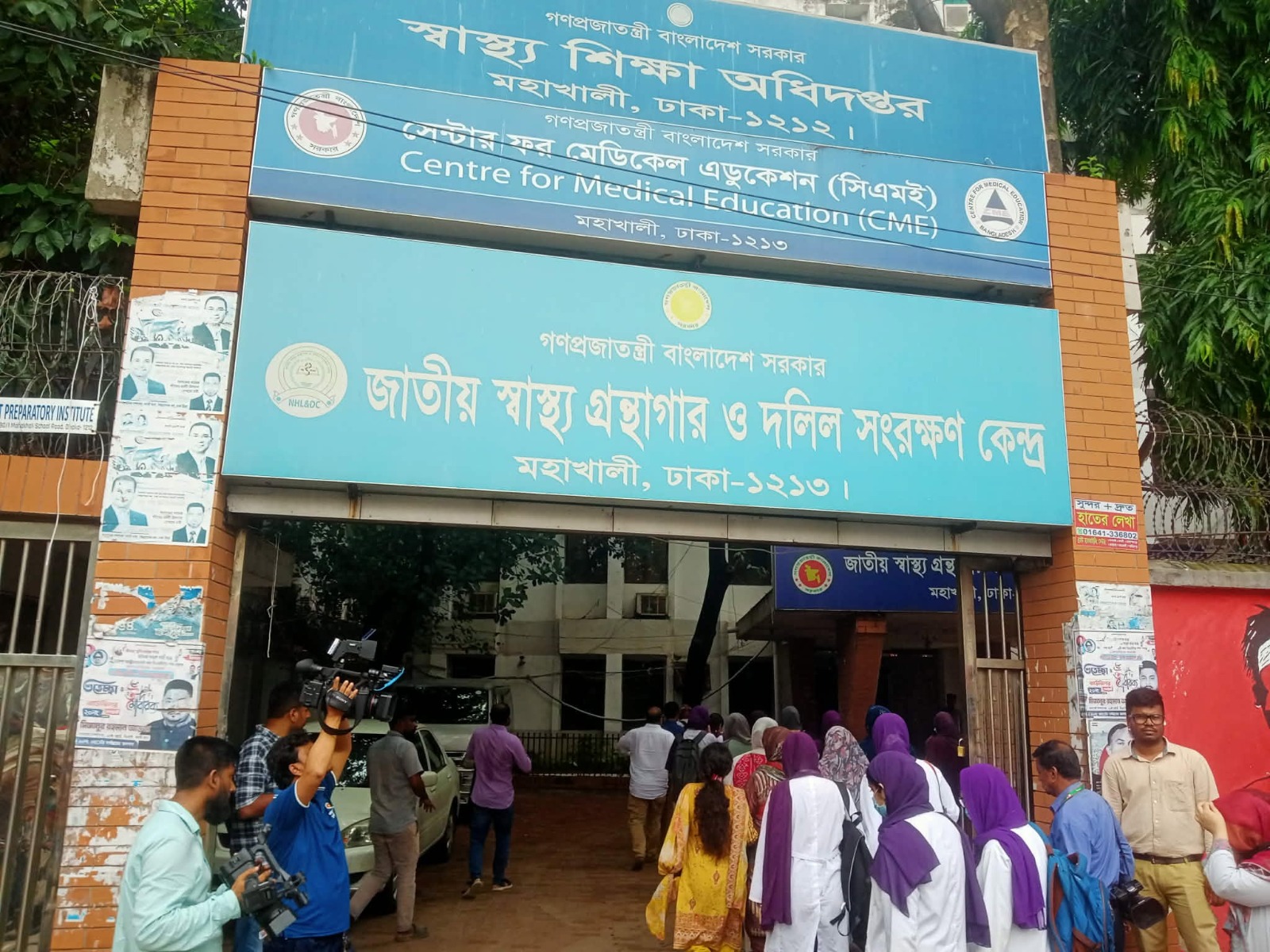
Heartbroken students visited the offices of DGHS and DGME today in search of answers regarding their student status, but left without any satisfactory update. While they managed to present their concerns to a director at DGME, no representative from DGHS was willing to address the anxiety and uncertainty faced by the affected students.
Halted Clinical Exposure Stifles Learning
While the college administration continues to hold regular theoretical lectures on the mofussil campus, third, fourth, and final-year students report that their essential clinical classes have been reduced to mere book learning. Fourth-year students Izreen Kanth, Mir Aisha Jabed, and Tabia Bhatt, all hailing from Kashmir, noted that without active patient flow, history-taking sessions, and ward rounds, their medical education has lost its practical substance.
The crisis is also causing immense distress among local Bangladeshi students. Fariha Zaman Purbasha, a local student, shared that students chose Ad-din specifically because of its massive patient flow, adding that while they support a fair investigation and neutral trial against any specific individual or department responsible for the newborn deaths, shutting down the entire hospital is ruining their education.
The broader administrative deadlock has also triggered serious concerns regarding Bangladesh's reputation as a preferred hub for regional medical education, which has already seen a staggering decline in foreign enrollment over the last three years.
| Academic Session | Total Enrolled Foreign Students | Vacant Foreign Quota Seats |
| 2022–23 | 2,319 students | Minimum vacancies |
| 2023–24 | 1,640 students | Steady decline begins |
| 2024–25 | 1,021 students | Significant seat surplus |
| 2025–26 | 1,099 students | ~60% seats vacant (Only 1,099 filled out of 2,800+ available seats) |
Deteriorating Diplomatic Ties and Regulatory Fears
The ongoing drop in international applicants across the nation's 67 private medical colleges—where up to 45 percent of seats are reserved for international students—is being automotive-linked to two primary catalysts. First, the lack of timely recognition from the World Federation for Medical Education (WFME) has caused widespread anxiety regarding the global validity of Bangladeshi MBBS degrees.
Second, Professor Dr. Saki Md. Zakiul Alam, Director of Medical Education at the DGME, pointed out that escalating diplomatic tensions between Dhaka and New Delhi following the July mass uprising have drastically reduced the student influx from the Kashmir valley, which traditionally provides the two-thirds majority of India's applicants to Bangladesh.
Senior medical professionals in Bangladesh have urged the interim government to reconsider the absolute closure of the institution. Professor Dr. Saklayen Russel, Head of Vascular Surgery at Ibrahim Cardiac Hospital, publicly warned that forcing these foreign students into external migrations will lead the Indian authorities to reject their medical licenses entirely, dealing a severe blow to the international image of Bangladesh’s medical education sector.
Administrative Standstill and Corporate Defense
Md. Siddiqur Rahman Suman, Assistant Director of Ad-din Foundation (Ad-din Medical Colleges), and Tariqul Islam Mukul, Director of HR & Company Affairs at Ad-din Hospital, confirmed that they are in constant communication with the government. They have formally petitioned the authorities to suspend the license cancellation, allowing existing patients to receive full treatment and reopening the main hospital to save the careers of their foreign and local students whose parents are calling constantly out of severe panic.
An anonymous official from the Directorate General of Health Services (DGHS) warned that an internal crisis at a top-tier institution like Ad-din sends a highly negative message to foreign markets, signaling that completing a degree in Bangladesh carries extreme institutional risks.
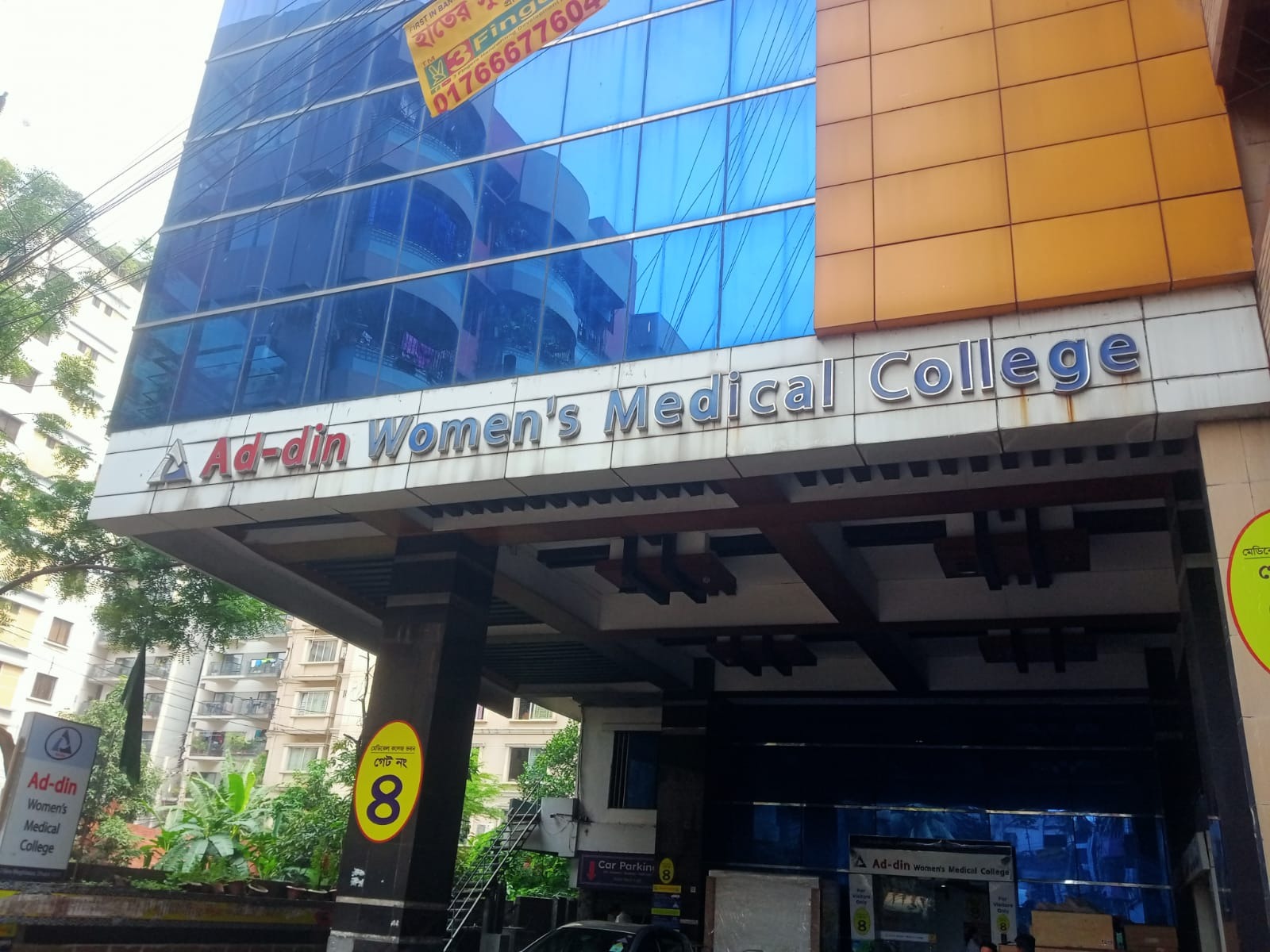
Meanwhile, the DGME is currently reviewing a formal written response submitted by Ad-din regarding the alternate clinical class arrangements, which suggests temporarily shifting practical sessions to two other sister hospitals operated by the Ad-din Foundation.
However, when questioned about a permanent resolution for the Indian students' regulatory dilemma, DGME Additional Director General Professor Dr. Rubina Yasmin stated that the ultimate responsibility to accommodate the Indian regulatory frameworks rests squarely on the management of Ad-din Medical College. She maintained that the college must figure out how its own admitted students will navigate foreign policies, stating that the state directorate is not currently focused on that aspect.
 Follow The Daily Campus on Google News