Trump Hints War in Iran Could End 'Pretty Quickly' but Says U.S. Hasn't 'Won Enough' Yet
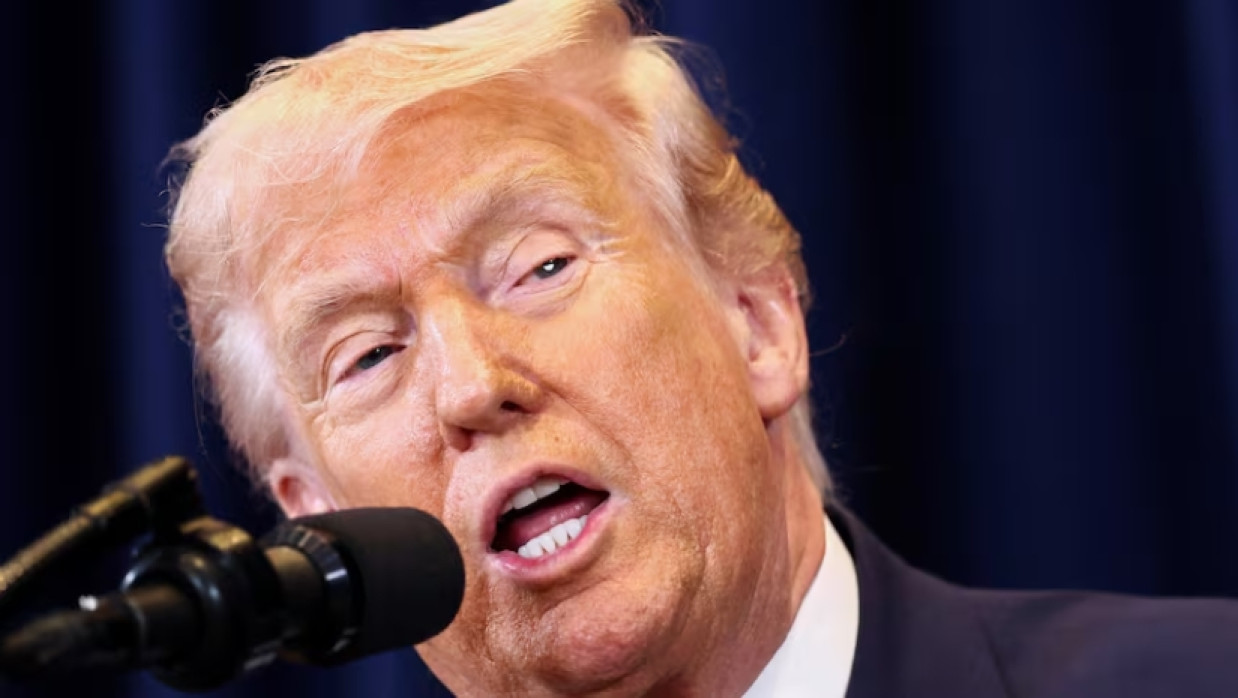
U.S. President Donald Trump suggested on Monday that the ongoing military campaign against Iran could conclude soon—though not this week—while emphasizing that the United States had not yet achieved a decisive victory. Speaking at a news conference in Doral, Florida, Trump delivered mixed signals: one moment forecasting a rapid end to the conflict, the next threatening escalated attacks if Iran attempted to disrupt global oil supplies.
Trump told Republican lawmakers earlier in the day: “It’s going to be finished pretty quickly. We’ve already won in many ways, but we haven’t won enough.”
In his formal news conference—the first since the U.S. and Israel launched strikes on 28 February—he claimed Iran’s military capabilities had been devastated. “It has all been blown up,” he said. “They have no navy, no air force, no anti-aircraft equipment. They have no radar, no telecommunications, and no leadership.”
He also made an unsubstantiated claim that Iran “could have launched” a missile that struck an Iranian girls’ school, killing at least 165 people—an assertion not corroborated by any independent reports or official statements from either side.
The conflicting messages triggered volatility in global markets. Oil prices surged on fears of prolonged disruptions to supplies through the Strait of Hormuz, while stock futures in Asia fell sharply before recovering slightly amid later reports of potential sanctions relief on Russian energy.
Bessma Momani, a fellow at the NATO Defence College, told CBC’s Power and Politics that Trump’s remarks were inconsistent and difficult to interpret. “If we take Trump to his word—which is really difficult because it is all over the place and constantly changing—he makes it sound as though the missiles have been depleted,” she said. She added that claims of Iran rapidly rebuilding nuclear capabilities since the U.S. strikes last June were “really dubious.”
The appointment of Mojtaba Khamenei as the new Supreme Leader on Monday—following the death of his father Ayatollah Ali Khamenei in the early days of the campaign—has been seen as a signal that hardliners remain firmly in control and are unlikely to seek an immediate ceasefire.
Iranian armed forces and the Islamic Revolutionary Guard Corps (IRGC) have publicly pledged loyalty to Mojtaba, while Parliament Speaker Mohammad Bagher Ghalibaf stated that Tehran was not seeking a ceasefire.
The U.S. has continued evacuation orders for non-essential personnel from embassies across the Gulf region, including Saudi Arabia, following drone attacks attributed to Iran.
 Follow The Daily Campus on Google News