
Itikaf in the Last Ten Days of Ramadan: The Worship for Attaining Allah’s Closeness
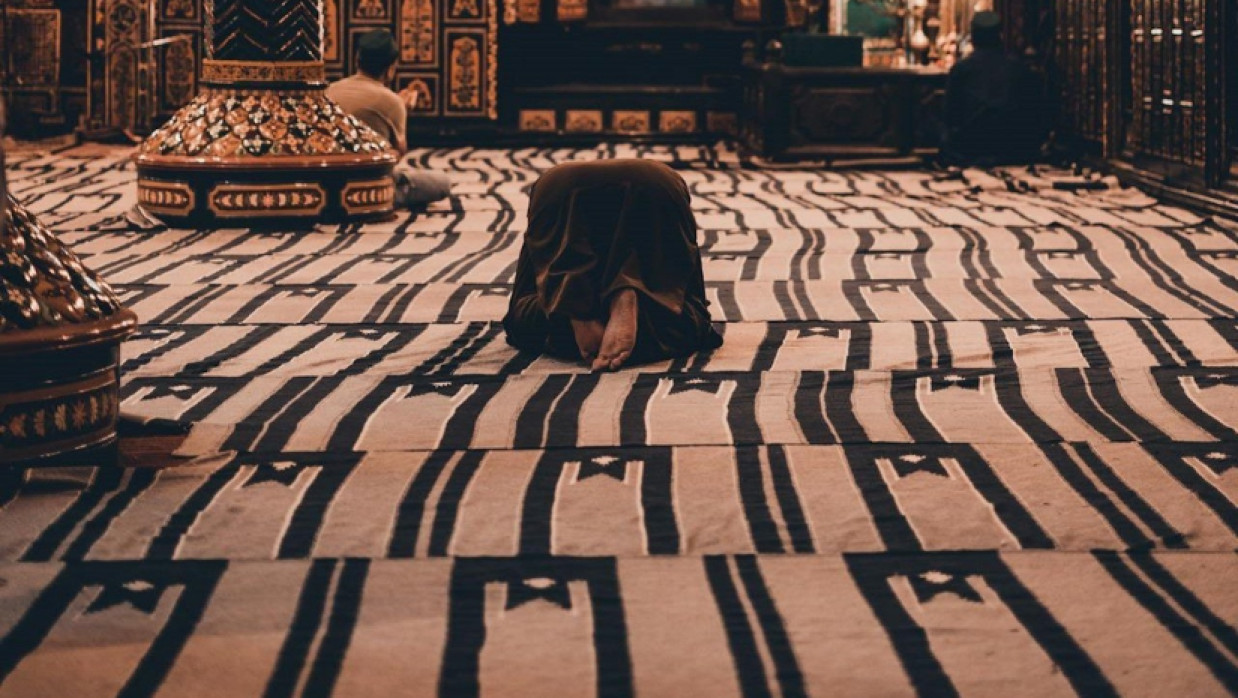
Itikaf is one of the most important acts of worship for drawing closer to Allah. By setting aside all worldly preoccupations and staying solely in the mosque for the pleasure of Allah, this practice is undoubtedly a great favor from the Lord to His servants.
Every believer should feel deep gratitude for this blessed Sunnah and participate in it with love, enthusiasm, and sincerity.
Itikaf is an Ancient Practice
The ruling of Itikaf is very old in Islam. The Qur’an mentions it in the context of Prophet Ibrahim and Ismail (peace be upon them):
“I commanded Ibrahim and Ismail to purify My House for those who perform Tawaf, Itikaf, and Ruku’ and Sujud.” (Surah Al-Baqarah: 125)
This verse shows that Itikaf existed even in the time of Ibrahim and Ismail (peace be upon them).
In another narration, Umar ibn al-Khattab (may Allah be pleased with him) made a vow in the pre-Islamic period to perform Itikaf for one night in the Masjid al-Haram. After accepting Islam, he asked the Prophet (peace be upon him) about it, and the Prophet instructed him to fulfill his vow. (Sahih al-Bukhari: 2023)
Definition and Types of Itikaf
Linguistically, Itikaf means staying, devoting oneself, or remaining continuously in a place. In Shariah terminology: Itikaf is staying in a mosque—where five daily prayers are offered in congregation—with the intention of worshiping Allah and withdrawing from worldly affairs.
The Prophet (peace be upon him) used to perform Itikaf in the last ten days of Ramadan every year. In one year he could not do it, so the following year he performed Itikaf for twenty days to make up for it. (Sunan Abu Dawud: 2463)
Three Types of Itikaf
- Sunnah Mu’akkadah Itikaf — Staying in the mosque from the sunset of the 20th of Ramadan (beginning of the 21st night) until the sighting of the Eid moon. The Prophet (peace be upon him) never missed this except once, and he made it up later.
- Nafl (Voluntary) Itikaf — Staying for less than ten full days in the last ten nights of Ramadan, or any number of days at any time of the year with the intention of Itikaf.
- Wajib (Obligatory) Itikaf — Itikaf made as a vow (nadhr), or making up a broken Sunnah Itikaf.
Best Places for Itikaf
In terms of reward:
- Masjid al-Haram (Makkah)
- Masjid an-Nabawi (Madinah)
- Masjid al-Aqsa (Jerusalem)
- Any congregational (Jami‘) mosque
- Any mosque where five daily prayers are held in congregation
For women, Itikaf should be performed in a designated clean and secluded place in their home. (Bada’i‘ as-Sana’i: 2/280–281)
Virtues and Blessings of Itikaf
Itikaf is a Sunnah emphasized by the Prophet (peace be upon him). It is one of the greatest means of attaining the blessings of the last ten nights of Ramadan and searching for Laylatul Qadr.
The Prophet (peace be upon him) said: “Whoever performs Itikaf with me should perform Itikaf in the last ten days. I was shown Laylatul Qadr… so search for it in the odd nights of the last ten.” (Sahih al-Bukhari: 2027)
During Itikaf, a person remains in a state of purity and protection from sin. Simply staying in the mosque becomes an act of worship—even if no additional voluntary deeds are performed.
Itikaf helps protect the rights and etiquettes of fasting, frees the heart from worldly distractions, and enables complete devotion to Allah. It purifies the mind and soul and brings lasting spiritual reform.
The last ten days of Ramadan are the most precious time for seeking Laylatul Qadr. Itikaf is the best way to devote oneself fully to Allah’s worship and closeness. Those who are able should seize this blessed Sunnah with love and sincerity, seeking forgiveness, mercy, and acceptance from Allah in these final nights.
 Follow The Daily Campus on Google News