Reconsider Scholarship Exam Decision, Extend Primary Education to Class VIII
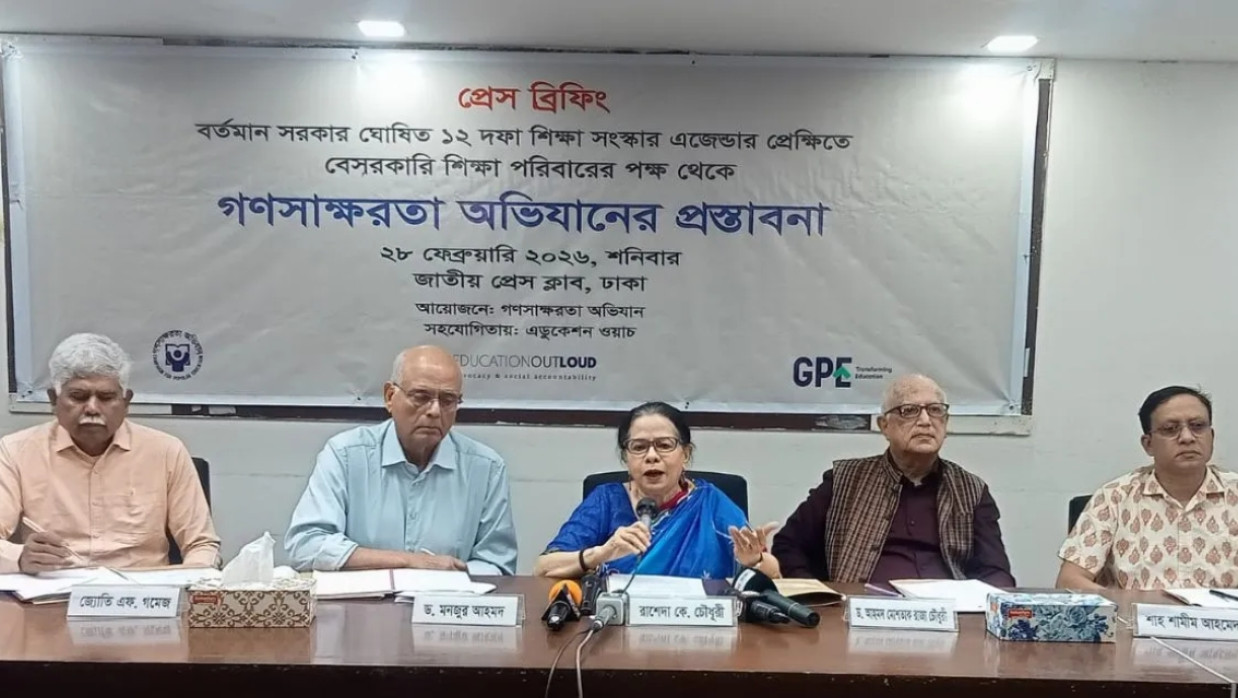
Mass Literacy Campaign has demanded that primary education in Bangladesh be extended to Class VIII and made free and compulsory. At the same time, it has called for a reconsideration of the decision to conduct primary and junior scholarship examinations.
Currently, primary education ends at Class V and is free of cost up to that level.
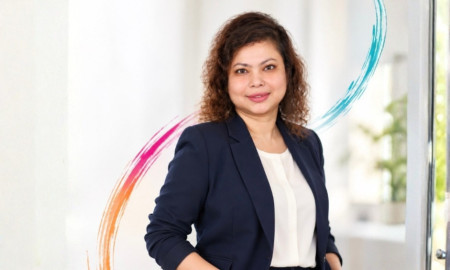
The demand was made on Saturday (28 February) at a press conference held at the National Press Club. The platform of non-governmental organizations working on education presented various demands and recommendations regarding the 12-point education pledges recently announced by the Ministry of Education and the Ministry of Primary and Mass Education. Rasheda K. Chowdhury, Executive Director of Mass Literacy Campaign, presented the written recommendations, which have been submitted to the government.
BRAC University Emeritus Professor Manzoor Ahmed, who headed the advisory committee formed by the interim government for improving primary and secondary education quality, said regarding scholarship exams: “For young students, there should not be public examinations at lower levels; school-based assessment is needed. The Class V scholarship exam was discontinued. Now it is being reintroduced. The Class VIII scholarship exam was held and will be held again. This is essentially bringing back public examinations.”
Professor Manzoor Ahmed noted that scholarship exams do not improve quality: “Only 10 to 20 percent of good students get some incentive through these exams. They are already doing well. But the vast majority of students who are not doing well need attention for quality improvement. I would say the decision to resume scholarship exams is not well-considered.”
Regarding the ‘Bridge Course’ announced by the Ministry of Education, the written statement said: “Introducing the Bridge Course is a timely decision. However, it is necessary first to extend primary education to Class VIII and make it free and compulsory. After that, any type of professional or vocational course can be added based on aptitude. This can be done through executive order. The Bridge Course facilitates smooth transition from one stream to another and incorporates technical education in secondary level.”
Mass Literacy Campaign emphasized that during the review of curriculum and examination system, continuous class-based assessment must be ensured. On this basis, separate classes can be arranged for weak students with additional incentives or allowances for teachers. The curriculum review should be finalized based on opinions from teachers, students, parents, and civil society stakeholders.
The organization stressed that students must not become trapped in endless exams, dependent on coaching centres and guidebooks. The government should prioritize preventing this.
Rasheda K. Chowdhury said: “Repeated exams have made continuous class-based assessment insignificant. Emphasis must be given to this. If students only study guidebooks and attend coaching centres, what is the need for schools? The government must pay attention to this. Students should not become mere examinees.”
The written statement also included demands and recommendations such as starting third language education from Class VIII, increasing implementation capacity and ensuring transparency and accountability in budget execution, providing mid-day meals to all children, enacting an integrated education law, and considering the recommendations of the advisory committee.
Professor Manzoor Ahmed expressed hope that neglect in education will end: “Promises are being heard, but implementation is the key issue. A special task force or experts should be formed to prepare a comprehensive education plan.”
Ahmed added: “There must be political commitment and promise to prioritize education, give it importance, and increase investment. Political support and commitment are needed to run education properly. Political misuse that exists must also be stopped.”
Among others present were Education Watch Convener Ahmad Mostaq Raza Chowdhury, Professor Shah Shamim Ahmed from DU’s Institute of Education and Research, and Catholic Education Board General Secretary Jyoti F. Gomez.
 Follow The Daily Campus on Google News