No Teachers, Computer Shortages: ICT Education Deficit Persists After a Decade
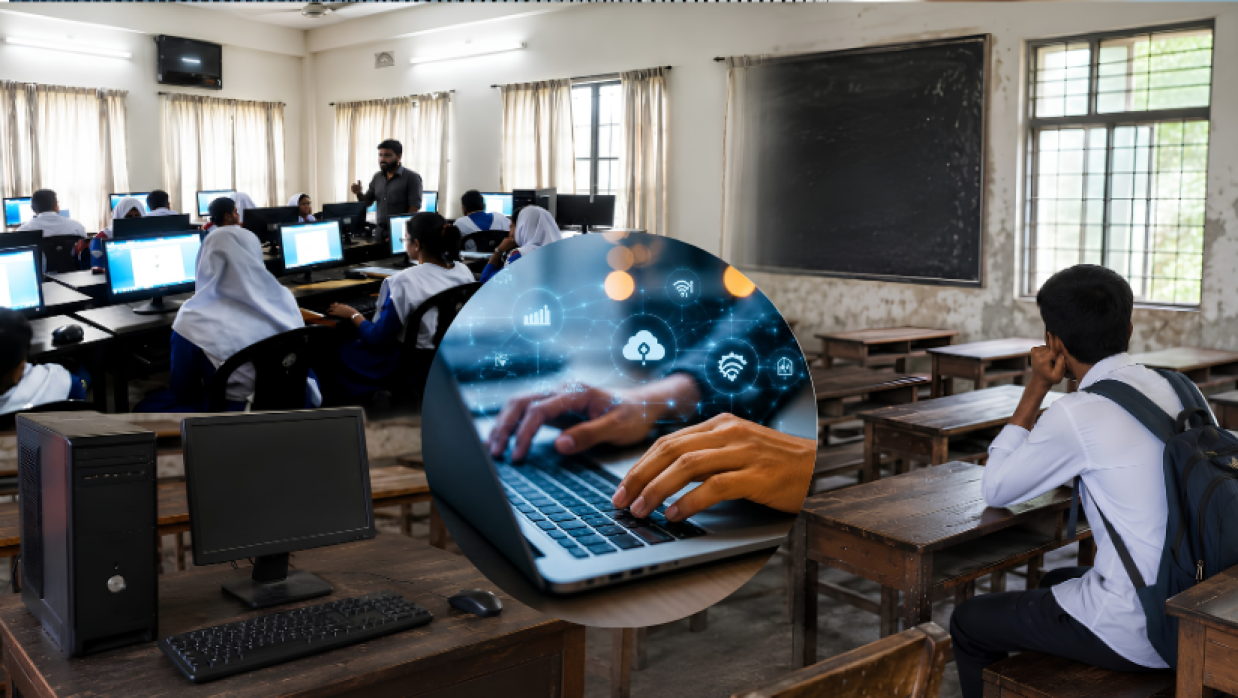
Despite more than a decade passing since Information and Communication Technology (ICT) was made a compulsory subject for higher secondary (XI-XII) classes, necessary infrastructure and teaching staff for ICT education have not yet been ensured in all colleges across the country. According to the latest annual report (2024) of the Bangladesh Bureau of Educational Information and Statistics (BANBEIS), there are 5,005 ICT teachers across 4,876 colleges of various levels in the country. However, 207 colleges still lack basic computer facilities.
According to BANBEIS data, out of the 4,876 colleges in the country, 792 are women's colleges. The number of government colleges stands at 705, while there are 4,171 non-government colleges. Among these, there are 1,514 school and colleges (college level), 1,422 higher secondary colleges, 1,047 degree (pass course) colleges, 695 degree (honors) colleges, and 198 masters colleges.
The report reveals that up to 2024, a total of 1,32,789 teachers have been appointed in various colleges across the country, among whom 37,252 are female. Out of the total workforce, 5,005 have been appointed as ICT teachers.
An analysis of the distribution of ICT teachers shows that there are 1,863 ICT teachers in combined school and colleges (college level), with 1,800 working in non-government institutions and only 63 serving in government ones. Additionally, there are 1,479 ICT teachers in higher secondary colleges, 1,199 in degree (pass course) colleges, 763 in degree (honors) colleges, and 201 in masters colleges.
When asked about updated data for 2026, Noor Mohammad, Statistical Officer at BANBEIS, said, "The latest statistical report of BANBEIS was published in 2024. The 2026 report has not been published yet. It might be released soon."
He added, "BANBEIS might have data on how many colleges have ICT teachers, how many do not, and where ICT lab facilities are available up to the 2025-26 academic year. However, the final report is yet to be published."
On the other hand, 207 out of 4,876 colleges lack computer facilities. Among these, the deficit exists in 29 school and colleges (college level), 164 higher secondary colleges, 10 degree (pass course) colleges, two degree (honors) colleges, and one masters college.
Professor Dr. B.M. Mainul Hossain, Director of the Institute of Information Technology (IIT) at Dhaka University, told The Daily Campus, "Although ICT was made compulsory, students are not reaping the expected benefits as it was implemented without ensuring the required teachers and infrastructure. ICT is a subject that cannot be taught merely by reading books or writing on a board; it requires trained teachers, computer labs, and opportunities for practical learning."
Professor Dr. Anindya Iqbal from the Department of Computer Science and Engineering (CSE) at Bangladesh University of Engineering and Technology (BUET) said, "The shortage of ICT teachers and necessary infrastructure in many colleges, even after a decade of making the subject compulsory in XI-XII classes, is a major challenge for our education system. Simply making a subject compulsory is not enough; the capacity to implement it must also be ensured."
It is known that though ICT was made compulsory at the college level in 2013, the Public Service Commission (PSC) issued a circular to recruit ICT teachers for government colleges on February 29, 2016. In that recruitment process, only 170 lecturers were recommended for appointment in Information and Communication Technology.
Regarding the recruitment of new teachers, Professor Dr. B.M. Mainul Hossain said, "Merely appointing teachers will not suffice; as ICT is a rapidly changing field, teachers must have opportunities for continuous training and skill development. At the same time, the ground realities of all educational institutions should have been considered while designing the curriculum. Currently, due to a combination of teacher shortages, skill deficits, and an impractical curriculum, students are falling behind in ICT."
To make ICT education more effective, Professor Dr. Anindya Iqbal suggested, "Alongside teacher training, technology-based educational initiatives can be utilized through public-private partnerships. Simultaneously, opportunities can be created to conduct lab-based learning activities at the college level by involving computer science students from universities."
Inquiries reveal that due to the shortage of ICT teachers, classes in many colleges are being conducted by teachers of Bangla, English, Philosophy, and Islamic History and Culture. In some colleges, teachers of Economics, Accounting, Business Organization and Management, Chemistry, Botany, Zoology, Physics, or Mathematics are teaching ICT. These teachers have only undergone a few months of basic computer training.
Regarding teachers of other subjects taking ICT classes due to the shortage, Professor Dr. B.M. Mainul Hossain remarked, "Instead of generating interest in ICT among students, this has created fear and disinterest. Although the government's intention was good, the desired results were not achieved due to implementation limitations."
He further added, "Because of the current situation, students have to be retaught many basic concepts upon reaching the university level. Therefore, to make ICT education effective, emphasis must be placed immediately on teacher recruitment, continuous training, infrastructural development, and formulating a practical curriculum."
Professor Dr. Anindya Iqbal stated, "The most urgent solution to this crisis is designing a practical curriculum, building digital learning infrastructure, and introducing alternative and innovative teaching methods to tackle the teacher shortage. This cannot be solved overnight; it requires long-term planning."
He further noted, "The current curriculum leans heavily towards memorization. Particularly in programming education, adequate importance is not given to acquiring practical skills. However, to succeed in future tech and computer science-based higher education and jobs, emphasis must be laid on programming and hands-on learning. For this reason, the curriculum needs to be restructured so that acquiring practical skills becomes the primary objective."
Professor Syed Amir Ali, Chairman of the Board of Intermediate and Secondary Education, Dhaka, stated, "There is no denying that a teacher shortage exists in ICT education. Where there are no subject-specific teachers and classes are being managed by teachers from other departments, it is difficult for the quality of education to reach the desired standard. If subject-specific teachers are present, students will have the opportunity to learn more effectively."
He added, "Our current government is very sincere. We hope these issues will be resolved very swiftly. Various initiatives are being taken to implement knowledge-based, skill-based, and outcome-based education. IT education is also one of the priority sectors for the government. Therefore, he expressed hope that existing problems, including the ICT teacher shortage, will be resolved soon."
Regarding the mitigation of the teacher shortage, he said, "If the recruitment process is completed swiftly in government and non-government educational institutions, the current crisis can be largely overcome. Vacant posts for ICT teachers must be filled quickly in institutions where they exist. This will improve the quality of education and yield positive academic results for students in ICT."
Professor Md. Nurul Haque Sikdar, Deputy Director of the College and Administration Wing of the Directorate of Secondary and Higher Education (DSHE), stated that although ICT was made compulsory for XI-XII classes, posts for this subject have not yet been created in all colleges. As a result, teachers of other subjects are conducting ICT classes in many institutions.
He said, "Recruitment is impossible unless posts are created. Currently, proposals have been sent to the ministry concerned to create posts in colleges where there are no ICT teacher positions, and the matter is under process. We are trying to ensure that at least one post is created in every college. Once the post creation is complete, this crisis can be largely mitigated through teacher recruitment."
Professor Dr. Mir Zahida Nazneen, Director of the Planning and Development Wing of DSHE, said, "ICT teacher posts have not yet been created in all government colleges. Although some colleges have this post, it has not been introduced everywhere. However, non-government schools and colleges do have ICT teacher posts." She added that the issue of the ICT teacher shortage comes up at various levels of discussion. Although computers and other ICT equipment are supplied to educational institutions through projects, proper utilization is often hindered due to the lack of adequate teachers.
 Follow The Daily Campus on Google News