
Robert Hall and Michael Woodford win Nobel Prize in Economics
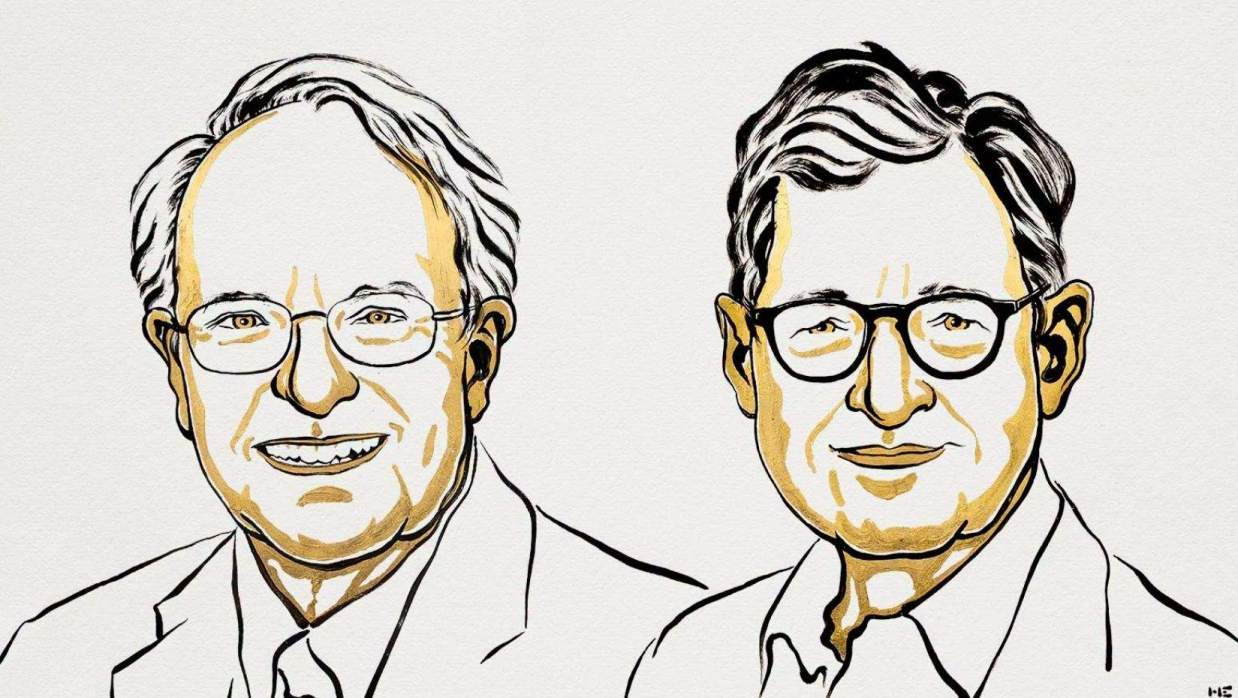
Robert E. Hall and Michael Woodford have been awarded this year’s Nobel Prize in Economic Sciences for their contributions to establishing microeconomic foundations for economic stability. Their economic models have played an important role in developing effective policies to manage fluctuations in the broader economy.
The Royal Swedish Academy of Sciences selected the two economists for the Sveriges Riksbank Prize in Economic Sciences in Memory of Alfred Nobel, recognising their work on how timely fiscal and monetary policy measures can help reduce economic fluctuations.
Economies regularly experience periods of recession and growth. Since economist John Maynard Keynes introduced his theory nearly a century ago, stabilisation policies have played an important role in addressing these fluctuations. During a recession, governments and central banks can stimulate economic activity by lowering interest rates and increasing budget deficits. Conversely, when the economy becomes overheated, they can take the opposite measures to slow it down.
However, the effectiveness of Keynesian economic models came under scrutiny during the oil crises of the 1970s. Although these models prescribed when and how policymakers should intervene, unemployment did not fall as expected. Instead, inflation spiralled out of control. Western economies subsequently faced a decade of low growth, high unemployment and high inflation, leading many to question whether stabilisation policies were doing more harm than good.
Against this backdrop, Robert E. Hall and Michael Woodford demonstrated how economic models could be rebuilt to make stabilisation policies more effective. Their models were grounded in microeconomic foundations rather than relying primarily on statistical relationships between macroeconomic indicators such as inflation, output and consumption.
This approach examines how decisions made by individual households and businesses influence the economy as a whole. In particular, their models emphasise that households and businesses consider future conditions when making decisions about savings, pricing and other economic activities.
When governments and central banks communicate their economic policy plans in advance, they can influence the expectations of households and businesses. This, in turn, can help steer the economy towards desired outcomes. Since their introduction, the new models have played an effective role in addressing various economic downturns.
 Follow The Daily Campus on Google News