Francis Halzen wins Nobel Prize in Physics for work on ‘ghost particles’
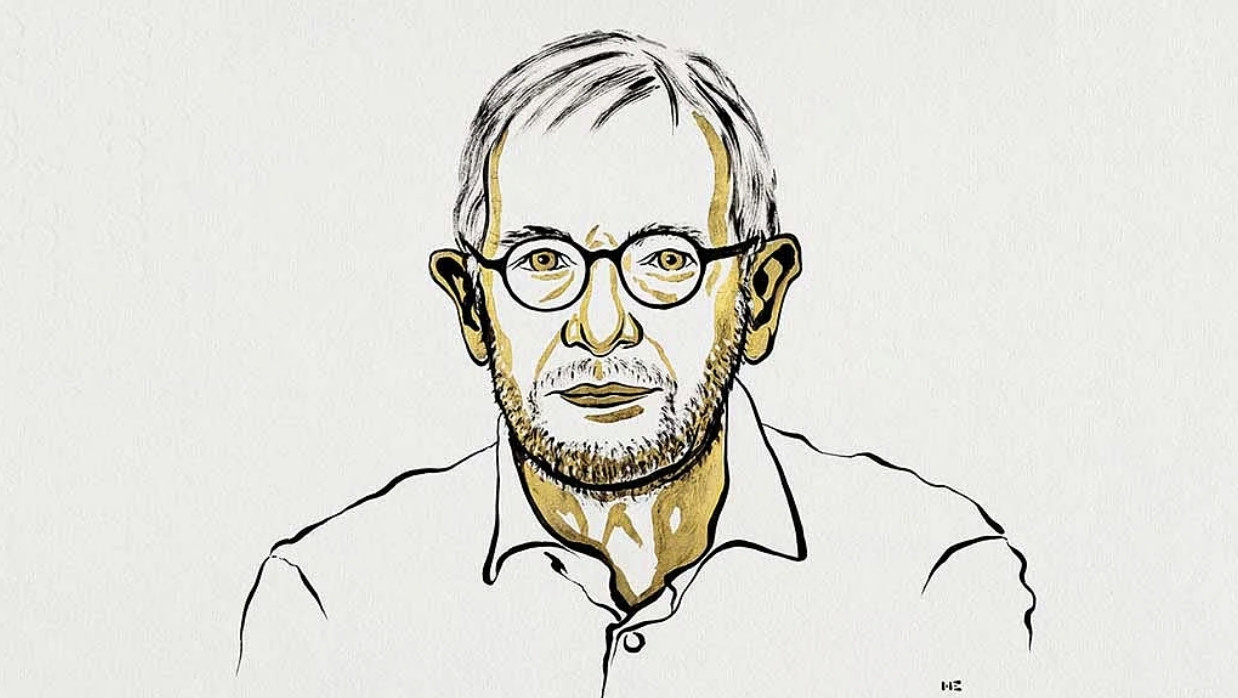
Belgian physicist Francis Halzen has won the 2026 Nobel Prize in Physics for his decisive contributions to the IceCube Neutrino Observatory and the discovery of high-energy neutrinos originating from astrophysical sources.
“This year’s prize is about ghostly messengers from space,” Ellen Moons, secretary general of the Royal Swedish Academy of Sciences, said at a news conference on Tuesday.
The academy said Halzen’s work was fundamental to the development of the observatory, which uses light sensors embedded in a cubic kilometre of Antarctic ice. The observatory has opened a new avenue for astronomy by allowing researchers to detect neutrinos, rare subatomic particles produced by extremely energetic processes in the distant universe.
Halzen, 82, was born in Tienen, Belgium, and is a professor at the University of Wisconsin-Madison in the United States, where he is a citizen.
“It was a great surprise, and I obviously didn’t expect it,” Halzen told the news conference by telephone shortly after the prize was announced.
Detecting ‘ghostly messengers’ from space
Neutrinos are extremely difficult to detect because they rarely interact with matter. Unlike other particles, they can travel across the universe without changing direction or losing energy, allowing them to carry information that cannot be obtained through other means, the academy said.
“Cosmic neutrinos with extremely high energies are very rare, so an enormous volume of ice is needed to observe an adequate number of collisions,” the Nobel committee said.
Halzen first presented his idea for the observatory in 1988, quickly gaining support from other researchers. Preliminary testing began a few years later, while the observatory was completed in 2011 and soon detected its first high-energy neutrinos.
“For me, the main pleasure of it, besides winning the Nobel Prize, is that I hope this reflects on the really courageous people who joined me in the beginning of this project,” Halzen said.
Halzen is the first physics laureate since 1992 to receive the prize without sharing it with other researchers.
Erin O’Sullivan, a neutrino astrophysicist at Sweden’s Uppsala University and spokeswoman for the IceCube collaboration, said the decision to award the prize solely to Halzen was “well deserved.”
“He really was the instigator of this whole project and has seen it through since the very early days,” O’Sullivan said.
In an interview with the Nobel Foundation, Halzen said he was grateful that the project received support during its early stages.
“This project, everybody thought, is a cute idea that won’t work,” he said.
‘Messages from aliens’?
Asked whether neutrinos could carry messages from potential distant civilisations, Halzen acknowledged that the possibility had been discussed.
“It has been speculated that this would be an ideal way to communicate with aliens,” he said.
“But I don’t think I will go there. I think we have enough realistic problems to deal with right now,” he added.
Belgian Prime Minister Bart De Wever congratulated Halzen, noting that he was the 11th Belgian to win a Nobel Prize and the second Belgian to receive the physics award.
“An impressive recognition of a life dedicated to unravelling the greatest secrets of the cosmos through its most minuscule manifestations,” De Wever said in a post on X.
The physics prize is the second Nobel award of the season, following Monday’s medicine prize for US psychiatrist and neurologist Karl Deisseroth and German scientists Peter Hegemann and Georg Nagel. They were recognised for pioneering work in optogenetics, which involves controlling nerve signals with light.
Last year, the Nobel Prize in Physics was awarded to Briton John Clarke, Frenchman Michel Devoret and American John Martinis for putting quantum mechanics into action and enabling the development of digital technologies ranging from mobile phones to a new generation of computers.
The Nobel Prize in Chemistry will be announced on Wednesday, followed by the literature prize on Thursday. The peace prize is due on Friday, while the economics prize will conclude the Nobel season on October 12.
 Follow The Daily Campus on Google News