What was in Abrar Fahad’s last Facebook post before his death?
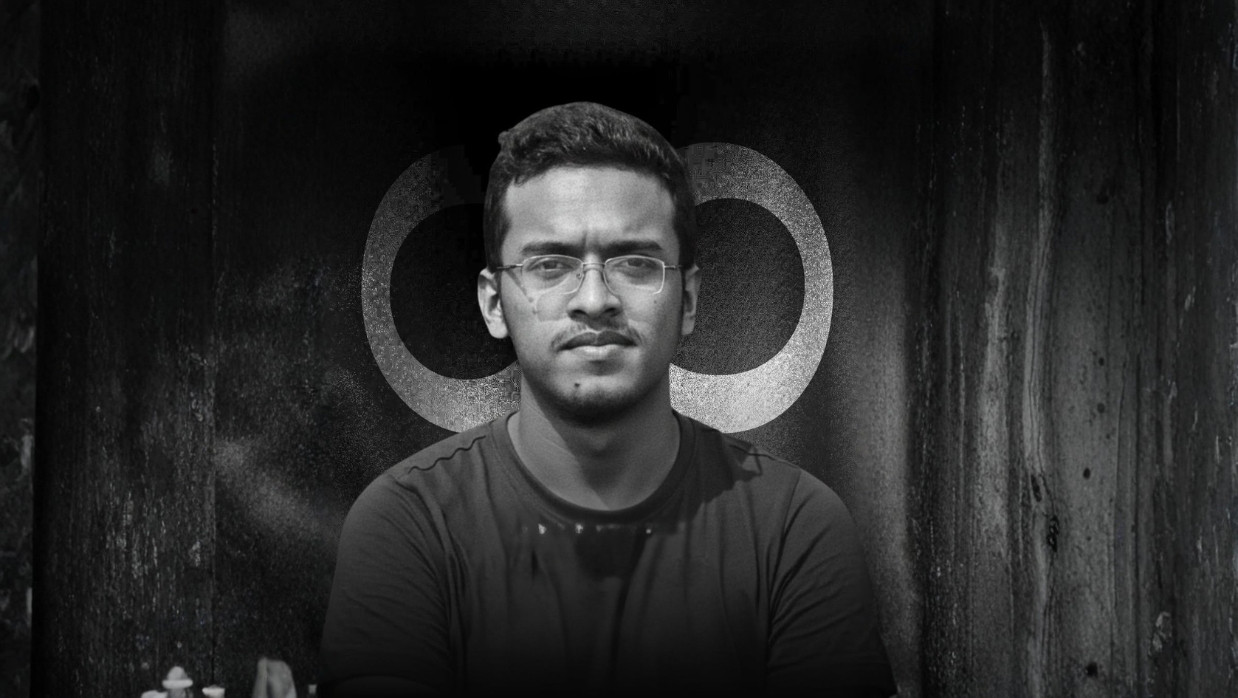
A Facebook post by Bangladesh University of Engineering and Technology (BUET) student Abrar Fahad, written shortly before he was killed in 2019, has received more than 471,500 reactions and been shared over 73,000 times.
Seven years after Abrar’s death, however, the death sentences handed down in the case have yet to be carried out. Although two stages of the judicial process have been completed, those concerned cannot say with certainty how long it will take to complete the High Court and subsequent legal proceedings before the verdict can finally be executed.
Abrar’s family has expressed frustration and disappointment over the delay.
On the night of October 6, 2019, Abrar was taken to Room 2011 of Sher-e-Bangla Hall at BUET and brutally beaten to death by leaders and activists of Bangladesh Chhatra League, the then ruling Awami League’s student wing. Abrar, a second-year student of the Electrical and Electronic Engineering Department, was found dead on the hall staircase by police around 3am.
Two days before the killing, on October 4, Abrar had posted on Facebook criticising various agreements and understandings between Bangladesh and India. According to the investigation and court documents in the case, Chhatra League leaders and activists summoned him to Room 2011 under the pretext of questioning him over the post. He was later beaten there throughout the night and eventually died.
Abrar’s family members are in Dhaka to observe his death anniversary. His father, Barkat Ullah, said, “India wanted to engulf our country. Abrar protested against it. We want to see the implementation of what Abrar had to give his life for. We want to see the Bangladesh that Abrar Fahad dreamed of.”
Death sentences upheld by High Court
A month after the killing, the Dhaka Metropolitan Police’s Detective Branch submitted a charge sheet against 25 people to the court on November 13, 2019. Charges were framed on September 15, 2020.
On December 8, 2021, Dhaka’s Speedy Trial Tribunal-1 handed down its verdict, sentencing 20 people to death and five to life imprisonment. On March 16, 2025, after hearing the death references, appeals and jail appeals in the case, a High Court bench upheld the trial court’s verdict.
Of the 20 people sentenced to death, three had been absconding since the trial court’s verdict. They are Morshed-Uz-Zaman, Ehteshamul Rabbi and Mujtaba Rafid. Another death-row convict, Muntasir Al Jemi, escaped from the high-security central jail in Gazipur on August 6, 2024.
Four of the 25 convicts in the case are currently absconding, according to the information provided.
Barkat Ullah said the case is currently pending before the Appellate Division.
“Seven years have passed since the murder of Abrar Fahad. Yet the verdict has not been executed. We demand the immediate arrest of the absconding convicts, completion of the judicial process and swift execution of the verdict,” he said.
He said the family had suffered from Abrar’s death and that his son had given his life for the country.
“I demand that a bridge in the city be named after him so that future generations do not forget Abrar Fahad,” he said.
Convicts in Abrar Fahad murder case
The 20 convicts whose death sentences were upheld by the High Court are Mehedi Hasan Russell, Anik Sarker, Mehedi Hasan Robin, Ifti Mosharraf Sokal, Moniruzzaman Monir, Meftahul Islam Ziyon, Majedur Rahman Majed, Mujahidur Rahman, Khandakar Tabakkarul Islam Tanvir, Hossain Mohammad Toha, Shamim Billah, ASM Nazmus Sadat, Morshed Amartya Islam, Muntasir Al Jemi, Shamsul Arefin Rafat, Mizanur Rahman, Mahmud Setu, Morshed-Uz-Zaman Mondal Jisan, Ehteshamul Rabbi Tanim and Mujtaba Rafid.
The last three had been absconding since the beginning of the case. According to a notice issued by the prison authorities on February 25, 2025, Muntasir Al Jemi escaped from Gazipur High Security Central Jail by breaking through the prison wall on August 6, 2024, during the July mass uprising.
The five convicts sentenced to life imprisonment are Muhtasim Fuad Hossain, Akash Hossain, Muaz Abu Huraira, Amit Saha and Ishtiaq Ahmed.
What Abrar wrote about India
In his last Facebook post on October 5, Abrar wrote about India.
The post read:
“After the partition of the country in 1947, the western part of the country did not have a seaport. The government at the time requested India to allow the use of the Kolkata port for six months. But the elder brothers advised us to measure our own roads ourselves. Forced by circumstances, Mongla Port was opened even before its inauguration to tackle the famine. In a cruel twist of fate, India now has to ask to use that Mongla Port.
“A few years ago, disputes between Kannadigas and Tamils over the sharing of water from the Kaveri River made headlines. In a country where one state does not even want to give water to another, we will provide 150,000 cubic metres of water a day without anything in exchange.
“A few years ago, northern India stopped exporting coal and stone citing the need to protect its own resources, yet we will give them our gas. Where we have to shut down our own factories because of a gas shortage, we will use our own resources to light our friend’s lamps.
“Perhaps it was in search of this happiness that the poet wrote:
‘For the sake of others, sacrifice your interests,
Give away this life and heart,
Is there any happiness like that anywhere,
Forget your own concerns.’”
 Follow The Daily Campus on Google News