Five Universities Set to Run on Net Zero Budget
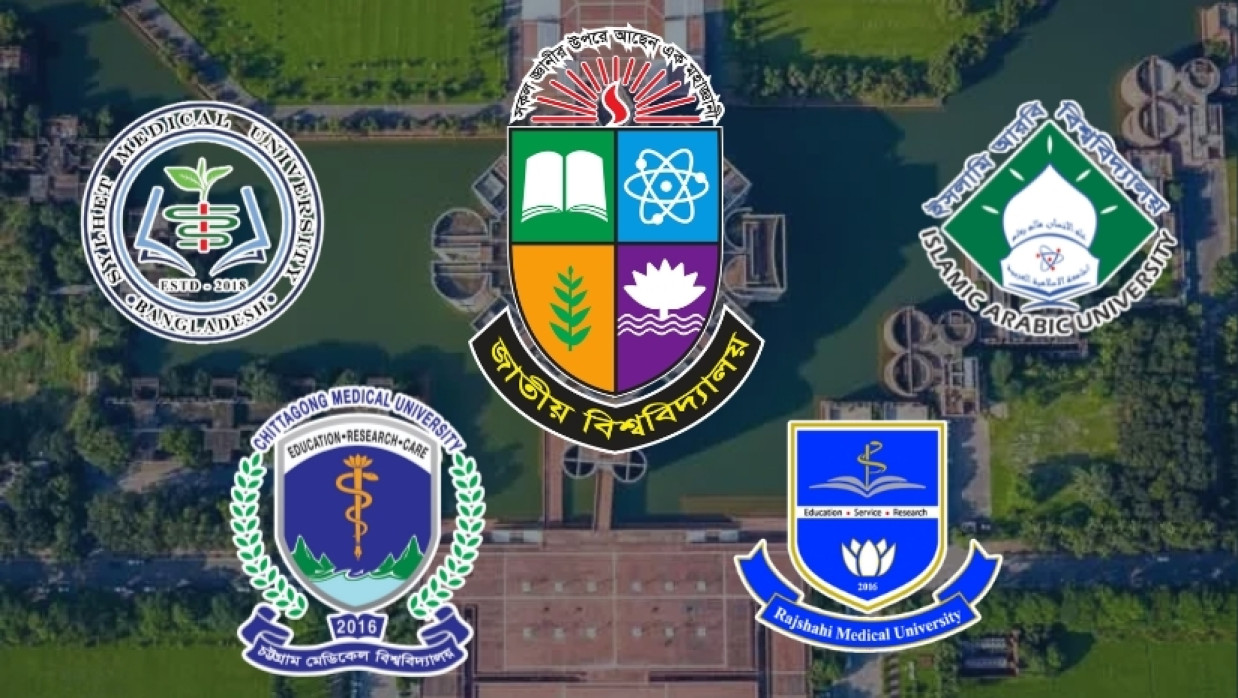
In a major shift toward fiscal autonomy in higher education, five prominent public universities in Bangladesh are setting a unique precedent by operating entirely on their own institutional income. In the newly approved University Grants Commission (UGC) budget framework for the 2026–27 fiscal year, National University, Islamic Arabic University, Chittagong Medical University, Rajshahi Medical University, and Sylhet Medical University have been allocated zero government funds for their operational expenses.
According to sources within the UGC, these institutions generate sufficient internal revenue through affiliation fees, student registrations, examinations, and specialized courses to completely cover their administrative and operational overheads, eliminating the need for state subsidies.
| University Name | Total Operational Budget (Tk in Crore) | Internally Earned Revenue (Tk in Crore) | Net Government Grant (Tk in Crore) |
| National University | 481.47 | 481.47 | 0.00 |
| Islamic Arabic University | 51.95 | 51.95 | 0.00 |
| Chittagong Medical University | 13.35 | 13.35 | 0.00 |
| Rajshahi Medical University | 13.07 | 13.07 | 0.00 |
| Sylhet Medical University | 0.63 | 0.63 | 0.00 |
Internal Revenue Generation Behind the Financial Autonomy
The mechanism driving this self-sustained financial model varies across the institutions based on their academic scope and institutional design. Speaking to The Daily Campus, Md. Misbah Ibne Hakim, Assistant Director (Finance) of Chittagong Medical University, explained how a targeted academic footprint allows the institution to remain entirely self-reliant.
"Currently, the university only runs an MD course in Tropical Medicine. However, on the undergraduate side, we have around 40 medical colleges affiliated with us. This means that while our core campus footprint is still developing, the revenue generated from these affiliated colleges and our specialized course is entirely sufficient to meet our operational expenditures. Consequently, we do not require any separate financial allocations from the UGC." — Md. Misbah Ibne Hakim, Assistant Director (Finance), CMU
Massive Educational Networks Achieve Self-Sufficiency
While the newer regional medical universities like Rajshahi, Chittagong, and Sylhet maintain lower overheads due to their specialized functions, the inclusion of National University and Islamic Arabic University in the zero-budget category highlights self-sufficiency on a massive scale:
-
National University: As the largest affiliating university in the country overseeing thousands of tertiary colleges, the massive volume of student enrollment, registration, and central examination fees generates a substantial financial reserve, allowing it to sustain its vast administrative framework independently.
-
Islamic Arabic University: Functioning as the central affiliating body for Fazil and Kamil madrashas nationwide, the university covers its operational costs entirely through institutional revenue collected from affiliated madrasah networks.
Education economists view this transition as a positive development that reduces the burden on the national exchequer. By enabling established or structurally capable institutions to run on internal revenue, the government can optimize and divert critical state funds toward infrastructure expansion at newer, less developed public universities across the country.
 Follow The Daily Campus on Google News