Bangladesh, Japan Expected to Sign Multiple MoUs During Tarique Rahman’s Visit
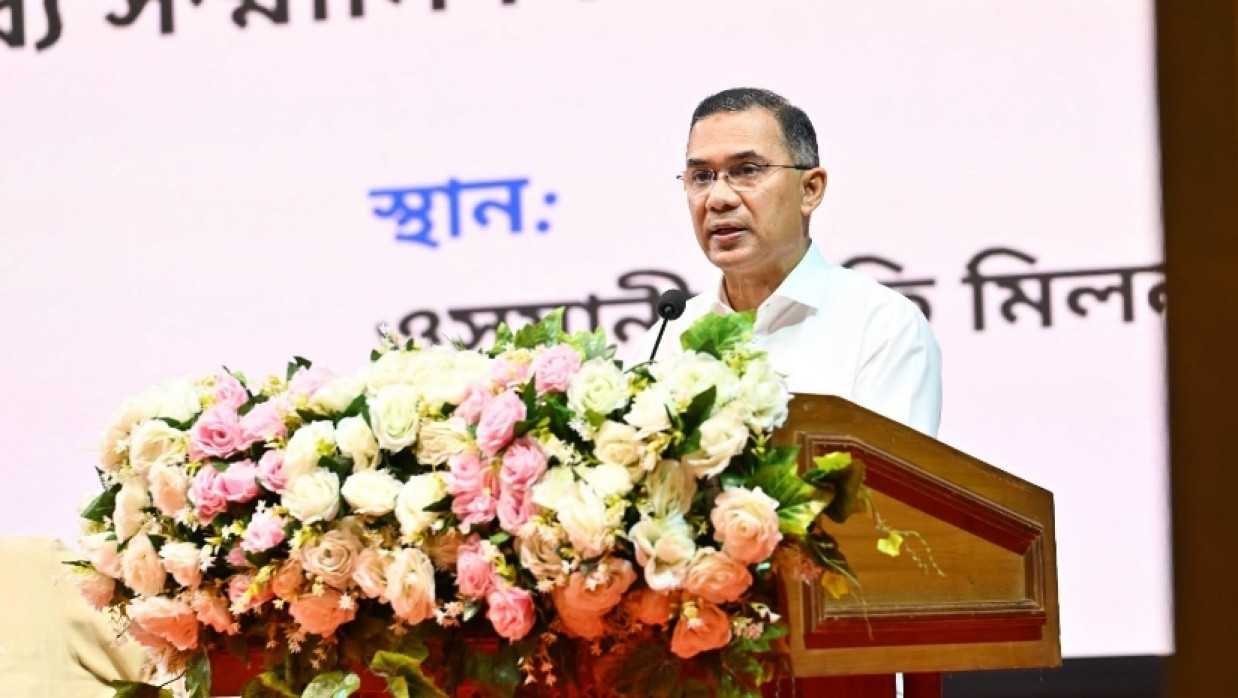
Bangladesh and Japan are expected to sign more than four memorandums of understanding (MoUs) during Prime Minister Tarique Rahman’s upcoming visit to Japan. The two countries are also expected to issue a joint statement outlining the outcomes of bilateral cooperation and future priorities.
The proposed MoUs cover cooperation in agriculture, fisheries, human resource development, skills enhancement, civil aviation, trade, environmental conservation and modernisation of local government systems.
At the invitation of Japanese Prime Minister Sanae Takaichi, Tarique Rahman will travel to Japan on October 26 for a four-day official visit. Preparations are underway to finalise eight documents on bilateral cooperation, although the final number to be signed will depend on the outcome of ongoing discussions.
Foreign Secretary Asad Alam Siam told the media that the government expected many of the proposed MoUs to be signed during the visit.
The anticipated joint statement is expected to outline the results of bilateral discussions and priorities for advancing the Bangladesh-Japan strategic partnership.
Former Dhaka University vice-chancellor Professor Dr Anwarullah Chowdhury told the media that the proposed agreements could broaden bilateral relations by linking Bangladesh’s development priorities with Japan’s industrial experience, technology and institutional expertise.
He said Tarique Rahman’s visit offered an important opportunity to inject fresh momentum into Bangladesh’s longstanding partnership with Japan. The proposed MoUs, he added, could establish a stronger foundation for cooperation in sectors directly connected to production, employment and livelihoods.
Chowdhury said cooperation in agriculture and fisheries should prioritise productivity, processing, preservation and quality management. Skills development programmes, meanwhile, should be aligned with employers’ needs.
“Language education and technical training must advance together,” he said, adding that the goal should be to create better employment opportunities for workers while developing the skilled workforce required by Bangladesh’s industries.
Emphasising the importance of involving local businesses in Japanese investment initiatives, the former vice-chancellor said domestic suppliers and small enterprises should also benefit. He suggested encouraging partnerships between Japanese mid-sized companies and Bangladeshi entrepreneurs alongside larger investment projects.
Such cooperation, he said, could help Bangladeshi businesses improve production methods, quality control and management practices.
According to the announced schedule, Tarique Rahman will hold high-level bilateral talks with Takaichi at the Japanese prime minister’s office on October 27. The two leaders will head their respective delegations, and the Japanese prime minister will host a luncheon in honour of her Bangladeshi counterpart.
Tarique Rahman will deliver the keynote address at the Japan-Bangladesh Economic Forum. He is also scheduled to meet Japanese business leaders to discuss investment opportunities and commercial partnerships.
His proposed engagements include meetings with representatives of the Japan-Bangladesh Parliamentary Friendship League and the chairman of the Japan-Bangladesh Committee for Commercial and Economic Cooperation.
Meetings are also planned with the president of the Japan International Cooperation Agency (JICA), the governor of the Japan Bank for International Cooperation (JBIC) and the president of the Japan External Trade Organization (JETRO). A meeting with the chairman of the Sasakawa Peace Foundation is also under consideration.
The proposed itinerary includes visits to a liquefied natural gas (LNG) terminal and a power plant in the Chiba region, as well as a Toyota factory in Nagoya.
The prime minister will be accompanied by his wife, Dr Zubaida Rahman, ministers, advisers, senior officials and other members of the delegation. The delegation will travel to Japan on a Biman Bangladesh Airlines flight.
Beyond the proposed MoUs, the visit will focus on advancing implementation of the Economic Partnership Agreement (EPA), signed on February 6 this year, and addressing practical challenges to expanding trade and investment.
Foreign Secretary Asad Alam Siam told the media that discussions would prioritise implementation of the agreement, improving Bangladeshi products’ access to the Japanese market and strengthening business connections.
The rising costs of major infrastructure projects are also expected to feature in the discussions. The cost of Dhaka’s MRT Line-1 project has increased by 83%, while that of MRT Line-5 has risen by 113%.
Asked whether the two sides would discuss these cost increases and the possibility of reducing interest rates on Japanese loans, Siam said Bangladesh had sought financing and technical assistance for infrastructure development. Such cooperation would certainly be discussed during the bilateral meeting between the two prime ministers, he said, adding that the talks would not be limited to metro rail projects.
“We want to obtain loans at lower interest rates from all countries,” he said, noting that the global financing system and factors specific to individual countries would influence the outcomes of negotiations.
Japan is supporting several major projects in Bangladesh, including the metro rail network, the third terminal of Hazrat Shahjalal International Airport and infrastructure development at Matarbari. Launched in 2014, the Bay of Bengal Industrial Growth Belt (BIG-B) initiative serves as a framework for linking infrastructure, industry and regional connectivity.
Alongside bilateral issues, the two countries will discuss regional and international peace and stability, cooperation in addressing the energy crisis, and a sustainable and peaceful solution to the Rohingya crisis.
The visit aims to advance the longstanding partnership through new frameworks for cooperation, stronger institutional ties and expanded economic opportunities.
 Follow The Daily Campus on Google News