Small Campus, Big Dreams: BUTEX Unveils Master Plan for Campus Development
University administration is working on a 50-year infrastructure master plan, including a proposed second campus, as students call for better laboratories, classrooms, recreational facilities and accommodation.
Students who secure admission to the country's reputed public universities after completing higher secondary education often look forward to campus life as an important part of their university experience. Alongside academic studies, the campus environment, infrastructure, sports and cultural activities play a significant role in shaping their university years.
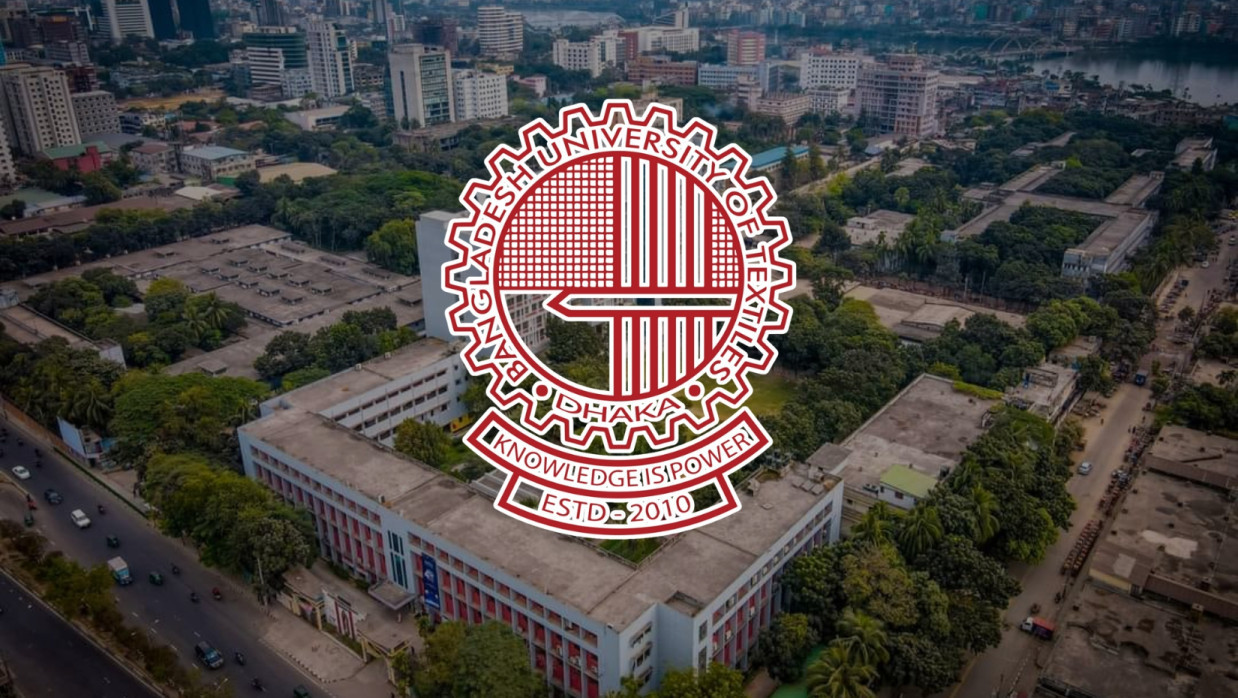
Bangladesh Textile University (BUTEX), the country's only specialised public university for textiles, is located in the capital's Tejgaon Industrial Area. Around 650 students are admitted to its 11 departments every year, hoping to contribute to the textile and apparel sector, which generates a significant share of the country's export earnings. However, the university's 11-acre campus and its limited infrastructure have raised concerns among its approximately 3,500 students.
How far are these expectations being met, and what does the university administration plan to do to improve the campus?
What students know about BUTEX before admission
Many students have limited knowledge of BUTEX's campus environment and facilities before securing admission. They often rely on senior students and information available online to learn about the university's departments and academic activities before selecting their preferred disciplines.
Newly admitted students can also face difficulties completing administrative formalities in an unfamiliar environment on admission day. The university has yet to introduce a fully automated admission process, leaving senior students to assist newcomers with the necessary procedures, including finding their respective academic buildings from the administrative building.
Sanjida Islam Shefa, a 52nd-batch student of the Department of Industrial and Production Engineering, said she had heard about the close relationships between senior and junior students before joining BUTEX. She experienced that support first-hand on admission day, when senior students helped her complete the admission process without difficulty.
Such assistance helps newcomers adjust to their new surroundings while laying the foundation for communication and networking among students.
Campus environment and leisure facilities
Located amid the busy Tejgaon Industrial Area, the BUTEX campus is relatively small but surrounded by greenery and maintained in an organised manner. Still, questions remain over whether 11 acres can adequately serve around 3,500 students.
Academic activities run from 8am to 5pm. Many students also spend additional hours on campus for research and other activities, making opportunities to relax in a quiet space or spend time with friends particularly important.
However, spaces for leisure activities are limited. Nadia Hossain, a 51st-batch student of the Department of Textile Engineering Management, said she was not particularly satisfied with the campus size and open spaces based on her experience over the past year.
Although female students have a common room where they can spend time outside classes, there is no comparable arrangement for male students. Many students instead sit on a few benches around the field or at the ESE Corner. Hossain said these spaces were inadequate for such a large student population.
The surroundings outside the campus also create difficulties for students. Given its location in an industrial area, traffic noise and congestion are part of everyday life. Vehicles ranging from goods trucks to auto-rickshaws use the roads, making it difficult for students to cross them.
The campus also has only one canteen, where seating is limited. With few options for hygienic food in the surrounding area, many students struggle to find suitable lunch arrangements.
The gap between expectations and reality
Visits to friends' campuses at other universities often leave BUTEX students wishing their own campus were larger. Tree-lined roads, green walking paths, places to spend long hours with friends and open spaces to sit in the winter sun are among the features many associate with university life.
Several public universities in Bangladesh have large libraries, gymnasiums, indoor sports facilities, swimming pools, auditoriums and playgrounds. Some also have separate buildings and laboratories for individual departments. Comparing these facilities with those available at BUTEX makes the university's limitations more apparent.
Mohammad Mamirul Islam, a 49th-batch student of the Department of Fabric Engineering, said the 11-acre campus offered limited space for walking and leisure activities. Multiple departments operate from the same building, and students sometimes have to use laboratories belonging to other departments for practical classes.
He also said students had few opportunities to spend time on campus after classes, as the university's main gate was only a few steps away.
Infrastructure and academic facilities
Academic activities of BUTEX's 11 departments are conducted mainly in a single academic building. Multiple departments operating on the same floor and a shortage of adequate research laboratories pose significant challenges for students. The absence of dedicated laboratories in many departments also limits opportunities for practical classes and research.
Dibyajit Saha, a 48th-batch student of the Department of Textile Engineering Management, said each department should have its own floor for classrooms. This would help ease classroom shortages while creating scope for separate faculty offices and teachers' lounges.
He also stressed that laboratories cannot become effective learning environments simply by having the necessary equipment. Skilled and patient laboratory instructors are equally important, he said.
Sabbir Hossain, a 50th-batch student of the Department of Textile Machinery Design and Maintenance, expressed dissatisfaction with classroom conditions. He said classrooms lacked adequate ventilation and air-conditioning, making classes uncomfortable during hot weather.
He also noted that while the use of smart boards was increasing at other universities, teaching at BUTEX remained largely dependent on multimedia projectors.
Students believe that simply increasing the number of buildings will not resolve all these problems. They have also called for expanded departmental laboratories, improved ventilation, proper chemical waste management, fire safety measures and an environment suitable for modern research.
Demand for a second campus
Given the limitations of the existing campus in terms of space, location and facilities, BUTEX students have long been demanding the establishment of a second campus.
They argue that modern laboratories, specialised research facilities and opportunities for collaborative research with industries are particularly important for technology-driven disciplines such as textile and materials science. A second campus could provide space to develop these facilities in a planned manner.
Pranta Majumder, a 50th-batch student of the Department of Wet Process Engineering, said a second campus would create opportunities to establish modern research laboratories, specialised labs, joint research centres with industrial organisations and an improved library.
It would also provide space for sports grounds and other facilities required by students, he added.
However, establishing a second campus would be a long-term and costly undertaking. Students say the university must also make the best possible use of its existing land and infrastructure, renovate laboratories where necessary and improve current facilities.
Any plan for a second campus would also need to consider the potential location, funding, transport, accommodation and academic coordination between the two campuses.
University administration's future plans
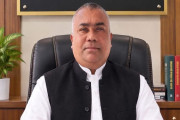
Vice-Chancellor Professor Dr Md Julhas Uddin said the university administration was aware of students' concerns over campus space and infrastructure. Work is underway to renovate and modernise various laboratories, he said.
He also said a 13-storey building was under construction at the south-eastern corner of the campus with funding from the Asian Development Bank (ADB) and under the supervision of the CCEP authorities. The building is intended to accommodate CCEP activities while also creating opportunities for modern education, research and recreational facilities for students.
The vice-chancellor said the university was preparing a master plan for infrastructure development over the next 50 years. Establishing a second campus is also part of the plan.
In addition, the university plans to construct a new 10-storey residential building for students beside G M A G Osmani Hall and a multi-storey building to provide accommodation for teachers. Government support and funding will be important to implement these initiatives, he said.
Despite the limitations, many students believe the small campus has its own appeal. Daily interaction among teachers, senior students, juniors and classmates helps build familiarity and close relationships. The compact setting also makes communication among students relatively easier.
Students nevertheless hope that BUTEX will one day develop into a fully equipped university campus, with separate buildings and modern research laboratories for every department, a larger playground, facilities for cultural activities and adequate residential accommodation.
 Follow The Daily Campus on Google News