High Ship Fares Put Saint Martin’s Island Out of Reach for Many Tourists
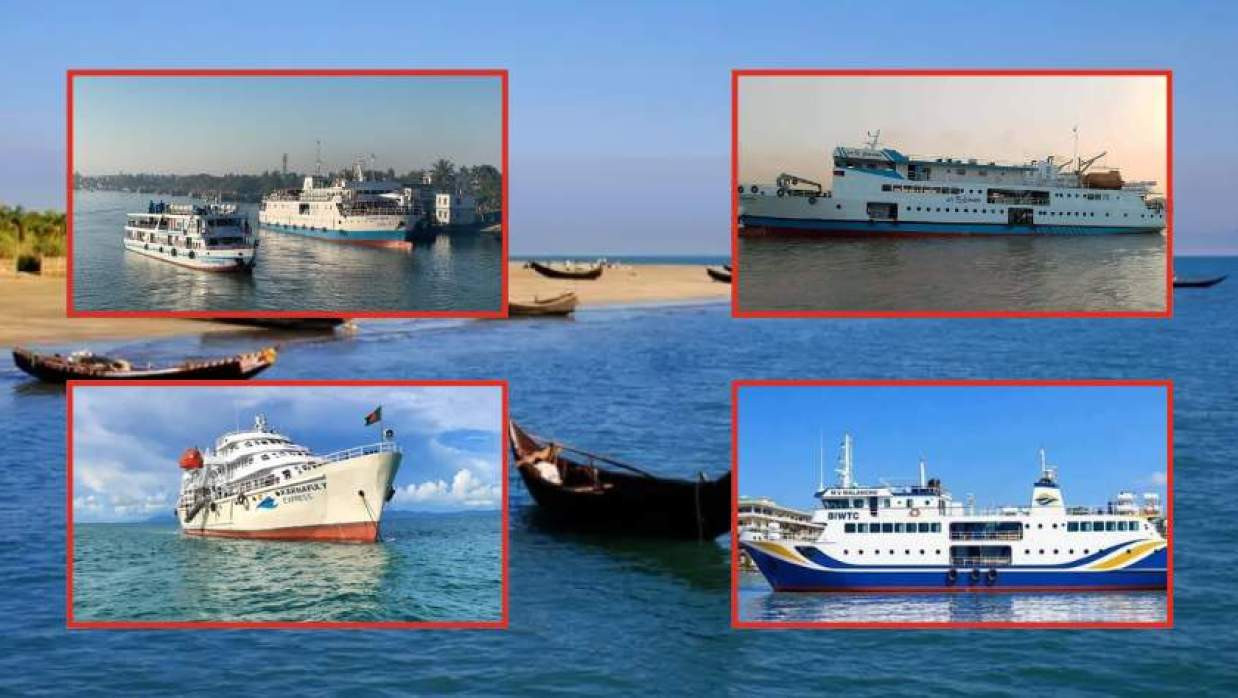
Saint Martin’s Island, Bangladesh’s only coral island, is drawing fewer tourists than expected this season as high ship fares, long sea journeys, ticketing hassles and various restrictions make visits increasingly expensive. Despite continued interest in the island, many tourists are abandoning their travel plans because of the rising costs of transport, food and accommodation.
The minimum round-trip ship fare has increased by Tk 700 from the previous season to Tk 4,200, marking a rise of nearly 20% in just one season. The additional costs of travelling to Nuniachhara Ghat in Cox’s Bazar, meals and accommodation on the island have further increased the overall expense, making trips increasingly difficult for middle- and lower-income families, students and people with limited earnings.
Although up to 3,500 tourists are permitted to visit the island daily during the tourism season, the actual number of visitors remains less than half that limit on many days.
Against this backdrop, the Bangladesh Inland Water Transport Authority (BIWTA) has taken initiatives to review ship fares, prevent overcharging and introduce a uniform fare structure. The authorities are also seeking to ease the difficulties faced by tourists.
At a meeting chaired by the BIWTA chairman last Monday, the authority decided to form a committee to bring fares down to a reasonable level. The proposed review will consider the interests of both tourists and ship owners, but no final decision has been made. Several meetings have already been held, with more scheduled.
From November 6 to 11, a total of 5,361 tourists visited Saint Martin’s Island, according to the ships’ voyage declarations. Of them, 72 were foreign tourists. On Friday (November 13), the latest reported day, 1,754 tourists travelled to the island, half the permitted number.
The meeting was informed that nine ships authorised to operate on the Saint Martin’s route, along with those that have applied for permission, have a combined passenger capacity of 4,604. Against this, the proposed daily tourist limit is 3,500. However, the three ships operating at the beginning of the season have a combined capacity of 2,298 passengers but are carrying an average of between 500 and slightly more than 1,000 tourists a day.
From November 6 to 11, a total of 5,361 tourists visited Saint Martin’s Island, according to the ships’ voyage declarations. Of them, 72 were foreign tourists. On Friday (November 13), 1,754 tourists travelled to the island, half the permitted number.
Travel arrangements have changed over three years
Over the past three years, major changes have been made to the policies governing visits to Saint Martin’s Island, transport routes, ship fares and tourist entry limits.
Previously, tourists could reach the island from the Dumdumia Ghat in Teknaf over a relatively short distance. They now have to travel a longer sea route from Nuniachhara Ghat in Cox’s Bazar, increasing both journey time and costs.
Comparative data show that the minimum round-trip fare from Teknaf to Saint Martin’s Island was Tk 1,000 to Tk 1,600 in the 2023-24 season, while the fare from Cox’s Bazar was Tk 2,500. In the following 2024-25 and 2025-26 seasons, the minimum fare from Cox’s Bazar rose to Tk 3,500. In the current 2026-27 season, it has increased to between Tk 3,600 and Tk 4,200.
Rules governing tourist entry have also changed. There was no fixed daily limit on the number of visitors in the 2023-24 season. A daily cap of 2,000 tourists was introduced in the following two seasons, before being raised to 3,500 this season.
Restrictions have also been imposed on overnight stays. While tourists could travel to and stay on the island from October to March in an earlier season, month-based restrictions were introduced later. This season, tourism activities are scheduled to run from November 1 to March 15. However, tourists must return on the same day in November, while overnight stays will be allowed from December.
In the 2023-24 season, the minimum round-trip fare from Teknaf to Saint Martin’s Island was Tk 1,000 to Tk 1,600, while the fare from Cox’s Bazar was Tk 2,500. In the 2024-25 and 2025-26 seasons, the minimum fare from Cox’s Bazar rose to Tk 3,500. In the current 2026-27 season, it has increased to between Tk 3,600 and Tk 4,200.
An online travel pass has also been made mandatory, while a Tk 100 environmental conservation fee has been introduced this season. Tourists therefore have to pay additional charges beyond the ship fare.
Rising fares put tourists under pressure
The minimum round-trip ship fare, which was Tk 3,500 last season, has been raised to Tk 4,200 this season, an increase of nearly 20% in one year.
Tourists say the ship ticket is only part of the expense. They also have to pay for transport to Nuniachhara Ghat in Cox’s Bazar, food and accommodation on the island. As a result, the total cost of a family trip can become substantial, prompting many people to abandon their plans.
Tourism stakeholders say the lack of affordable fares is particularly affecting students, young travellers and families with limited incomes. Although many remain interested in visiting the island, the cost makes the trip financially unfeasible for them.
Ship owners defend fares as BIWTA considers new structure
Hossain Islam Bahadur, general secretary of the Sea Cruise Operators Owners Association of Bangladesh, does not consider the announced fares unreasonable. Speaking to The Daily Campus, he claimed that tourists are currently being offered discounts of up to 50% on the announced fares. He said ship owners set fares in line with competition in the tourism business.
He also argued that ship operators have to bear operating costs throughout the year, even though the tourism season lasts only a few months. However, he said ship owners would not object if fares for certain passenger categories were set at reasonable levels to make travel more affordable for ordinary tourists.
At a BIWTA meeting, ship owners proposed a one-way fare of Tk 2,100 for the general class. According to their calculation, Tk 1,327 would go towards VAT, agent commissions, environmental fees, various government charges and operating costs, leaving Tk 773 as profit.
Meanwhile, the meeting discussed a proposal to set fares for economy and open-deck classes between Tk 800 and Tk 3,500, and for business and lounge classes between Tk 1,500 and Tk 5,500. The possibility of allowing ship owners to determine fares for luxury cabins is also under consideration.
More meetings planned to review fares
BIWTA has held several meetings to review fares on the Saint Martin’s route, but no final decision has been reached. Discussions are continuing on a fare structure that takes into account the interests of both tourists and ship owners.
Mohammad Mahmudur Rahman Sayem, assistant commissioner and executive magistrate of the Expatriates’ Welfare and Tourism Branch of the Cox’s Bazar Deputy Commissioner’s Office, told The Daily Campus, “Several meetings have been held under the chairmanship of BIWTA regarding the revision of fares. A few more meetings are expected to take place on the matter.”
Mohammad Abdul Wakil, port officer at BIWTA’s Cox’s Bazar (Kasturaghat) River Port, said, “Our meetings on the revision of fares are ongoing.”
Monitoring planned to prevent overcharging
Apart from reviewing fares, BIWTA is considering allocating passengers to ships on the Saint Martin’s route, ensuring that vessels carry passengers within their approved capacities and requiring tickets to separately display the basic fare and various fees. The authority is also planning to strengthen monitoring to prevent overcharging.
Officials are considering Thailand’s model for setting maximum fares in line with fuel prices. They believe this could allow fares to be adjusted as fuel prices and operating costs change.
Nayan Shil, deputy director of the Port and Transport Department at BIWTA’s Cox’s Bazar office, said, “For the safety of tourists, this year we have made navigation-related certificates and approvals for ships mandatory. Taking tourists’ objections over fares into consideration, we have collected the opinions of all relevant parties. We are working to develop an acceptable fare structure by considering the interests of both tourists and investors.”
Stakeholders say government restrictions are necessary to protect Saint Martin’s environment and biodiversity. However, they argue that travel costs must also remain affordable while conservation measures are enforced. Long sea journeys, higher ship fares and additional fees have become major barriers for ordinary tourists.
They believe that setting reasonable fares, preventing overcharging and ensuring transparency in ticketing could help restore momentum to tourism on the island. The key question now is whether BIWTA’s proposed fare structure, following its series of meetings, will make travel more affordable and bring Saint Martin’s within reach of middle-income families again.
 Follow The Daily Campus on Google News